
The 2020 rookie class was a loaded group that had dynasty owners’ attention for years. I’ve written about the class three separate times: before the NFL Draft, live during the NFL Draft, and about a month ago. I’ve included all the links to those previous series at the bottom of the page. However, in those articles, I focused on the rookies from a redraft perspective and how they will impact redraft rosters in 2020.
However, I recently began a different type of examination of the 2020 rookie class. In part 1, I did a deep dive into J.K. Dobbins and Ke’Shawn Vaughn. They represented the two highest-ranked rookies that I expected to bust at their cost. I recommended moving on from them, especially Vaughn, while each player has a value I don’t expect them to maintain.
Now, it’s time for two more players. I’m finding as I’m doing research that I’m relatively high versus consensus on this rookie class, especially compared to veteran assets. With that said, I believe the following two players are overvalued.
Zack Moss
If you’ve been following my previous work, you’d remember that I’ve written about Moss previously in a debate with @DynastyDiagnos1. In that piece, I supported Moss against his still too-low ranking of the 27th-ranked rookie. However, nailing down exact values is essential to winning dynasty leagues. Let’s take a deeper dive into Moss.
At Utah, Moss played from 2016-2019, serving as the starter for his final three seasons. Moss averaged 209 carries per season, so he comes with the background to take a lead share of a backfield. Moss also totaled 36 touchdowns throughout those seasons, and he profiled as a goal-line grinder because of his college success scoring touchdowns.
However, somewhat less known is that in 2017 and 2019, when Moss played all the games, he caught 29 and 28 receptions. Moss totaled 66 receptions for 685 yards and three touchdowns throughout his college career. He averaged 10.4 yards/reception, which is an exceptional mark for a running back.
The Bills selected Moss with the 86th overall pick in the 2020 NFL Draft. The Bills plan to use Moss in Frank Gore’s role from 2019. Gore took most of the Bills’ goal-line work throughout the 2019 season, although his overall usage varied wildly. Moss will compete with incumbent starter Devin Singletary for touches.
As a whole, I expect Singletary to dominate the Bills’ backfield in 2020, especially given the disrupted offseason. Moss will receive carries and perhaps even some receptions, but there’s no reason for the Bills to move away from Singletary as their lead back. The Bills recently drafted Singletary in 2019, and they spent slightly more draft capital on him than they spent on Moss.
Singletary played well in 2019, averaging 5.1 YPC. After Singletary took over as the definite starter in Week 9, he averaged 16.4 rushing attempts, 3.6 targets, and 2.5 receptions per game. I believe Singletary will maintain that role, although Moss will beat out Singletary for goal-line work. Even with Moss receiving goal-line carries, he won’t get enough volume to become a standalone fantasy asset.
While I stand by my take that 27th in the rookie class is far too low for Moss, I’m not on board with where Moss falls in consensus dynasty rankings. I still rank Moss as my 18th overall rookie, and he comes in at 106th in my 1 QB overall dynasty rankings. Therefore, I haven’t changed my opinion on Moss since my previous article.
However, dynasty owners seem to include Moss in a tier of players with receivers Tee Higgins, Brandon Aiyuk, Michael Pittman, Laviska Shenault, and Denzel Mims. I would far prefer any of those players to Moss, even though Moss can gain some short-term value with touchdowns. Those receivers all have long-term upside that far exceeds Moss’, and dynasty owners who select Moss over them make a huge mistake in doing so.
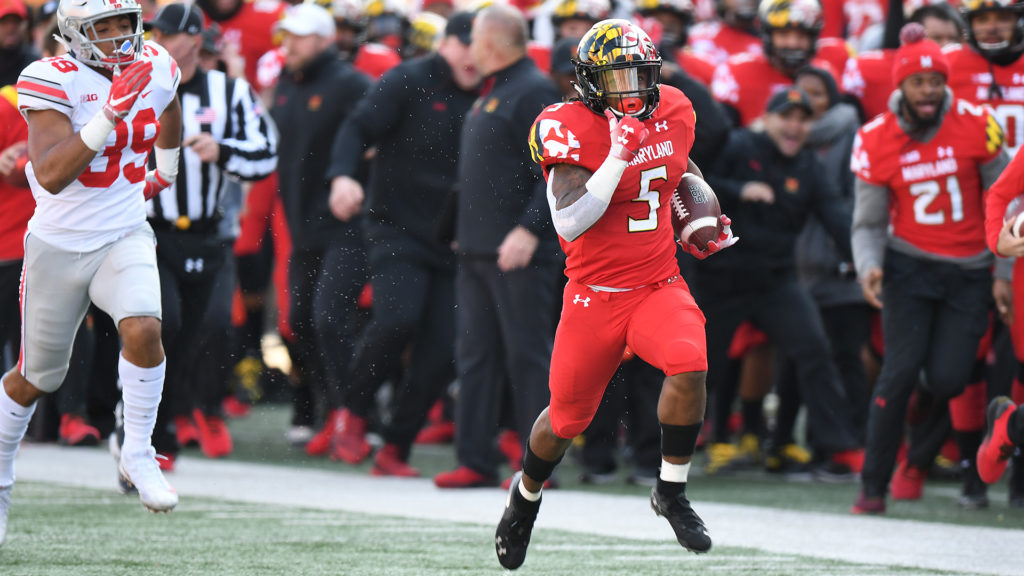
Anthony McFarland
I wrote a short write-up on McFarland right after the NFL Draft, where the Steelers selected him in the fourth round with the 124th overall pick. McFarland had a two-year career at Maryland with mixed results. In 2018, he shined, averaging 7.9 YPC and rushing for 1,034 yards. However, in 2019, he lost work to Javon Leake, posting lower marks in YPC and carries than 2018.
McFarland did improve as a receiver in 2019, improving from seven receptions in 2018 to 17. As an NFL running back, McFarland is a smaller back. He came in at only 5’8’’ and 208 pounds at the NFL Combine. Therefore, most teams saw him as a third-down or change-of-pace back who could complement an early-down or workhorse back.
Unlike Moss, though, I have little to no confidence that McFarland will ever receive relevant work in the Steelers’ backfield. Between the NFL Draft and today, there have been positive rumblings from the Steelers’ organization about James Conner and Benny Snell. Conner is fully healthy from any previous injuries, and he will be the Steelers’ workhorse back in 2020.
When healthy in 2018 and 2019, Conner averaged 14.4 rushing attempts per game and 3.9 receptions per game. Conner also put up those numbers despite leaving multiple games early with injuries. Steelers’ head coach Mike Tomlin has leaned on a single running back throughout his time as a head coach. Honestly, I don’t see 2020 being any different.
Also, given the shortened offseason and recent news, I believe that Snell, not McFarland, is Conner’s direct backup. If Conner misses time, Snell will step into Conner’s early-down work. While McFarland might see more work in the passing game, he won’t become the Steelers’ workhorse back. Therefore, it would require multiple injuries for McFarland to play a significant role in the Steelers’ 2020 offense.
However, some dynasty owners are already looking ahead to 2021. Conner is a free agent after the 2020 season, and I don’t expect the Steelers to re-sign him. Unfortunately for McFarland, even if the Steelers move on from Conner, McFarland will likely not slot into the Steelers’ starting job.
McFarland only has fourth-round draft capital, not particularly high for a starting NFL running back. The 2021 free-agent running back class could include players like Chris Carson, Kareem Hunt, Aaron Jones, Todd Gurley, and others, all of whom are better than McFarland. I think the Steelers would either sign a veteran free agent, draft a running back in the first two rounds of the 2021 NFL Draft, or retain Conner after all.
McFarland’s dynasty price seems to include the idea that he has a path to the Steelers’ starting running back position, which I don’t see as a possibility. To me, McFarland’s best-case scenario is to replace Jaylen Samuels as the receiving/third-down back and potentially to challenge for a few carries. Now could be an excellent time to get out from under McFarland. Since I believe he currently holds the highest value he will ever have.
Thanks for reading this article. You can find me on Twitter at @DFF_Karp. I love to interact with anyone in the community, so reach out at any time! I take fantasy questions and help with all formats, so keep sending those questions my way.
Original Redraft Rookie Breakdown Series: Part 1, Part 2, Part 3, Part 4
NFL Draft Quick Takes: Round 1, Round 2, Round 3, Rounds 4-7
Rookie Redraft Updates: Part 1, Part 2, Part 3, Part 4, Risers

