
Campus2Canton Analysis
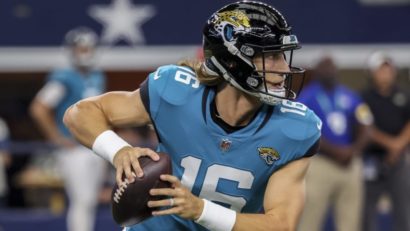
I did something this week I never thought I’d do: I traded away King Henry… TWICE. Was it bold? Absolutely. Was it smart? Ask me in December. That’s Dynasty in a nutshell, and with the halfway point of the season here for a lot of leagues, now is the time to decide whether you’re buying, selling, or holding on for dear life. And if you play Devy or C2C, Saturday brought its own chaos, from Bryce Underwood’s benching to an injury in Columbus that could ripple through Ohio State’s entire QB room. You’ll also notice a couple of changes this week: our new C2C Saturday Prep section has everything you need before kickoff, and we’ve added even more Devy coverage, including a free article from Jim. Whatever your plan, the DFF Crew has you covered. Let’s get after it!
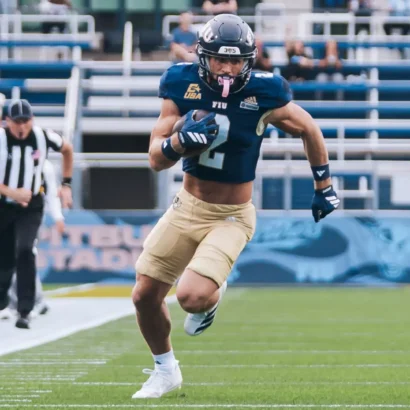
Welcome back to C2C Control Room: Players to Watch, Part 2! I hope you enjoyed the first article in this series, where I explored the players highlighted by our Campus Control Center beta app during the first half of the season. In this installment, I will review the previous week’s notable players, discuss some early-season hits and misses, and identify three more players for you to keep an eye on.
As a reminder, my name is Joe Memmolo Jr., and I am a Co-Owner and Director of Technology at Dynasty Football Factory. I am primarily known for my work on building the Control Room app, which you are currently using, rather than for writing articles. With over two decades of experience in fantasy sports and a career in business intelligence, I always seek out the data trends that matter. My goal is to provide you with a tool that simplifies the process. Now, let’s dive back in!
Campus Control Center: Week in Review
Dominic Knicely, RB, Coastal Carolina (18% rostered)
I was extremely excited to watch Knicely play last week and was absolutely devastated as soon as I checked the box score in the second quarter. Apparently, some linebacker was leading the team with nine carries! Luckily, this was just an error, and it was Knicely all along. Now, despite leading the team with 18 carries, 60% of the total rushes, Knicely only finished with 90 yards on the ground to go along with one catch for 5 yards. I love the workload, but was disappointed with the outcome overall. However, 12 points as a floor play for someone rostered in only 18% of leagues (up 2% week over week) isn’t bad. Now we just need to hope the ceiling is still there, and with 19 touches, I believe it is. Unfortunately, we’ll have to wait until after the bye to see Knicely take the field against Georgia State in week 10.
Dominic Kelley, RB, Nevada (29%)
I mentioned last week that Kelley had a tough matchup against NDSU, but what I didn’t expect was the absolutely wild sequence that took place near halftime. There was a kick-six at half, a two-point conversion attempt returned for a safety, and then an absolutely unreal touchdown catch all within a 10-minute span. Through the chaos, Nevada found themselves trailing the entire second half against a team that was already tough to run against. What I didn’t expect to see was Kelley getting targeted six times. That was an extremely pleasant surprise that turned a bad situation into a potential fantasy goldmine. Of course, five catches on six targets for 33 yards isn’t anything stellar, but that potential in the receiving game, plus a good day on the ground leading Nevada once again with 11 carries (52% of the team’s share) for 60 yards, got him to 14 points. San Jose State is up next and should be much easier to run against, so there might be some delayed satisfaction with Kelley, but I’m expecting over 20 points this week, so if you’re in any of the 71% of leagues that haven’t caught wind, grab him before it’s too late.
Josiah Freeman, WR, Fresno State (27%)
Freeman had the targets but could not get anything going with them. This was definitely one of those gambles where you’re hoping that the inefficiency returns to the mean at some point, but once again, despite leading the team in targets with 7 (33% of the team’s total), Freeman failed to catch even 50% of them for the second game in a row and finished with only 49 yards and no touchdowns. He’s the clear leader in the clubhouse at Fresno State, but I’m starting to become concerned with his efficiency. He has a bye next week, so I wouldn’t blame anyone for dropping him, but his schedule does look fantastic to end the year if you want to wait until after Halloween when they play Oregon State.
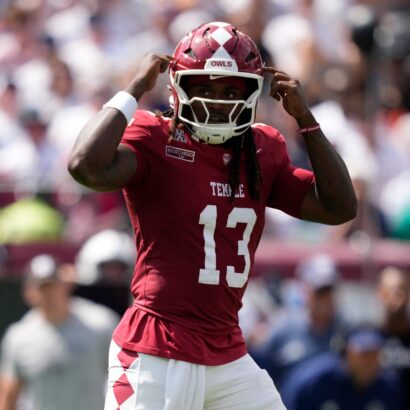
Week 7 gave us several interesting players to attack on the C2C waiver wire. We have a running back producing as both a runner and receiver, a quarterback creating opportunities with his legs, and a couple of tight ends becoming reliable campus options. The approach stays the same. Win the campus side first, then look at C2C appreciation, youth, and ceiling. Every recommendation assumes a $100 C2C FAAB budget.
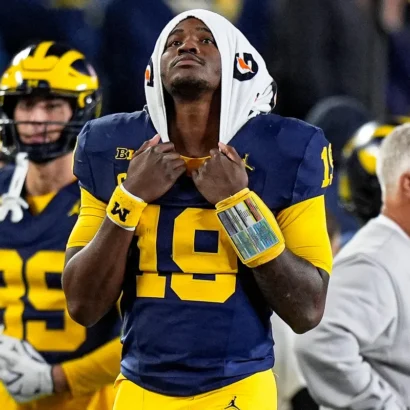
Malachi Toney Takes Over the Rivalry
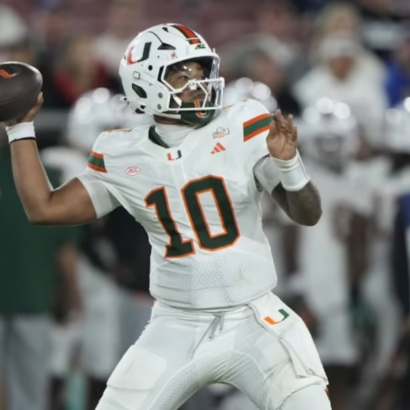
Toney caught 11 passes for 154 yards and 2 touchdowns, added 31 rushing yards on 2 carries, and threw the winning 2-point conversion as Miami beat Florida State 43 to 35 in double overtime. That is 13 touches for 185 scrimmage yards in the biggest moment of the night.
Javian Mallory Makes His Move
Mallory turned 13 carries into 108 yards and 2 touchdowns for Miami. The true freshman delivered in a competitive rivalry game, including the tying fourth-quarter touchdown, and is becoming more than a stash. This is a legitimate C2C/Devy move up.
Bryce Underwood Gets Benched
Underwood completed 5 of 11 passes for 43 yards with no touchdowns and 2 interceptions, adding 11 yards on 3 carries before Michigan benched him at halftime. True freshman Tommy Carr completed 5 of 7 passes for 47 yards and added 36 rushing yards with a touchdown on 4 carries as Michigan rallied to beat Penn State 21 to 18. After that performance, Carr has made a strong case to keep the job.
Savion Hiter Shows the Burst
Hiter carried 11 times for 78 yards and caught 2 passes for 2 yards. His 41-yard fourth-quarter run accounted for 52.6% of his rushing total, leaving 10 carries for 37 yards without it. The true freshman flashed, but Jordan Marshall still handled 14 carries, and Michigan gave the goal line touchdowns to Marshall and Carr.
Arch Manning Comes Up Short Again
Manning completed 14 of 20 passes for 173 yards, 1 touchdown, and no interceptions, added 8 yards on 6 official rushing attempts, took 5 sacks, and lost the game-ending fumble in Texas’ 27 to 24 loss to Florida. His 62-yard completion came with Texas down 27 to 17 and supplied 35.8% of his passing yards. Remove it, and he was 13 of 19 for 111 yards. I’m not abandoning my favorite quarterback, but 2 straight losses with late turnovers mean I need to take another look at where I have him ranked.
Jadan Baugh Gets the Feature Work
Baugh carried 25 times for 91 yards and 1 touchdown, caught 2 passes for 13 yards, and finished with 27 touches for 104 scrimmage yards in Florida’s upset. The efficiency was ordinary, but the workload and fourth-quarter scoring opportunity were exactly what we needed after last week’s shutdown.
Jesse Legree’s Box Score Needs Context
Legree caught 8 passes for 108 yards and 2 touchdowns in Oregon State’s 48 to 30 win over Washington State. His 90 yard touchdown supplied 83.3% of the yardage. Without it, he had 7 catches for 18 yards, although he still caught a second touchdown from 5 yards out.
KJ Edwards Makes His Move
Edwards carried 13 times for 116 yards with a long of 34, no touchdowns, no receptions on 1 verified target, and no fumbles as Texas A&M beat The Citadel 41 to 0. Runs of 32 and 34 yards came after the Aggies led 28 to 0 and produced 56.9% of his total. Remove both, and he had 11 carries for 50 yards, so keep the true freshman in the pipeline without overreacting to late explosive work.
Dilin Jones Does Everything
Jones carried 18 times for 84 yards and caught 8 of 9 targets for 58 yards, giving him 26 touches and 142 scrimmage yards in LSU’s 31 to 0 win over Mississippi State. The receiving role is the important development because it strengthens both his campus floor and his potential NFL usage.

We’re almost a third of the way through the 2026 season, and this season has been about as unpredictable and injury-riddled as I can remember. Jalen Hurts is the latest big-name player to find himself on the injury list (get well soon, Jalen), and last week we were without Lamar Jackson. Hopefully, neither injury keeps them out long. Whether you’re trying to find your replacement QB or looking for a bye week fill-in, as always, the DFF Crew has you covered. Let’s get after it!
Welcome to my first series in about four years! The goal is to spotlight a few players each week I’m watching or adding to my C2C rosters who I think are buried deep in your Fantrax player pools. But first, a little about myself and why I think I’m the perfect person to find those diamonds in the rough.
My name is Joe Memmolo Jr and I’m a Co-Owner/Director of Technology at Dynasty Football Factory. I’m mostly known for no longer writing articles, but for building the Control Room, which should be exactly the app you’re reading right now! Now you’re asking yourself, why is this guy qualified to write about C2C diamonds in the rough? It’s a great question, and I’ve played C2C for only half a year at this point, so it’s extremely valid. But I bring a mind for data and trend analysis, plus a passion for winning. Everything I’m going to put into these articles is backed by real data and analysis that I’m using to test out a future capability for the Control Room: The Campus Control Center.
This also isn’t the first time I’ve used data analysis to back fantasy sports decision-making. I played fantasy basketball back in 2017-2019 and created macros in Excel to scrape data from ESPN and effectively build teams that became the best in specific category combinations and find the best values in the draft and free agency. To me, college football, even with all its week-to-week chaos, is no different. So with that, let’s talk about some of the players I’ve called out in the past and identify how the Control Room has helped me identify valuable players to this point.
By Week 7, the roles are getting easier to read. The hard part now is not letting the name of the player decide for us. I am keeping it simple again this week and following the production and workload.
Quarterbacks
Starts
Darian Mensah, Miami vs. Florida State
Mensah has thrown for 1,438 yards, 15 touchdowns, and still has not thrown an interception through 5 games. He has also added 79 rushing yards and 2 touchdowns. When a quarterback is producing like this without turning the ball over, I am not getting cute with it.
JC French, Cincinnati at West Virginia
French has 949 passing yards and 6 touchdowns while adding 193 rushing yards and 5 more touchdowns on the ground. That gives us 2 different ways to get points, and West Virginia has struggled against both the pass and run. I like this spot for French.
Sits
Anthony Colandrea, Nebraska at Oregon
Colandrea has 1,406 passing yards, 13 passing touchdowns, 296 rushing yards, and 3 rushing touchdowns. Last week against Indiana, though, he threw for 264 yards with no passing touchdowns and 1 interception. His legs can always save the day, but going to Oregon is not where I want to depend on that happening.
Dylan Raiola, Oregon vs. Nebraska
Raiola went 6 of 19 for only 43 yards with 2 interceptions against UCLA and was replaced by Brock Thomas. Thomas came in and threw for 156 yards and 1 touchdown. Dante Moore is out again, but Oregon has not committed to Raiola or Thomas as the starter. I am staying away until we know who actually has the job.
Running Backs
Starts
DeJuan Williams, Maryland vs. Rutgers
Williams has only 29 carries this season, but he has turned them into 242 yards and 3 touchdowns. That is 8.3 yards per carry. Rutgers is allowing 199.2 rushing yards per game, so I am willing to follow the production here.
Jaziun Patterson, Michigan State vs. Northwestern
Last time we talked about Patterson, I wanted to see the role before trusting him. I think we got our answer. Against Illinois, he had 17 carries for 93 yards and 3 rushing touchdowns while adding 3 catches for 26 yards and another touchdown. That is the type of workload I needed to see.
Find out which college prospects you need to be targeting before Week 7 in this week’s C2C Waiver Wire Report by @DffFrankPanthro.
Week 6 Highlights
Jesse Legree Keeps Dominating
Legree caught 10 passes for 191 yards and 3 touchdowns in Oregon State’s 66 to 14 win over San Diego State. Even without his 71-yard touchdown, he still had 9 catches for 120 yards and 2 touchdowns. That is 6 straight 100-yard games. He is not just a fun campus story anymore.
Braden Atkinson Does It Again
Atkinson completed 29 of 38 passes for 409 yards, 5 touchdowns, and no interceptions. He has topped 300 yards in all 6 games and 400 in back-to-back weeks. At some point, the C2C price has to catch up with the production.
Jonaz Walton Explodes
Walton carried 13 times for 181 yards and 2 touchdowns in Notre Dame’s 58 to 7 win over Stanford. His 97- and 40-yard touchdowns made up most of the yardage, but explosive plays count too. The bigger story is that the true freshman opportunity keeps growing.
Isaac Brown’s Box Score Needs Context
Brown ran for 235 yards and 2 touchdowns on 17 carries in Louisville’s win over Florida State. His 97- and 68-yard touchdowns accounted for 165 yards, leaving 15 carries for 70 yards without them. Enjoy the explosiveness, but do not pretend every touch was dominant.
Nate Sheppard Shows the Complete Package
Sheppard finished with 99 rushing yards, 7 catches for 91 yards and 2 touchdowns on 34 total touches. The rushing efficiency was nothing special, but the workload and receiving usage continue to support a true three-down campus role.
Arch Manning Gives Us Both Sides
Arch completed 19 of 31 passes for 260 yards, 3 touchdowns and 2 interceptions in Texas’ 27 to 24 loss to Oklahoma. He led the fourth-quarter tying drive, but his second interception also gave Oklahoma the short field for the winning kick.
Dylan Raiola Gets Benched
Raiola completed 6 of 19 passes for 43 yards with 2 interceptions, lost a fumble, and was replaced by Brock Thomas. Thomas nearly brought Oregon back, completing 11 of 15 passes for 156 yards and a touchdown.
Keelon Russell Meets a Real Defense
Russell completed 16 of 30 passes for 185 yards and a touchdown while adding 41 rushing yards against Georgia. It was his first game below 285 passing yards. No panic, but Georgia reminded us that the sophomore is still developing.
@PaulRyan15 compiles all of DFF’s Week 4 content in this edition of The Assembly Line, your Dynasty Fantasy Football newsletter.
By Week 6, we have enough numbers to start trusting what these players are showing us. I am keeping this week simple and letting the production help make the decisions.
Quarterbacks
Starts
Ashton Daniels, Florida State at Louisville
Daniels has 1,111 passing yards and 6 passing touchdowns, but the biggest number for our lineups is what he has done on the ground. He has 278 rushing yards and 9 rushing touchdowns through 5 games, including 136 yards and 5 touchdowns last week. That rushing production is too valuable for me to sit.
Aidan Chiles, Northwestern vs. Ball State
Chiles has thrown for 900 yards and 6 touchdowns without an interception while adding 5 rushing touchdowns. Ball State is allowing 37.8 points per game, so this is a spot where I am comfortable staying with a quarterback who has already given us 11 total touchdowns in 4 games.
Sits
Anthony Colandrea, Nebraska vs. Indiana
Colandrea has been productive with 1,142 passing yards, 13 passing touchdowns, 249 rushing yards, and 2 more touchdowns on the ground. The problem this week is Indiana, which is allowing only 173.4 passing yards, 64.4 rushing yards, and 10.8 points per game. Those numbers are enough for me to look somewhere else if I have another option.
George MacIntyre, Tennessee at Arkansas
MacIntyre completed 8 of 10 passes for 86 yards after coming into the Auburn game last week. I want to see a full game and if he is truly the starter before putting him into my lineup.
@DffFrankPanthro covers the top waiver options in C2C following Week 3 of college football. Find out where to place your FAAB in this FREE article!
Week 5 gave us a little bit of everything. Some players helped their C2C value, some took a step back, and a few box scores needed a closer look before we overreacted.
For me, the goal stays the same. What can this player give us on the campus side now, and did anything happen that should change how we value him long term?
Week 5 Highlights
Jesse Legree Keeps Dominating
Legree caught 5 passes for 156 yards and 3 touchdowns in Oregon State’s 56 to 26 win over Colorado State. He scored from 50, 28, and 52 yards and now has five straight 100-yard games with 9 touchdowns this season.
Braden Atkinson Was Nearly Perfect
Atkinson completed 30 of 34 passes for 413 yards, 5 touchdowns, and no interceptions. He has exceeded 300 yards in all five games and deserves much more C2C attention.
Harlem Berry Finally Gets His Opportunity
Berry carried 15 times for 125 yards and 1 touchdown against McNeese. His 46-yard run helped the total, but without it he still had 14 carries for 79 yards. It was his first career 100-yard game and strengthened his case to be LSU’s RB2.
Dilin Jones was not injured. He finished with 16 carries for 79 yards and 1 touchdown plus 2 receptions for 5 yards.
Corey Barber Jr. Introduces Himself
The LSU true freshman caught 7 passes for 83 yards and his first 2 career touchdowns.
Keelon Russell Shines
Russell completed 16 of 22 passes for 285 yards and 3 touchdowns while adding 16 rushing yards and another touchdown.
Kamario Taylor Takes a Step Back
Taylor threw for 258 yards and 3 touchdowns, but he also committed 3 turnovers, took 5 sacks, and left injured.
Bryce Underwood Hits Another Wall
Underwood completed 10 of 21 passes for 101 yards with 2 interceptions and lost a fumble against Minnesota. The long-term talent remains, but his campus value and confidence are falling.
DeSean Bishop Takes Over
Bishop carried 34 times for 220 yards and 3 touchdowns against Auburn. Even without his 44-yard touchdown, he produced 176 yards on 33 carries.
Faizon Brandon Struggles
Brandon completed 3 of 8 passes for zero yards with an interception before being replaced. Ouch!
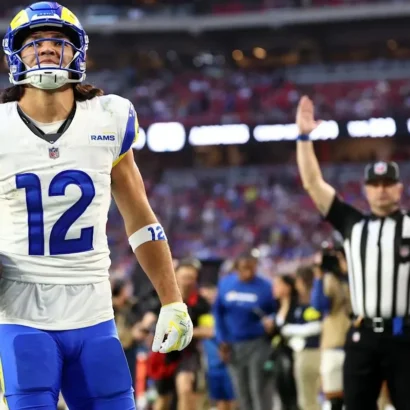
Check out all the recent DFF content from the past week in this edition of The Assembly Line, your go-to dynasty newsletter.
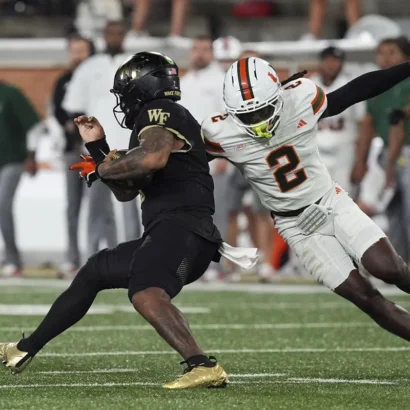
By Week 5, I feel like we finally have enough information to stop guessing so much. We have an idea of who is producing on a week-to-week basis and who is giving us a big game here and there. If you have been following my waiver pickups, this is the hard part. Now we have to figure out how to plug those productive players into our roster spots based on our league settings and matchups. This is where I can help with some of those tougher decisions.
Some players have earned enough trust that I am not sitting them just because the matchup gets tougher. Other players are going to depend much more on their role, opportunity, and who they are facing that week. That is what we are looking at in Week 5. As always, every C2C league is different. Your scoring, lineup requirements, and roster can change a close decision.
Let’s get into it.
Quarterbacks
Starts
Gio Lopez, Wake Forest vs. Stanford
I am not letting 1 bad week scare me away from Lopez. Through 4 games, he has thrown for 1,112 yards, 8 touchdowns, and only 1 interception. He is also averaging 9 yards per attempt, so he has not needed a crazy amount of passes every week to give us production.
Last week was his worst game of the season, and I know that can make us second-guess putting him back into our lineup. I am going the other way. Stanford has allowed at least 27 points in every game, and I trust what Lopez has shown us through 4 games more than I am worried about 1 bad Saturday.
Keelon Russell, Alabama at Mississippi State
Keelon Russell is starting to look like someone I can’t leave out of my lineup each week. He has thrown for 1,129 yards and 8 touchdowns while adding 168 rushing yards and 3 more touchdowns on the ground. What I like most is that he is not dependent on one part of the offense. If the passing production slows down, he can still get us points with his legs.
We are also starting to see him do it against better competition. That matters because we do not want to fall into the trap of trusting numbers that only came against easier opponents. Mississippi State also has enough offense to keep Alabama from shutting things down too early, which could help keep Russell involved and build up our points.
Sits
Byrum Brown, Auburn at Tennessee
Brown is always going to make this decision difficult because of what he can do with his legs. That rushing ability gives him a way to save a fantasy day even when the passing production is not there. The problem is the passing game has been too inconsistent for me.
Brown threw 3 interceptions against Baylor and has thrown 2 more since. He also finished with only 140 passing yards against Vanderbilt. Now he has to go on the road to Tennessee. The rushing upside is what makes me think about it, but I do not trust the passing side enough this week. Sometimes the rushing floor is not enough to make up for everything else we are worried about.
Isaac Wilson, Colorado vs. Texas Tech
Colorado is expected to turn to Wilson over Julian Lewis at quarterback. That makes Wilson interesting. It does not automatically make him someone we need to put into our lineup. We still have to see what this offense looks like with Wilson running it.
How much will Colorado use his legs? How aggressive will they let him be throwing the ball? Does the quarterback change actually make the offense better? Those are all questions we do not have answers to yet. I would rather watch Wilson’s first start and learn from it than put him into my lineup and hope we guessed correctly.
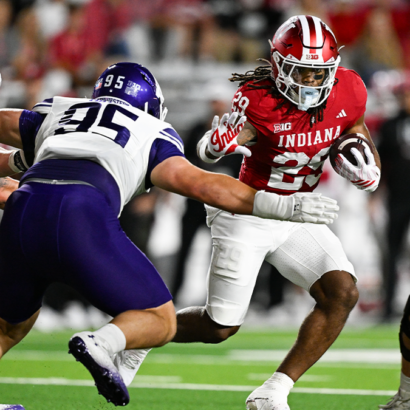
Week 4 gave us exactly what I want when I am working the C2C waiver wire. We have changing workloads, players starting to separate themselves, and a few situations where we have a chance to get there before everybody else does. At this point in the season, I am not interested in chasing somebody because he had one big Saturday. I want to know what changed. Did the touches increase? Is the player earning a bigger role? Are we seeing multiple weeks of production instead of one big play?
That is where we can find value before the rest of our league catches up. The approach stays the same every week. Win the campus side first. Then I am looking at C2C appreciation, youth, and ceiling.
Every recommendation assumes a $100 C2C FAAB budget.
Overall Waiver Order
Lee Beebe Jr., RB, Indiana: Add at 22 to 30 percent
Jeffrey Overton Jr., RB, Virginia Tech: Add at 16 to 22 percent
Cole Tabb, RB, Cincinnati: Add at 14 to 20 percent
Cayden Lee, WR, Missouri: Add at 12 to 18 percent
Ty Clark III, RB, Wake Forest: Add at 10 to 15 percent
Caden High, WR, Stanford: Add at 7 to 11 percent
Jacob Harris, TE, Wisconsin: Add at 5 to 9 percent
Luke Dehnicke, TE, Northwestern: Add at 4 to 8 percent
Quarterbacks
No quarterback makes my waiver list again this week. There are quarterbacks who can help in traditional CFF formats, but I am not going to force somebody into this article just because we need a quarterback section. None of the available options gave me enough of a combination of immediate campus production and C2C upside to put him ahead of the players on this week’s board.
That is part of Always Be Scouting too. Sometimes identifying what not to chase is just as important as finding the next waiver addition. We have already covered quarterbacks who fit what we are trying to do, and I am not going to recycle names just because they had another productive Saturday.
Running Backs
Lee Beebe Jr., Indiana
Beebe is my Final Lock this week. Luigi talked about him on our Devy Degens podcast this week. Turbo Richard left Indiana’s game against Northwestern after nine carries for 68 yards, and Beebe took advantage of the increased opportunity by finishing with 24 carries for 203 yards and 1 touchdown. The 203 yards are going to get everyone’s attention, but the 24 carries are what really got mine. We are not talking about a player who received a few touches and broke one long run. Indiana put the ball in Beebe’s hands 24 times, and he showed what he could do with the opportunity.
The Richard injury obviously matters, especially because Indiana was already dealing with Khobie Martin being unavailable. I am not going to pretend we know exactly how long Richard will be out, and I am not calling Beebe Indiana’s locked-in workhorse for the rest of the season. I also do not need Richard to be ruled out for the next month to want Beebe. We just saw what the workload can look like when the opportunity opens up, and I want Beebe on my roster while we find out what happens next. Nice shoutout, Luigi.
My call: Spend 22 to 30 percent. Beebe is my No. 1 waiver claim and Final Lock this week.
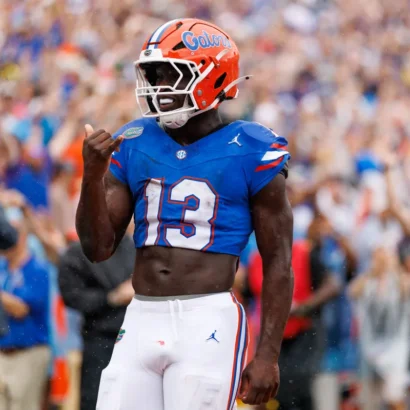
Week 4 gave us a little bit of everything. We had a former five-star quarterback come off the bench and remind everybody why he was such a big recruiting name. We had a young SEC quarterback continue to force his way onto the radar. We had running backs handle massive workloads, veteran transfers make explosive plays and a pair of highly valued quarterbacks survive games where their offensive lines did them very few favors.
But this article is not about chasing box scores. Every week I want to figure out what actually matters for C2C. Did a player’s value change? Did his role change? Was the production sustainable, or did one huge play make the final stat line look better than the performance really was? Then, as always, we will finish with the injuries we need to monitor going into next week.
Oregon vs. USC
Dylan Raiola, QB, Oregon
Dylan Raiola came off the bench after Dante Moore left the game and completed 19 of 25 passes for 289 yards, 11.6 yards per attempt, two passing touchdowns and no interceptions. He was not sacked, did not record a rushing attempt or fumble, and led Oregon to a 41 to 27 win after Moore left the game.
Raiola’s 62-yard completion to Dierre Hill Jr. came early in the third quarter with Oregon leading 13 to 10. His 34-yard completion to Jamari Johnson came later with Oregon ahead 20 to 17. Those two plays supplied 96 yards, or 33.2 percent of Raiola’s production. Remove them, and he was still 17 of 23 for 193 yards, 8.4 yards per attempt, with both touchdowns.
That was legit. The former five-star recruit entered with 4,819 career passing yards and 31 touchdowns from his two seasons at Nebraska, so we are not pretending this came from nowhere. What changed is the landing spot and the possibility that Oregon can keep its offense alive without Moore. I’m moving Raiola back onto the active C2C board, but the immediate value depends heavily on Moore’s health and Oregon’s quarterback decision.
Dante Moore, QB, Oregon
Moore completed 8 of 10 passes for 77 yards, 7.7 yards per attempt, with no touchdowns or interceptions before leaving. He was not sacked, added one carry for 10 yards, and did not fumble. His 37-yard completion supplied 48.1 percent of his passing yards. Without it, he was 7 of 9 for 40 yards and 4.4 yards per attempt.
The injury is the story here, not the box score, and this is a hold until we know more. There is no reason to make a C2C valuation move based on an incomplete game and an unresolved injury, especially when we still do not know how long Moore could be out or what Oregon plans to do at quarterback.
C2C takeaway: Raiola is back on the active board. Moore is a hold until we have more information.
Mississippi State vs. Missouri
Kamario Taylor, QB, Mississippi State
Kamario Taylor completed 27 of 38 passes for 360 yards, 9.5 yards per attempt, three passing touchdowns and one interception in Mississippi State’s 31 to 24 win. He took four sacks and added 10 carries for 7 yards with no rushing touchdowns or fumbles.
His 43-yard touchdown to Sanfrisco Magee came in a scoreless first quarter. The 48-yard completion to Anthony Evans III came with 4:54 remaining and the game tied at 24, setting up the winning touchdown. Those plays supplied 91 yards. Without them, Taylor was still 25 of 36 for 269 yards, 7.5 yards per attempt, and two touchdowns.
This kid is forcing us to pay attention. Taylor is a 6-foot-4, 230-pound sophomore who threw only 77 passes last season. Now he has delivered a 360-yard performance and a fourth-quarter answer against an SEC defense. That combination of youth, frame, and production was enough for me to move Taylor all the way to QB1 in my C2C rankings this week.
The failure condition is still pressure. Four sacks and the interception remind us that he is developing, but this was more than empty production. At this point, I’m not just watching Kamario Taylor anymore. I’m treating him like one of the most valuable quarterbacks on the campus side.
Fluff Bothwell, RB, Mississippi State
Fluff Bothwell carried 25 times for 122 yards, 4.9 yards per carry, with a long of 18 and one rushing touchdown. He caught 6 of 7 targets for 55 yards and another touchdown. That gave him 31 touches, 177 scrimmage yards, two total touchdowns, and no fumbles.
There was no 50-yard run inflating this line. Bothwell earned everything across a massive workload. He already had consecutive productive seasons entering this year, but seven targets are the important development. If that receiving work sticks, he becomes more than a campus hammer and his C2C profile becomes more interesting because that gives us another avenue for production. I’m moving him up modestly and buying before everybody decides one Saturday made him a guaranteed NFL feature back.
C2C takeaway: Taylor made the biggest move of the week for me and is now my QB1 in C2C. Bothwell gets a bump, especially if the receiving work continues.
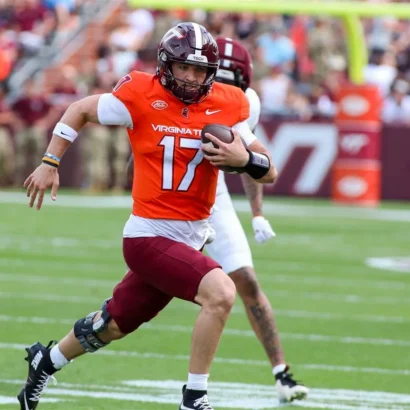
Week 4 is where I really want to start separating the player from the weekly situation. We have enough games now to know who is earning touches, who is losing them, and which early-season breakouts might actually be real. That does not mean we blindly follow the box score.
A player can still be someone I like long term and belong on the bench this week. On the other side, an emerging player does not need to be a household name yet if the role tells us it is time to trust him. That is what we are looking for this week.
As always, every C2C league is different. Your scoring, lineup requirements, and roster can change a close decision.
Let’s get into it.
Quarterbacks
Starts
Ryan Browne, Purdue at Notre Dame
This is exactly the type of Start I want for this article. Browne has thrown for at least 300 yards in each of Purdue’s first 3 games and enters Week 4 with 1,024 passing yards, 7 touchdowns and only 1 interception. Now we get the real test.
Notre Dame has been legitimately good defensively, so I am not calling this an easy matchup. What I am betting on is Purdue’s passing game. They are averaging 366.7 passing yards per game, and Browne has completed 73.3 percent of his passes through 3 weeks.
Purdue’s defense has also helped create game scripts where Browne has to keep throwing. So I am not sitting him just because Notre Dame is on the other side. Purdue has shown me enough through 3 games to trust the volume until somebody proves we should not.
Ethan Grunkemeyer, Virginia Tech at Boston College
Grunkemeyer is starting to become one of those players where the role is getting more interesting before everybody completely catches up. Virginia Tech has put a lot on his plate in James Franklin’s offense, and I like that for C2C.
Boston College gives us enough resistance that this is not some automatic matchup call, but I am not running away from the volume either. This is where I want to get ahead of the point where Grunkemeyer becomes an obvious weekly option.
Sits
Hauss Hejny, Colorado State at UTSA
The production says Start. The hamstring says Sit. Hejny has completed 64.4 percent of his passes for 619 yards, 10 touchdowns and only 1 interception while adding 128 rushing yards and another touchdown.
That is exactly the type of production we want from our campus quarterback. The problem is that he is now a game time decision with a hamstring injury.
His mobility is part of what makes him valuable, so even if he is active, I do not want to find out after kickoff that Colorado State is protecting him or limiting what he can do with his legs. This one hurts because I like the player and the production. I just do not like the risk this week.
Tait Reynolds, Clemson at California
Tait Reynolds is still Clemson’s starting quarterback. Christopher Vizzina being probable does not change that.
What it does change is how comfortable I am with the weekly floor. Clemson’s offense has not been consistent enough for me to completely ignore the possibility that Vizzina gets involved if things are not going well Friday night.
Reynolds still has the long-term talent I like, but this is a weekly campus decision. I need more stability before I trust him in the lineup.
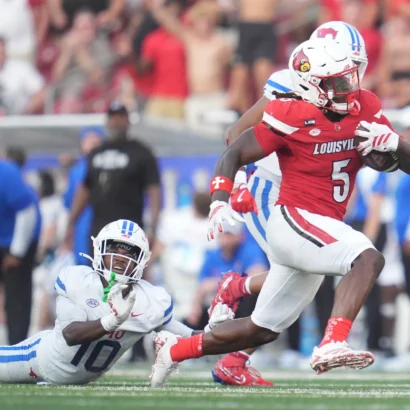
Week 3 gave us something I really like when I am working the C2C waiver wire: roles starting to change.
At this point, I am not just looking for somebody who had one big Saturday. I want to know why it happened. Did the workload change? Are the targets becoming consistent? Is a young player starting to take over a bigger role?
That is where we can get ahead of the rest of our league. The approach stays the same. Win the campus side first. Then I am looking at C2C appreciation, youth, and ceiling.
Every recommendation assumes a $100 C2C FAAB budget.
Overall Waiver Order
Nolan James Jr., RB, Notre Dame: Add at 18 to 25 percent
Keyjuan Brown, RB, Louisville: Add at 15 to 22 percent
Chris Durr Jr., WR, Maryland: Add at 12 to 18 percent
Aiden Flora, RB, Iowa State: Add at 10 to 16 percent
Kari Ashley, TE, TCU: Add at 8 to 13 percent
Junior Sherrill, WR, Vanderbilt: Add at 8 to 12 percent
Justin Bowick, WR, Oklahoma State: Add at 6 to 10 percent
CJ Baxter Jr., RB, Kentucky: Add at 5 to 9 percent
Micah Gilbert, WR, Notre Dame: Add at 4 to 8 percent
Kenny Johnson, WR, Texas Tech: Add at 3 to 6 percent
Elija Lofton, TE, Miami: Stash at 2 to 5 percent
Quarterbacks
No quarterback makes my waiver list this week. There are quarterbacks worth talking about, but we have already covered the ones who fit what we are trying to do here. I am not going to recycle a name just because he had another good week.
That is part of Always Be Scouting too. We want to find these players before everyone else catches up.
Running Backs
Nolan James Jr., Notre Dame
James is my Final Lock this week. He carried the ball 26 times for 121 yards and 1 touchdown against Michigan State. The 121 yards are nice. The 26 carries are what really got my attention.
That is not a player getting a few touches and breaking one long run. Notre Dame gave James a legitimate workload, and the latest reporting has him moving ahead of Aneyas Williams in the backfield. Now we have something I want to attack.
James can help us win the campus side right now, and if this workload sticks, his C2C value should have room to grow with it. I am not dropping Williams because of one week. That would be an overreaction. But I am absolutely adding James because 26 carries and an expanding role are exactly what we are looking for.
My call: Spend 18 to 25 percent. James is my No. 1 waiver claim this week.
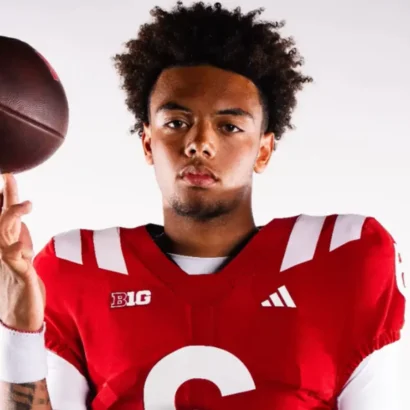
I’ve been working through this 2027 class for a while now, and the more I dig into it, the more I like what we have. I’ve already talked about a lot of these names with Luigi and Papi on Devy Degens, including several players we grabbed during our 2027 prospect draft. Now that I’ve had more time to work through the class, I wanted to put my own top 15 together and show where I’m at today. I’ll also be getting into this class again soon on Always Be Scouting with Griddy and Cuse.
If you’ve followed my scouting work before, you already know how I approach this. I’m not taking somebody else’s rankings, moving a few names around, and calling it scouting. I want to know what a player actually does well, whether those traits are going to translate when everybody on the field gets bigger and faster, and what still needs to develop before I’m comfortable projecting him forward.
For me, it always comes back to traits over hype, translation over production, and tape first. Production matters, size matters, and testing matters, but those things are there to support what I’m seeing on the field, not tell me what I’m supposed to think.
One thing to understand with the grades is that they are not always going to match the exact order of the board. The grade is my evaluation of the overall prospect today. The ranking is where I personally want that player on my board. Sometimes preference, fantasy translation, or what I think the player can become is going to move somebody ahead of a player with a slightly higher grade.
My S tier is my own five-star grading tier, and that starts at 9.0. I’m not handing that out just because somebody is a great high school player. If I’m putting five stars next to a prospect, I want to feel like there are very few major translation questions left. Nobody is there yet, but two players are getting pretty damn close.
1. Kemon Spell (RB – Georgia)
Grade: 8.9/9
Spell is still my No. 1 player in this class, and the more I watch him, the easier it is for me to keep him there. At 5’10” and around 205 pounds, he already has almost exactly the kind of build I want at running back. He’s compact, thick, and low to the ground, but what really separates him for me is that he actually knows how to play the position.
He sees the hole, stays square, lets blocks develop, and gets north without wasting movement. He isn’t bouncing everything outside looking for a highlight because he knows he can outrun most of the defense. He rushed for 1,755 yards and 28 touchdowns in 2025 despite missing five games, but the numbers just confirm what I already see.
The vision is high-level, the feet are really good, and he has the burst and contact balance to create more than what is blocked for him. I also think he has enough natural receiving ability to eventually get a real three-down role. I still want to see more route development and better pass protection, but those are developmental questions, not reasons for me to move him down.
Spell is the closest player on this board to my five-star tier. If the rest of the game develops the way I think it can, I’m looking at a three-down NFL starter with early-round upside.
2. Trae Taylor (QB – Nebraska)
Grade: 8.9//9
Taylor is still my QB1 because he already does the quarterback things I care about most. Accuracy comes first for me, then ball placement, processing, pocket awareness, and the ability to deliver the football on time. He checks those boxes better than anybody else in this quarterback group right now.
He threw for 3,571 yards, 38 touchdowns, and only three interceptions in 2025 while adding 633 rushing yards and another 12 touchdowns. The production is impressive, but I’m more interested in how he gets there. He anticipates throws, understands where the window is going to be, and doesn’t need every receiver to be completely uncovered before letting the football go.
Taylor also moves well enough inside the pocket without immediately turning every broken play into backyard football. At around 6’3” and 200 pounds, I still want another 15 to 20 pounds on him, and his reported 9.25-inch hands come in a little below the 9.5-inch mark I prefer.
Those are things I’m tracking, but they aren’t enough to move him off QB1. Taylor already plays quarterback instead of just showing quarterback tools, and there is a big difference between the two.

Every college football season, an unexpected quarterback prospect seems to emerge from the shadows, step into the national spotlight, and enter the conversation as a potential first-round pick.
In 2019, it was former Ohio State backup, Joe Burrow. In 2025, it was former Cal starter and Indiana Hoosier transfer, Fernando Mendoza.
2026? Early returns suggest the University of Missouri southpaw gunslinger, Austin Simmons.
The 247 four-star transfer portal signee arrives at Columbia by way of the Ole Miss Rebels and has the Tigers off and running with a 2-0 record.
So who is Austin Simmons, and why does there seem to be a groundswell of hype building behind him?
Let’s begin with what makes him truly one-of-a-kind. Simmons is currently in his fourth year of college, 20 years old, and working on his master’s. A true academic prodigy, he graduated high school in two years and skipped his junior and senior years to jump into the SEC and play at Ole Miss. Originally a class of 2025 quarterback, he reclassified to 2023 to get an early start on his tutelage from Lane Kiffin.
Drawn to Ole Miss specifically because of Kiffin’s offensive prowess and ability to develop elite quarterbacks, the high school two-sport phenom was also swayed by the promise of being able to play football and baseball in Oxford.
In the summer of 2023, Simmons flipped his commitment from the Florida Gators to Ole Miss and spent the fall 2023 season taking a redshirt year to adapt to the speed of college athletics. Simmons joined the Mississippi baseball team as a left-handed relief pitcher. He made 13 bullpen appearances, putting up a stellar 3.21 ERA and a 2-0 record before a minor elbow sprain ended his baseball season. After the injury, Simmons stepped away from baseball to focus on football, his first love.
In the fall of 2024, Simmons was back on the gridiron as the primary backup to future first-round pick Jaxson Dart. He appeared in nine games, flashing high-end upside.
After Dart’s departure, Simmons beat out the competition in fall camp and was named the undisputed starter for the 2025 season. In week 1, he exploded for 341 yards and 3 touchdowns against Georgia State. However, in week 2 against Kentucky, he suffered a pivotal left ankle injury. While Simmons healed, little-known backup, former Division II star and potential 2026 first-round pick, Trinidad Chambliss took over, and the offense caught fire, leading the Rebels to a College Football Playoff berth and leaving Simmons relegated to the bench.
Recognizing the writing was on the wall, Simmons entered the transfer portal on January 2, 2026. Four days later, he joined the Tigers of Missouri.
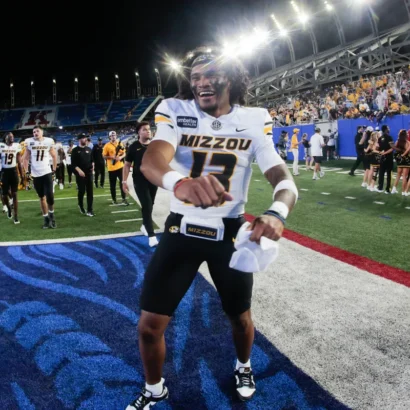
Week 3 is where we need to start trusting what we are actually seeing on the field. We have 2 games of touches, targets, and roles to work with now. Some players are confirming what we thought all offseason, while others are already forcing us to adjust.
The goal is still the same. I am not here to tell you to start the obvious stars. We are looking for the players whose current role, matchup, or availability can make a difference in your campus lineup this week. As always, every C2C league is different. Your scoring, lineup requirements, and roster can change a close decision.
All kickoff times are Eastern.
Quarterbacks
Starts
Austin Simmons, Missouri
vs. Troy
Saturday at 7 p.m.
Simmons has been one of the best early surprises of the season. Through 2 games, he has completed 36 of 48 passes for 544 yards, 7 touchdowns, and zero interceptions.
What I like most is how comfortable he already looks running this Missouri offense. This is not a quarterback surviving on 1 or 2 big plays. He has been accurate, efficient, and has consistently moved the offense. Now he gets Troy at home. I am riding this start until somebody gives me a reason not to.
Kamario Taylor, Mississippi State
@ South Carolina
Saturday at 4:15 p.m.
Taylor has been exactly what we want from a C2C quarterback through 2 games. He has thrown for 581 yards and 7 touchdowns without an interception, but the rushing production is what really gets my attention.
Against Minnesota, Taylor carried the ball 13 times for 86 yards. That gives him another path to fantasy points if the passing touchdowns come back down. This will be his first SEC start, but the dual-threat role gives me enough confidence to keep him in the lineup.
Drew Mestemaker, Oklahoma State
vs. Murray State
Saturday at 7 p.m.
I am staying with Mestemaker. After a rough opener, he responded against Oregon with 317 passing yards, 2 passing touchdowns, 109 rushing yards, and another touchdown on the ground.
That rushing involvement changes everything. When a quarterback can give us that type of production with his legs, he does not need the passing game to be perfect every week. Now Murray State comes to Stillwater.
We are getting to the point in the season where roles start to matter more than preseason expectations. That does not mean we chase every big box score. One long run can make an average day look great. Three touchdowns can hide a small role. What I want is opportunity we can actually use on the campus side; then I am looking at whether that player can gain value as a C2C asset.
This week’s board gives us a little bit of everything. We have a running back getting real SEC volume, a receiver who just commanded a massive part of his passing game, and a young quarterback with the type of rushing ability that can change a campus lineup quickly.
Every recommendation assumes a $100 C2C FAAB budget.
Overall Waiver Order
Daniel Hill, RB, Alabama: Add at 15 to 22 percent
Collin Dixon, WR, Illinois: Add at 12 to 18 percent
Michael Hawkins Jr., QB, West Virginia: Add at 12 to 18 percent
Na’eem Abdul-Rahim Gladding, WR, Maryland: Add at 8 to 13 percent
Jaden Craig, QB, TCU: Add at 7 to 12 percent
Matt Fuller, RB, South Carolina: Add at 6 to 10 percent
Rodney Fields Jr., RB, Kansas State: Add at 5 to 9 percent
Gio Lopez, QB, Wake Forest: Add at 4 to 8 percent
Joseph Williams, WR, Colorado: Add at 4 to 7 percent
JV Gibson, WR, Cincinnati: Add at 3 to 6 percent
Jaleel Skinner, TE, Louisville: Stash at 1 to 3 percent
Quarterbacks
Michael Hawkins Jr., West Virginia
Hawkins is the quarterback I want most from this group. He completed 5 of 7 passes for 155 yards and 2 touchdowns against UT Martin. He also ran 6 times for 96 yards and another 2 touchdowns. Obviously, we are not projecting 4 touchdowns every week. We also have to acknowledge that 71 of those 96 rushing yards came on one play. That does not change what interests me.
Hawkins is a redshirt sophomore starting at quarterback and giving us production with his legs. That creates another path to campus points when the passing volume is not there. Seven pass attempts are nowhere near enough for me to make a big statement about where his passing game is headed. I want to see him against better competition. For C2C, though, the age, starting opportunity, and rushing ability give Hawkins the best combination of campus runway and appreciation potential among these quarterbacks.
Next two games: Virginia on September 19 and Oklahoma State on September 26
My call: Spend 12 to 18 percent. If I am choosing between Hawkins and Craig for more than just the next matchup, I want Hawkins.

However you feel about LSU head football coach and controversial enigma Lane Kiffin, one thing remains: the man can put points on the scoreboard. Across his 15-year career as a head coach, Kiffin’s teams have averaged 35.4 points per game, ranking in the top five among active FBS college football head coaches [minimum five seasons coached]. Exclude the numbers from Tennessee and USC; when he ran a slow, methodical, pro-style system, the average jumps to 37.1 PPG. At Florida Atlantic University [FAU], Kiffin began shifting to his version of the veer-and-shoot. Kiffin marries pro-style passing progression, pass protection rules, and tight-end-heavy packages with the up-tempo, spread-the-field, RPO-heavy scheme. Call it a pro-Spread hybrid built on the Veer-and-Shoot architecture. This offense creates space by splitting its wide receivers out to the literal sidelines and numbers, horizontally stretching defenses and making them defend every blade of grass, leaving gaps for the right play call to target and gash. Speedy weapons out wide are essential to executing this. When Kiffin arrived in Baton Rouge for the 2026 season, he completely overhauled the wide receiver room via the transfer portal. Yet, two unique names have emerged from the dust as stash opportunities for your Devy/C2C rosters.

Week 1 gave us a lot more to work with. We finally have real usage, real workloads, and enough game action to start figuring out which early roles might actually stick.
This report covers games completed through Sunday. SMU and Florida State play Monday night, so I am leaving that game out rather than trying to make decisions before it is played.
The approach stays the same. Help the campus lineup first. Then look at C2C appreciation, age, and ceiling.
A lot of the biggest Week 1 names are already rostered in the leagues I checked. Nate Sheppard, Jamal Rule, Mason Heintschel, J’Koby Williams, KJ Duff, Faizon Brandon, Jeremiah McClellan, Jaylin Carter, and Jamari Johnson will still be discussed because their Week 1 usage matters. They are not realistic waiver additions, so I am not attaching FAAB bids to them.
