
Dynasty Analysis
Welcome to my first series in about four years! The goal is to spotlight a few players each week I’m watching or adding to my C2C rosters who I think are buried deep in your Fantrax player pools. But first, a little about myself and why I think I’m the perfect person to find those diamonds in the rough.
My name is Joe Memmolo Jr and I’m a Co-Owner/Director of Technology at Dynasty Football Factory. I’m mostly known for no longer writing articles, but for building the Control Room, which should be exactly the app you’re reading right now! Now you’re asking yourself, why is this guy qualified to write about C2C diamonds in the rough? It’s a great question, and I’ve played C2C for only half a year at this point, so it’s extremely valid. But I bring a mind for data and trend analysis, plus a passion for winning. Everything I’m going to put into these articles is backed by real data and analysis that I’m using to test out a future capability for the Control Room: The Campus Control Center.
This also isn’t the first time I’ve used data analysis to back fantasy sports decision-making. I played fantasy basketball back in 2017-2019 and created macros in Excel to scrape data from ESPN and effectively build teams that became the best in specific category combinations and find the best values in the draft and free agency. To me, college football, even with all its week-to-week chaos, is no different. So with that, let’s talk about some of the players I’ve called out in the past and identify how the Control Room has helped me identify valuable players to this point.
It is time for you to be real with your roster. Are you a top-4 team with a legit chance to win? Are you a middle-of-the-road team that has been hit with the injury bug? If not, you should be selling. Do not get stuck with aging Dynasty assets if you are not a contender. With that, let’s dive into my top four “buys” and “sells” for Dynasty.
By Week 7, the roles are getting easier to read. The hard part now is not letting the name of the player decide for us. I am keeping it simple again this week and following the production and workload.
Quarterbacks
Starts
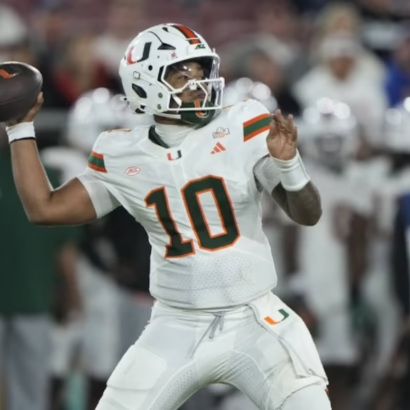
Darian Mensah, Miami vs. Florida State
Mensah has thrown for 1,438 yards, 15 touchdowns, and still has not thrown an interception through 5 games. He has also added 79 rushing yards and 2 touchdowns. When a quarterback is producing like this without turning the ball over, I am not getting cute with it.
JC French, Cincinnati at West Virginia
French has 949 passing yards and 6 touchdowns while adding 193 rushing yards and 5 more touchdowns on the ground. That gives us 2 different ways to get points, and West Virginia has struggled against both the pass and run. I like this spot for French.
Sits
Anthony Colandrea, Nebraska at Oregon
Colandrea has 1,406 passing yards, 13 passing touchdowns, 296 rushing yards, and 3 rushing touchdowns. Last week against Indiana, though, he threw for 264 yards with no passing touchdowns and 1 interception. His legs can always save the day, but going to Oregon is not where I want to depend on that happening.
Dylan Raiola, Oregon vs. Nebraska
Raiola went 6 of 19 for only 43 yards with 2 interceptions against UCLA and was replaced by Brock Thomas. Thomas came in and threw for 156 yards and 1 touchdown. Dante Moore is out again, but Oregon has not committed to Raiola or Thomas as the starter. I am staying away until we know who actually has the job.
Running Backs
Starts
DeJuan Williams, Maryland vs. Rutgers
Williams has only 29 carries this season, but he has turned them into 242 yards and 3 touchdowns. That is 8.3 yards per carry. Rutgers is allowing 199.2 rushing yards per game, so I am willing to follow the production here.
Jaziun Patterson, Michigan State vs. Northwestern
Last time we talked about Patterson, I wanted to see the role before trusting him. I think we got our answer. Against Illinois, he had 17 carries for 93 yards and 3 rushing touchdowns while adding 3 catches for 26 yards and another touchdown. That is the type of workload I needed to see.
Week 5 had a little bit of everything. Josh Allen ran for 121 yards in a Monday night overtime classic; Puka Nacua caught 17 passes (on 24 targets!), Drake Maye threw four touchdowns, Jahmyr Gibbs piled up over 200 total yards, the Giants and Commanders played more than 60 minutes of football to settle absolutely nothing, and Marvin Harrison Jr. is now a Houston Texan.
You might notice things look a little different this week. I’ve moved away from slapping a Buy, Sell, or Stash label on every team, because the most useful stuff doesn’t always fit in one of those boxes.
Here’s how this works. I dig through the numbers, snap counts, and news from all 32 teams so you don’t have to, and pull out the stat, trend, or storyline from each one that deserves your attention. Some of it points to a clear move. Some of it is food for thought. Either way, you’ll walk away with something you can use when you set your lineup, work the waiver wire, or fire off that trade offer.
ARIZONA CARDINALS
Marvin Harrison Jr. was traded to the Houston Texans, but oddly enough, I don’t think any of the other Cardinals receivers should be elevated because of this move. Harrison had just 13 targets on the year and wasn’t a real focal point of the offense.
Takeaway: Kendrick Bourne is third on the team in targets with 22. He’s worth keeping an eye on, but if anyone should rise up the rankings, it’s RB Jeremiyah Love.
ATLANTA FALCONS
Kyle Pitts caught his first touchdown of the season and looks to be finding his place in the Falcons’ offense, and Michael Penix Jr. has three straight games with 200 or more passing yards, something he did only five times in 2025.
Takeaway: Bijan Robinson and Drake London are the stars of the Falcons’ offense, but Pitts and Penix aren’t far behind.
BALTIMORE RAVENS
Even without Lamar Jackson, the Ravens’ offense didn’t skip a beat. Receiver Rashod Bateman is rumored to be on the trade block, and while his stats don’t jump off the screen, he has 30 or more receiving yards in every game this season and has played 75% or more of the snaps in every game but one. He also proved he can handle the WR1 role in Week 2 without Zay Flowers, putting up 21 points.
Takeaway: Bateman is a low-end flex play right now, but depending on where he lands (if he gets traded at all), he could be a WR3 in fantasy lineups.
BUFFALO BILLS
The Buffalo offense is efficient, but if you’re chasing their receivers, I’d temper expectations. The Bills rank 29th in pass attempts at 27 per game. Maybe the return of D.J. Moore will help?
Takeaway: D.J. Moore is the only Bills receiver with double-digit targets in a game this year, and that happened just once. Right now, picking which Bills receiver to start is a guessing game I’m not looking to play.
CAROLINA PANTHERS
Coming off their bye week, nothing has changed for the new and improved passing attack. However, Jalen Coker is expected to return and give Bryce Young another weapon.
Takeaway: In the first three weeks of the season, Jalen Coker had 22 targets (he left in the third quarter of Week 3) and Tetairoa McMillan had 23. Coker’s return doesn’t hurt McMillan as much as it complements him.
CHICAGO BEARS
The trio of Rome Odunze, Luther Burden, and Colston Loveland has started to show signs of life over the last three weeks. Odunze has 24 targets, Burden has 23, and Loveland has 18. The return of Caleb Williams can’t come soon enough.
Takeaway: The injury to RB Kyle Monangai, who is second on the team in red zone touches with 15, should open up more scoring opportunities for Burden, Odunze, and Loveland.
CINCINNATI BENGALS
Fun fact: Chase Brown is second among all RBs with 24 receptions. Brown has been frustrating lately, and Samaje Perine stealing a touchdown from him didn’t help matters. Over the last three games, Brown has 52 total touches and Perine has 26.
Takeaway: Brown is a big part of this offense and leads the team in red zone touches with 12 (Perine has eight). The touchdowns are coming for Brown.
CLEVELAND BROWNS
Quinshon Judkins got hurt in Week 5, and Raheim Sanders is on IR. Dylan Sampson might play on Sunday. Add in Jaleel McLaughlin and Audric Estime, and this backfield is a mess.
Takeaway: Judkins has a chance to play, but if he doesn’t, I like Denzel Boston’s and Harold Fannin Jr.’s chances of scoring a touchdown given the state of the RB room. Maybe Watson finally scores his first rushing touchdown of the season?
DALLAS COWBOYS
With 10 days off, hopefully the Cowboys are well rested after playing three games in 12 days. Javonte Williams heads into the break riding a three-game touchdown streak.
Takeaway: The Packers have allowed nine total touchdowns to RBs this season, which ranks 30th in the NFL. I expect Javonte to have a big game in Week 6.
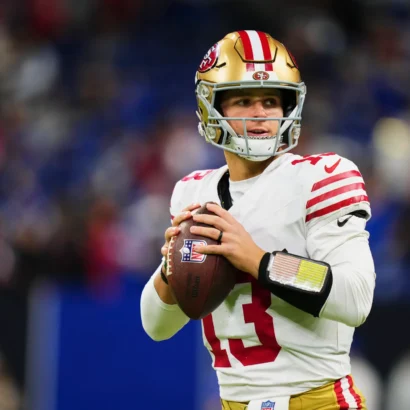
Week 5 is in the books, and we’re officially a third of the way through the season. While Week 5 will be remembered for Mike Evans mogging Trevon Diggs, Week 6 is the first bye-pocalypse of the season. When the byes and injuries pile up, we have to make lineup decisions that make your skin crawl. With those bad decisions in mind, we start with a huge trade involving a former 1.01 pick. Here are the biggest Dynasty storylines in Week 6.
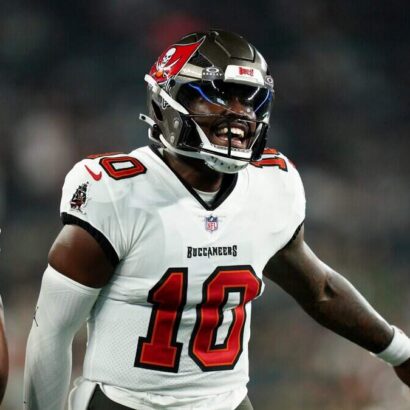
In this series, @joshreedy5 spotlights the standout performances from the 2026 Rookie Class and highlights both promising and concerning trends. Let’s dive into how these rookies fared in Week 5.

@DynastyFFWolf has three new dynasty assets for you to target before Week 6 kicks off. Find out who is trending up in this DFF article.
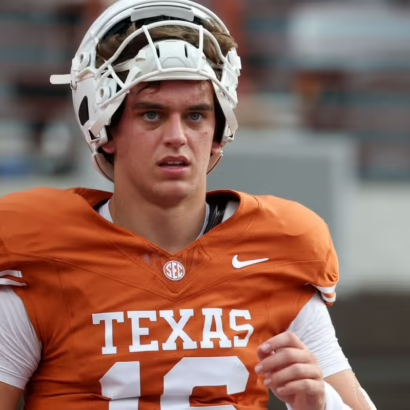
@DffFrankPanthro, @GridironNerd, and @Jmancuso005 are back with another episode of Always Be Scouting! The boys break down the MHJ trade, preview the biggest games of the Week 7 college football slate, and argue over their Top 10 Devy quarterbacks. Check it all out and more here!
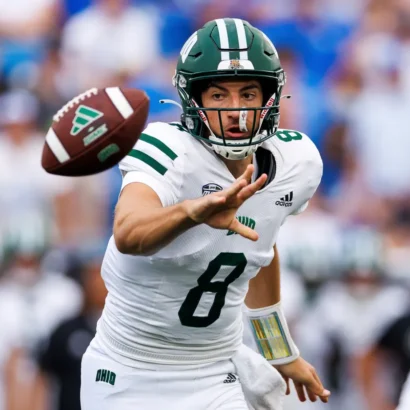
Find out which college prospects you need to be targeting before Week 7 in this week’s C2C Waiver Wire Report by @DffFrankPanthro.

Fantasy point production is not always the best predictor of future fantasy point production. One blown coverage or short touchdown can instantly make a player’s otherwise pedestrian week look great for fantasy..
This is where usage trends come in. A player’s usage is a better predictor of what kind of future fantasy production we should expect. You can use this to target Dynasty owners who may be otherwise disenchanted with a low macro fantasy output, while you know the underlying factors are healthy. On the other hand, you can also utilize usage trends to see which players may have a concerning trend relative to their historical valuation that you may want to consider trading.
*Data Sources: DFF Data Factory, PFF, Fantasy Pros, NFL Pro, Next Gen Stats*
Run your own custom reports in the DFF Data Factory within the Control Room app. Receiving yards per team pass attempt is a good way to measure a player’s efficiency within their offense. The above chart lists the top eight in RYPTPA.
1. Zay Flowers is a player I am aggressively targeting in trade offers. He is WR11 in Dynasty Community value on Keep Trade Cut. He will cost you about a mid-first. But he is still obtainable because he has played most of this season injured. His Dynasty managers haven’t seen the end result of huge fantasy points, but in reality he is producing that way in his limited time. You can see in the chart above he is even out-producing the far more expensive Jaxon Smith-Njigba. The newest factor depressing his fantasy value is the absence of Lamar Jackson. This makes the trade window wide open. Fire out some offers this week before it is too late.
2. Similarly, Drake London has been electric since the return of Michael Penix. He has nearly doubled his target share and fantasy points per game since Penix took over the reins.
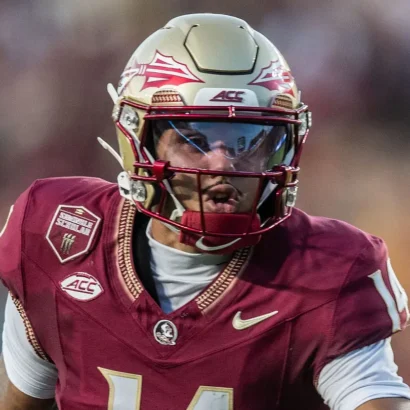
By Week 6, we have enough numbers to start trusting what these players are showing us. I am keeping this week simple and letting the production help make the decisions.
Quarterbacks
Starts
Ashton Daniels, Florida State at Louisville
Daniels has 1,111 passing yards and 6 passing touchdowns, but the biggest number for our lineups is what he has done on the ground. He has 278 rushing yards and 9 rushing touchdowns through 5 games, including 136 yards and 5 touchdowns last week. That rushing production is too valuable for me to sit.
Aidan Chiles, Northwestern vs. Ball State
Chiles has thrown for 900 yards and 6 touchdowns without an interception while adding 5 rushing touchdowns. Ball State is allowing 37.8 points per game, so this is a spot where I am comfortable staying with a quarterback who has already given us 11 total touchdowns in 4 games.
Sits
Anthony Colandrea, Nebraska vs. Indiana
Colandrea has been productive with 1,142 passing yards, 13 passing touchdowns, 249 rushing yards, and 2 more touchdowns on the ground. The problem this week is Indiana, which is allowing only 173.4 passing yards, 64.4 rushing yards, and 10.8 points per game. Those numbers are enough for me to look somewhere else if I have another option.
George MacIntyre, Tennessee at Arkansas
MacIntyre completed 8 of 10 passes for 86 yards after coming into the Auburn game last week. I want to see a full game and if he is truly the starter before putting him into my lineup.
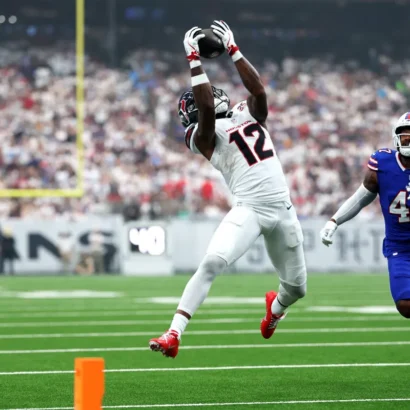
Week 4 had its moments, but overall it was kind of blah. Drake Maye showed signs of life, Puka Nacua made his triumphant return, CeeDee Lamb reminded everyone who the “real” alpha is in Dallas, Bryce Young’s breakout season rolled on, and Brian Robinson Jr. (NOT Bijan, although he had himself a day) stole the show on Monday night with three touchdowns.
As always, I dug through the numbers and the news from all 32 teams, so you don’t have to. Every team gets a player worth talking about and a verdict: Buy, Sell, or Stash. Let’s make your lineup and trade decisions easier.
ARIZONA CARDINALS
Trey “TE1” McBride has double-digit targets and seven or more receptions in every game this season. But with only two touchdowns, it’s worth kicking the tires to see if someone is willing to part ways with him.
McBride is a Buy High for contenders or teams looking to make a push.
ATLANTA FALCONS
The Robinson duo of Bijan and Brian Jr. has scored eight touchdowns over the last two weeks, including three from Brian in Monday night’s 45-24 rout of the Saints. Bijan is still the lead dog, but Brian has double-digit touches and 50 or more rushing yards in each of his last three games.
Brian Robinson Jr. is a Buy if you need production while your team deals with injuries.
BALTIMORE RAVENS
Lamar Jackson and the Ravens’ new-look offense have been great, but Lamar is now nursing an ankle injury, missed Wednesday’s practice, and could miss time. With only one rushing touchdown on the season, we haven’t seen the blow-up game we’re accustomed to from Lamar.
With Lamar potentially set to miss games, Lamar is a Sell High!
BUFFALO BILLS
D.J. Moore hasn’t done much since his 21-point Week 1 performance. Over his last three games, he’s scored a combined 15.5 points, and now he’s banged up again. I believe in the Bills’ offense, and Moore’s injury isn’t considered long-term. I’d reach out to the Moore manager and see if he’s available.
D.J. Moore is a Buy Low.
CAROLINA PANTHERS
Bryce Young’s breakout season is here, and it’s for real. The fantasy QB3 is on a tear, leading the league in passing yards (1,268) and sitting tied for first in passing touchdowns with nine. The Panthers are on bye this week, so he can’t add to his stats, but Bryce has unlocked this offense.
Bryce Young is a Buy High league winner.
CHICAGO BEARS
Kyle Monangai had a career day, but D’Andre Swift still had 17 touches of his own. Until Caleb Williams returns and the QB play improves, Chicago will lean heavily on the run. Over the last two weeks, Monangai and Swift have NINETY combined touches!
I’m Buying both, and if one gets hurt, you have a league winner on your hands.
CINCINNATI BENGALS
Tee Higgins continues to prove me wrong this year, posting 90 or more receiving yards for the third game in a row. Joe Burrow and the Bengals average 30-plus pass attempts a game; the running game is still a work in progress, and with Ja’Marr Chase in the concussion protocol, Higgins’ target share could climb even higher.
Even though he’s banged up, Tee Higgins is a Buy.
CLEVELAND BROWNS
Deshaun Watson has turned the Browns into a fantasy surprise this year, and he currently sits as the QB12. The biggest surprise so far is his rushing production: 20 or more rushing yards per game. A big game is on the horizon for Watson and the Browns.
Watson is an upside Buy.
DALLAS COWBOYS
CeeDee Lamb stole the show on Sunday, but it was Dak Prescott who led the charge. Dak has thrown for 250 or more yards in three straight games, the Cowboys have scored 30-plus points in each of them, and he’s protecting the ball with just one turnover against eight touchdowns. Until the Dallas defense improves, the Cowboys will be in shootouts more often than not.
Dak Prescott is a Buy High for any contenders out there.
DENVER BRONCOS
The Broncos have been unlucky with their early schedule; it doesn’t get any easier, and everyone’s favorite bounce-back candidate, Jaylen Waddle, has suffered the most. With only two games of 35 or more receiving yards and one touchdown, it’s hard to trust the Denver offense moving forward.
Waddle is a Sell due to the schedule and QB play.
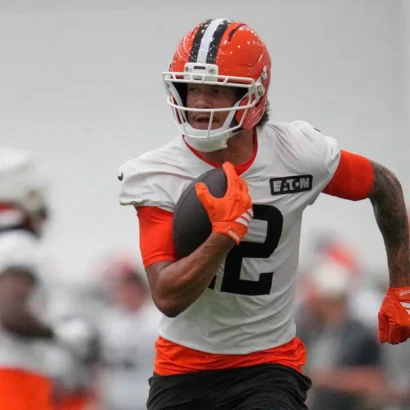
In this series, I’ll spotlight the standout performances from the 2026 rookie class and highlight both promising and concerning trends. Let’s dive into how these rookies fared in Week 4.
Quarterback
Stock Up
Jalon Daniels: He started in Week 4 for Baker Mayfield, who was injured the week before. He completed 19 out of his 27 pass attempts (70%) for 148 yards. He threw for a touchdown but also threw 2 interceptions. His QBR was 49.7. He rushed eight times for 55 yards, so he does offer the rushing side if you need a quarterback to start because of bye weeks or injuries. He plays Dallas on Thursday night, so he should be able to score some points with their defense not being great.
Stock Down
Athan Kaliakmanis: Made his debut when Marcus Mariota got injured. He completed 15 out of his 33 pass attempts (45%) for 186 yards. He threw for a touchdown but also threw 1 interception. He rushed three times for 16 yards. His QBR was 20.7. He did not look great, but he was prepared to be the backup all week. It’s unclear who will start Week 5 for Washington, so he is a name to look for on the waiver wire if you are desperate for a quarterback.
Jack Strand: Made his debut when the Falcons were getting crushed in Week 1. He played 42% of the snaps. He completed eight of 15 passes for 59 yards and added two rushes for 16 yards. No new playing time since Week 1.
Running Back
Week 4 was relatively quiet for rookie running backs, which was expected. Nevertheless, a few trends are worth noting.
Stock Up (Above 40% of team carries)
Jeremiyah Love: In Weeks 1-4, he has had 55 carries for 223 yards, a touchdown, and 13 catches for 36 yards and a touchdown. Week 4, he played 45% of the snaps, which was down from Week 3 when he played 64%. His carry percentage also went down for the first time this season from 91% in Week 3 to 69% in Week 4. However, the drop in usage was just due to Love suffering a minor ankle injury in-game. His window to buy is probably closed.
Stock Down (Below 40% of team carries)
Emmett Johnson: In Weeks 1-4, he had 16 carries for 56 yards and five catches for 74 yards, playing on 36% of the snaps. In Weeks 1 and 3, they got up big. Week 2 was a tight game, and he did not play as much, and that was the case again in Week 4. Clear backup and handcuff to Kenneth Walker.
Kaelon Black: In Weeks 1-4, he has had 31 carries for 120 yards, and one catch for 5 yards. Week 4, he played 26% of the snaps, which was up from Week 3 when he played 15%. His carry percentage went up slightly from 21% in Week 3 to 29% in Week 4. He is the clear backup and handcuff to Christian McCaffrey.
Mike Washington: In Weeks 1-4, he has had 24 carries for 120 yards, a touchdown, and one catch for -1 yard. Week 4, he played 21% of the snaps, which was up slightly from Week 3 when he played 16%. His carry percentage also went up from 21% in Week 3 to 35% in Week 4. Clear backup and handcuff to Ashton Jeanty.
Kaytron Allen: In Weeks 1-4, he has had 12 carries for 41 yards. Week 4, he played 19% of the snaps, which was his season high so far this season. He had 3 carries in Week 4, which was 17% of the carries.
Nick Singleton: He did not play at all in Week 1. In Weeks 2-4, he has had seven carries for 12 yards. Week 4, he played 13% of the snaps, which was his season high. His carry percentage was 14% in Week 4.
Seth McGowan: In Weeks 1-4, he had 12 carries for 45 yards, and two catches for 7 yards. His snap percentage has gone up each week up to 29%. His carry percentage has gone up each week so far this season, up to 23% in Week 4. He is the clear backup and handcuff to Jonathan Taylor.
Demond Claiborne: In Weeks 1-4, he has had six carries for 13 yards, and one catch for 2 yards. Week 4, he played (12%) of the snaps, which was his season high. His carry percentage was 13% in Week 4.
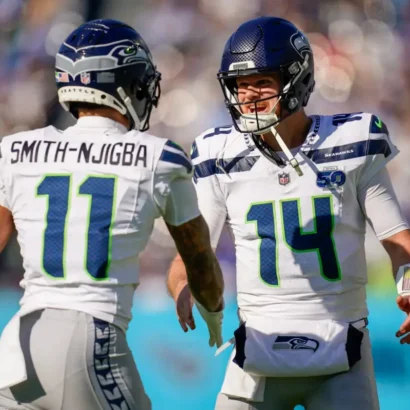
About an hour into Sunday’s Week 4 slate, I thought I would be writing a very different introduction after both Marvin Harrison Jr and Brian Thomas Jr. scored touchdowns within minutes of each other. Unfortunately, the excitement of promising starts gave way to the familiar reality of disappointment. Still, what a beautiful 10 minutes when all was right in the world. We move on. Week 5 is here. Let’s get into the biggest storylines of the week.
Jaxon Smith-Njigba: Dynasty WR1?
In the interminable doldrums of the off-season, there is nothing we love to indulge in more than wild speculation. One of the big questions this off-season was: “Who will be this year’s Jaxon Smith-Njigba?” Well, it turns out, this year’s Jaxon Smith-Njigba is this year’s Jaxon Smith-Njigba. Through four weeks of the season, Jaxon Smith Njigba ranks as the WR1 overall.
Which begs the question: where do we rank him in dynasty? Heading into the season, Ja’Marr Chase and Puka Nacua were locked in ahead of Smith Njigba. After 4 weeks, there’s a legitimate case for moving JSN up to No.1 in the dynasty wide receiver rankings.
JSN ranks:
1st in fantasy points (117)
1st in total EPA (46.71)
1st in target share (36.5%)
2nd in TPRR (0.36)
2nd in YPRR (4.15)
3rd in receptions (32)
5th in targets (42)
Whilst I’m not prepared to rank Jaxon Smith Njigba ahead of Ja’Marr Chase just yet, he is a lot closer to the WR1 in dynasty than he was in July. The Seahawks get the 49ers, who have allowed the 7th fewest fantasy points to wide receivers, in a mouth-watering NFC West clash.
Brock Purdy Faces his Demons
Stick with Sunday’s Big Game, we move to Brock Purdy. Mr Not So Irrelevant has been one of the biggest stories of the season so far. Purdy, who has yet to be sacked, ranks as the QB2 in fantasy. He has thrown for over 1,000 yards, 11 touchdowns, and one interception. In PPG when he returned from injury last season, Purdy ranked as the QB2.
In Week 5, Purdy visits the Seattle Seahawks – the site of some of his biggest failures in recent history. First, there was Week 18. Purdy logged just 127 passing yards and threw an INT for 6.18 fantasy points. In the Divisional Round, Purdy logged just 140 passing yards and threw one interception. Sure, the 49ers were banged up. But that hasn’t changed much this season.
Last time out, the Seahawks defense generated pressure on 47.4% of Brock Purdy’s dropbacks – the highest pressure rate of last season. They accomplished that while only blitzing on 10.5% of plays. Whilst Purdy leads the way in the Way-Too-Early-MVP Race, he can elevate himself into the elite tier of dynasty quarterbacks with another strong performance against one of the league’s best defenses.

Welcome to Week 5, which is one of my favorite weeks. Why? We now have four weeks of proof points and data to paint a picture of who a team is, and what players’ roles are becoming. It’s an opportunity to start forming conclusions based on this season rather than heavily relying on data from last year and the summer. That said, it’s shaped up as quite a strange main slate for Sunday. There aren’t many games that scream for points to be scored, and there also aren’t many QB spots that stand out. However, I do see some hidden opportunity in some of the matchups, especially those with smaller totals that some might overlook for DFS. There is also a higher point total game that I will be building my own lineups around.
Dohnte Meyers (WR – CIN)
Rookie Dohnte Meyers ran the most routes (53) in the NFL last week, finishing with seven receptions for 82 yards. Now, injuries to Ja’Marr Chase (concussion) and Tee Higgins (adductor) could open the door for the former Saskatchewan Roughrider to make an even bigger impact in Week 5.
And guess who’s on deck this week for the Bengals? The winless Dolphins. Miami has surprisingly allowed the third-fewest fantasy points to wide receivers through four weeks, but I think that has more to do with them getting gashed by running backs and tight ends instead.
Still, if Chase or Higgins do sit this one out — which seems likely considering Cincinnati has its bye in Week 6 — then Meyers becomes an interesting dart throw for WR-needy dynasty managers. He could be Joe Burrow’s No. 1 wideout this week in a game where the Bengals have an implied team total of roughly 25 points.
While being able to plug Meyers into your lineup may only be a one-week thing, he should definitely be added to the back end of rosters. We know Higgins has a propensity to miss a few games every year, making Meyers a handcuff in a weird sort of way. With players dropping like flies every week, you want playmakers on good offenses. Meyers fits the bill.
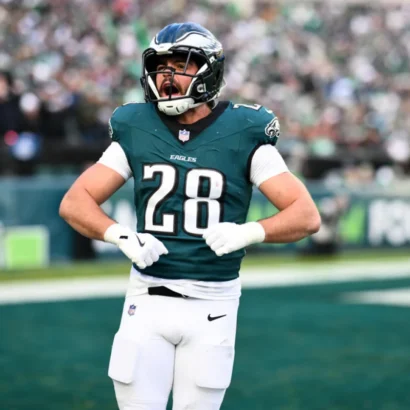
Will Shipley (RB – PHI)
This one isn’t just for dynasty. Will Shipley is going to be a popular waiver-wire add in all formats this week thanks to injuries suffered by Saquon Barkley and Tank Bigsby.
Barkley is considered week-to-week with a hamstring injury. I’d count on him missing a game or two. Bigsby is going to be out much longer. He’s headed to IR and will have surgery to repair a core muscle injury.
That leaves Shipley as the last man standing.
While he hasn’t done much as a pro yet, we know he was insanely productive in college. At Clemson, Shipley averaged 5.2 yards per carry and scored 31 rushing touchdowns across three seasons. He was also a sure-handed weapon out of the backfield, catching 85 passes for 602 yards.
The Eagles have been a mess on offense lately. Barkley doesn’t have a touchdown yet this season, and this week’s matchup against the Jaguars is a tough one. But volume will always be king at the running back position, and Shipley could see a bunch of touches for as long as Barkley is sidelined.
Spend up to get Shipley if you can. He’s worth holding long-term as well. Barkley is nearly 30 years old, and appears to be slowing down. That cliff could come quick, making Shipley a guy who could play a major role down the stretch.

Welcome back, Dynasty Football managers! Throughout the season, it’s essential to continually evaluate rosters to determine which players to trade for or cut ties with. With that, it’s time for Volume 2 of Dynasty Vet Values for 2026. In this series, I’ll be analyzing veteran players who are excellent targets for your contending teams based on current Dynasty market value and perhaps an NFL weekly Pick’em. We all know youth and longevity are essential to remain competitive in Dynasty. But the ultimate goal is to win fantasy championships, and sometimes that means acquiring that “win-now” asset.
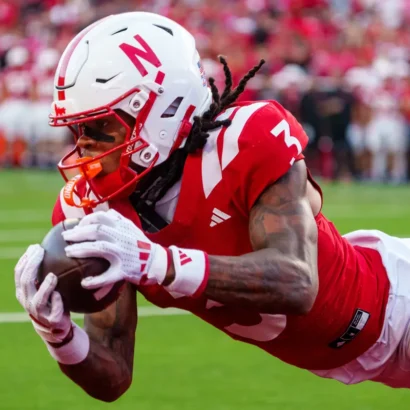
@DffFrankPanthro covers the top waiver options in C2C following Week 3 of college football. Find out where to place your FAAB in this FREE article!
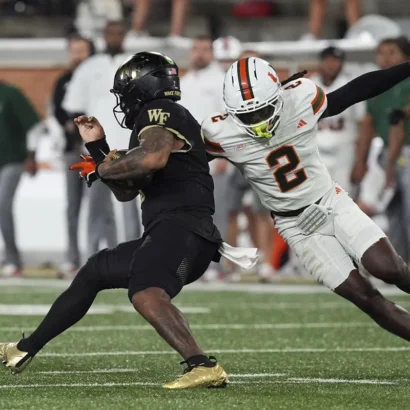
By Week 5, I feel like we finally have enough information to stop guessing so much. We have an idea of who is producing on a week-to-week basis and who is giving us a big game here and there. If you have been following my waiver pickups, this is the hard part. Now we have to figure out how to plug those productive players into our roster spots based on our league settings and matchups. This is where I can help with some of those tougher decisions.
Some players have earned enough trust that I am not sitting them just because the matchup gets tougher. Other players are going to depend much more on their role, opportunity, and who they are facing that week. That is what we are looking at in Week 5. As always, every C2C league is different. Your scoring, lineup requirements, and roster can change a close decision.
Let’s get into it.
Quarterbacks
Starts
Gio Lopez, Wake Forest vs. Stanford
I am not letting 1 bad week scare me away from Lopez. Through 4 games, he has thrown for 1,112 yards, 8 touchdowns, and only 1 interception. He is also averaging 9 yards per attempt, so he has not needed a crazy amount of passes every week to give us production.
Last week was his worst game of the season, and I know that can make us second-guess putting him back into our lineup. I am going the other way. Stanford has allowed at least 27 points in every game, and I trust what Lopez has shown us through 4 games more than I am worried about 1 bad Saturday.
Keelon Russell, Alabama at Mississippi State
Keelon Russell is starting to look like someone I can’t leave out of my lineup each week. He has thrown for 1,129 yards and 8 touchdowns while adding 168 rushing yards and 3 more touchdowns on the ground. What I like most is that he is not dependent on one part of the offense. If the passing production slows down, he can still get us points with his legs.
We are also starting to see him do it against better competition. That matters because we do not want to fall into the trap of trusting numbers that only came against easier opponents. Mississippi State also has enough offense to keep Alabama from shutting things down too early, which could help keep Russell involved and build up our points.
Sits
Byrum Brown, Auburn at Tennessee
Brown is always going to make this decision difficult because of what he can do with his legs. That rushing ability gives him a way to save a fantasy day even when the passing production is not there. The problem is the passing game has been too inconsistent for me.
Brown threw 3 interceptions against Baylor and has thrown 2 more since. He also finished with only 140 passing yards against Vanderbilt. Now he has to go on the road to Tennessee. The rushing upside is what makes me think about it, but I do not trust the passing side enough this week. Sometimes the rushing floor is not enough to make up for everything else we are worried about.
Isaac Wilson, Colorado vs. Texas Tech
Colorado is expected to turn to Wilson over Julian Lewis at quarterback. That makes Wilson interesting. It does not automatically make him someone we need to put into our lineup. We still have to see what this offense looks like with Wilson running it.
How much will Colorado use his legs? How aggressive will they let him be throwing the ball? Does the quarterback change actually make the offense better? Those are all questions we do not have answers to yet. I would rather watch Wilson’s first start and learn from it than put him into my lineup and hope we guessed correctly.
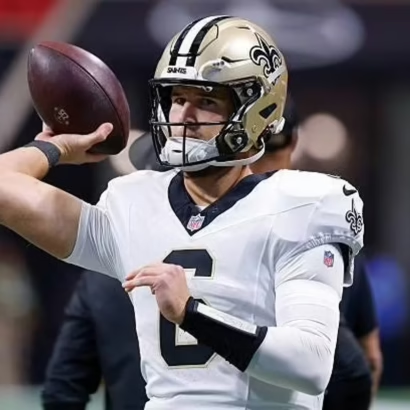
It is time for you to be real with your roster. Are you a top 4 team with a legit chance to win? Are you a middle-of-the-road team that has been hit with the injury bug? If not, you should be selling. Do not get stuck with aging dynasty assets if you are not a contender. With that, let’s dive right into my top four “buys” and “sells” from a dynasty
Buys
Tyler Shough (QB – NO)
Shough leads all starting quarterbacks in pass attempts. He anchors a fast-paced, pass-heavy New Orleans Saints offense.
Through the first three games of 2026, he ranks second in the entire NFL in passing yards (917) and boasts eight passing touchdowns.
Shough contributes valuable weekly points on the ground, he averages multiple rush attempts per week that raise his overall fantasy floor.
He plays against defenses like the Tampa Bay Buccaneers and Atlanta Falcons, with top targets like Chris Olave and returning Jordyn Tyson boosting his ceiling.
I would be trying to buy him for Bo Nix, Justin Herbert, De’Von Achane, Jayden Daniels, or Jaxson Dart.
Javonte Williams (RB – DAL)
He dominates the backfield touches in Dallas, leaving minimal work for backups like Malik Davis and Jaydon Blue.
He has already secured 169 rushing yards, 56 receiving yards, and 3 total touchdowns through the first three games of the 2026 season.
Playing alongside Dak Prescott and CeeDee Lamb, it prevents defenses from entirely stacking the box. They will be playing in a lot of shootouts, so there will always be opportunities for rushing touchdowns.
I would be trying to buy him for TreVeyon Henderson, Jaylen Waddle, Quinshon Judkins, or Jadarian Price.
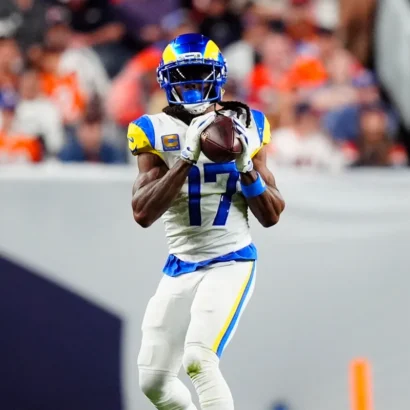
njuries continue to take their toll on fantasy players as De’Von Achane was lost for the season and Travis Etienne will miss extended time with a hamstring injury. But, that’s the game we play and it’s important to stay active and ready for anything. And that’s what this article is meant to help you with.
So, without further ado, here is Last Week In Fantasy.
Arizona Cardinals
If it wasn’t evident enough, Week 3 made it crystal clear. Michael Wilson is THE WR1 for the Cardinals, and his 17 targets in Week 3 were more than Harrison has combined for the season.
I’m buying Wilson, and I believe Arizona is a top 10 offense for the rest of the season.
Atlanta Falcons: In his first start of 2026, QB Michael Penix had more passing yards than Cooper Rush did in Weeks 1 and 2 combined and scored more points than the Falcons offense did in Weeks 1 and 2.
Penix is a buy for me and has a great supporting cast for fantasy.
Baltimore Ravens: Derrick Henry continues to do Derrick Henry things! He now has six touchdowns and is averaging two touchdowns per game, and the Ravens offense is averaging 30 PPG this season.
With injuries to De’Von Achane and Travis Etienne, Derrick Henry is a BUY High.
Buffalo Bills: James Cook “quietly” has back-to-back games of over 130 rushing yards and a touchdown. We’re still waiting on his targets to show up, but they’re coming.
James Cook and every other Bills player is a BUY.
Carolina Panthers: Tetairoa McMillan had his worst statistical game of the season, but he was on the field for 95% of the Panthers’ snaps. With Jalen Coker banged up, McMillan is about to get fed!
Buy McMillan and this Carolina offense that is third in pass attempts in the NFL.
Chicago Bears: It feels like so long ago when D’Andre Swift had his three-touchdown performance in Week 1, and since then he’s scored ZERO touchdowns! Although he does have 45 total touches since then.
Buy from any frustrated owner who is giving up on the Bears offense.
Cincinnati Bengals: Tee Higgins is averaging six or more targets in every game this season, and he’s scored 14 or more PPR points in back-to-back games. Joe Burrow has 30 or more pass attempts in every game so far, so the volume could get better.
Tee Higgins is a BUY, and I would try to buy now before his price goes up.
Cleveland Browns: Deshaun Watson and the Browns offense are starting to find a groove, but the RBs are still trying to find their way. Of the 8 red zone possessions for the Browns, Judkins has 7 touches. Judkins is averaging 17 touches per game and is the clear lead back.
Buy Quinshon’s volume and reap the rewards of a young, up-and-coming offense.
Dallas Cowboys: George Pickens has had a frustrating start to the season, but his targets, receptions, and yards have increased every week of the season.
The Dallas offense is humming, and Pickens, with everyone else, is a buy.
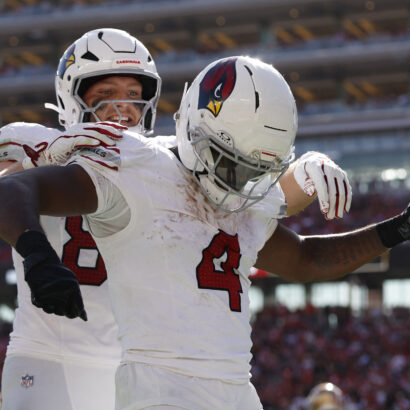
By the time Monday Night Football comes to a close, we will be officially 25 percent of the way through the fantasy football season. While I apologize for the morbid note to start the column, we’re starting to get a really good idea about the state of the NFL and, most importantly, the state of our Dynasty rosters. Let’s dive into the biggest storylines in Week 4.
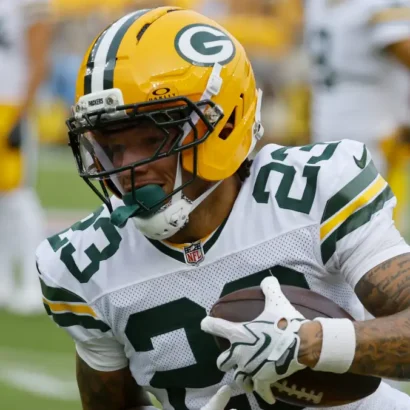
Skyy Moore – (WR – GB)
If you’ve played dynasty for a while, the name Skyy Moore might bring about unspeakable rage and frustration.
Drafted in the second round by the Chiefs in 2022, Moore was a mid-to-late first-round selection in most rookie drafts due to the allure of playing with Patrick Mahomes.
Well, Moore ended up being a complete bust in Kansas City, with tons of dropped passes and production that matched his out-of-place No. 24 jersey number — hideous.
Now in Green Bay, Moore still rocks a stupid number for a wide receiver, this time No. 23. But with Jayden Reed suffering a scary neck injury in Week 2 with no timetable for a return, Moore has an opportunity to get his career back on track as the slot man in the Packers’ offense.
Green Bay’s offensive line is downright atrocious, and this team feels like it could become this year’s version of the 2025 Arizona Cardinals — throwing a ton because they’re constantly trailing and can’t establish a ground game.
Last week, Moore saw seven targets, catching three for 31 yards. I expect him to see five or six opportunities per game with Reed sidelined. He also serves as Green Bay’s return man, so if your league awards points for return yardage, Moore becomes a little more valuable. He’s worth a stash now, to see if the role and volume stick.
Jalon Daniels – (QB – TB)
When the Buccaneers named Jalon Daniels as the backup quarterback before the season, it was cool to see them recognizing the talent of an undrafted rookie. The kid from Kansas played well enough in the preseason to make veteran Jake Browning expendable and earned the No. 2 job behind Baker Mayfield.
Little did they know that a month into the season, he’d be their starting quarterback for the foreseeable future.
That’s right. Daniels will be under center for the next few games, thanks to a dislocated thumb on Mayfield’s throwing hand. Early reports say he’ll be out at least three games, giving Daniels a chance to lead a team desperately seeking victory after an 0-3 start.
What makes Daniels such an intriguing player for fantasy is his legs. During his time with the Jayhawks, he rushed for more than 390 yards in a season three times. It’s that mobility that’s going to help him rack up fantasy points while he’s out on the field.
Managers in one-QB leagues don’t have to worry about picking Daniels up, but superflex managers should absolutely try to acquire him. With upcoming games against Green Bay, Dallas, Pittsburgh, and Carolina, Daniels is a high-upside dart throw you can start as a QB2 because of his rushing potential.
If you’ve been struggling with guys like Drake Maye or Cam Ward — or lost Jaxson Dart, Jayden Daniels, and Caleb Williams to injury — why not put this hyper-mobile signal-caller in your lineup and see if he produces?

In this series, @joshreedy5 spotlights the standout performances from the 2026 rookie class and highlights both promising and concerning trends. Let’s dive into how these rookies fared in Week 3.
5. Jaxon Smith-Njigba has been putting up historic target share numbers. But Brock Bowers said, “Not so fast”. Klint Kubiak installed the Seattle offense that turned JSN into a target funnel. Now he appears to be doing the same with Bowers.
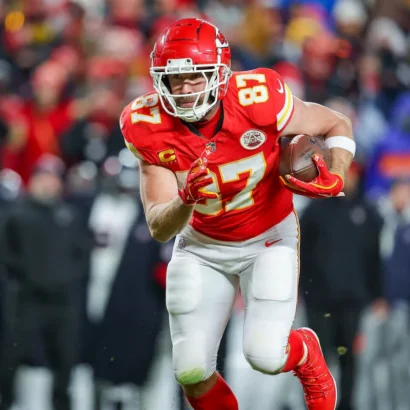
6. Travis Kelce seems to be rejuvenated by his off-season marriage to Taylor Swift. He is off to a great start, ranking 8th among all pass catchers in yards per route run.
7. In last week’s column, I highlighted these two players as buys with the statements below:
Ted Hurst: “Ted Hurst seems primed for a week 3 breakout. He has little to show for surface stats with just 5 receptions for 63 yards through two games. But he only trails Egbuka by 1 target for the team lead with 10. The Bucs go up against the 28th-ranked Vikings pass defense next week. Per Fantasy Points Data, he boasts an excellent 17.9% route win rate. He is getting open and getting targets. The chemistry with Mayfield is still developing. “
Marcus Mariota: That brings us to Marcus Mariota. If you are going to empty your FAAB and need a multi-week starter, I’d go with Mariota. In his 7 full starts in 2025, he averaged 17 fantasy points per game. “
Hurst had his best fantasy production of the young season with 11 fantasy points, while Mariota put up 20 of his own in an upset win over one of the best defenses in the NFL, Seattle.
8. Jeremiyah Love had the best game of his young career. He excelled in every metric I evaluated for my annual RB1 model, but his most exciting trait for fantasy was his receiving ability. I wrote in the RB1 model article.
“The most exciting aspect of his repertoire is his receiving acumen. Receiving, not rushing, is what makes a running back a perennial top fantasy asset. Think Christian McCaffrey, Alvin Kamara, Saquon Barkley, Austin Ekeler, and De’Von Achane. And boy, is Love a great receiving back. He may be the second-best slot receiver in this draft to Makai Lemon.
Love led all running backs in this class in yards per route run at 1.6, good for 10 points towards his overall model score. He also excelled in receiving yards and receptions per game. The receiving categories contributed 32 points towards his overall RB1 model score.”
Week 3 was the first game to really showcase his receiving prowess with 5 receptions for 19 yards and a TD.
