
Strategy Focused Content
Looking to secure the rookie 1.01 in your dynasty league? @force_fantasy gives you the full breakdown on how to tank and complete a rebuild.

Welcome to Week 5, which is one of my favorite weeks. Why? We now have four weeks of proof points and data to paint a picture of who a team is, and what players’ roles are becoming. It’s an opportunity to start forming conclusions based on this season rather than heavily relying on data from last year and the summer. That said, it’s shaped up as quite a strange main slate for Sunday. There aren’t many games that scream for points to be scored, and there also aren’t many QB spots that stand out. However, I do see some hidden opportunity in some of the matchups, especially those with smaller totals that some might overlook for DFS. There is also a higher point total game that I will be building my own lineups around.
My last name is Hammer. I’m not going to pretend this article’s name is an accident. This isn’t a weekly column, because most weeks I won’t have enough to say. I write these when a slate actually lines up – when the numbers, the narratives, the beat reports from practice, the under-the-radar role changes, and the injury report all point in the same direction towards players. Week 1 is one of those weeks. Prices were locked in earlier this summer, and a lot of what we’re betting on now is how guys finished the 2025 season, plus whether camp backed it up. That’s a real edge if you’re paying attention. I’ve got five names this week. They aren’t on the same team, and they don’t have the same role. What they share is that the close of 2025 still looks better than their price, their summer backed up what we saw last year, and Sunday’s matchup gives them a reason to eat. That’s the swing. Let’s get into it.

We’ve all heard this fantasy advice before: target running backs on good teams, fade the ones on bad offenses. A prime example this year is De’Von Achane, whose Underdog ADP sits at RB11 overall. This is four spots below Saquon Barkley, who averaged nearly six fewer PPR points per game than him in 2025. The reason? Achane plays for a team that’s projected to win 4.5 games on most major sportsbooks.
Logic tells us that winning teams run more late in games, see more red-zone trips, and score more points. But how much is team success actually correlated to RB production in fantasy? To find out, I had Claude pull ten full seasons of NFL data (2016–2025) from nflverse to find out. Stick around to see what I learned; the answer may surprise you!
The variables
To measure “team success” for this exercise, I’m using actual point differential (average scoring margin per game across a full season) and Vegas-implied point differential (the average margin each team was expected to win or lose by, based on the closing spread). The Vegas line matters specifically for fantasy draft strategy, assuming there’s some meaningful correlation between team success and RB production.
On the running back side, I’m looking at PPR points per game, and splitting it three ways:
RB1: the leading PPR scorer in each team’s backfield that season (minimum 8 games played)
RB2 / RB3: the second- and third-leading scorers (minimum 4 games played)
The whole RB room: every running back on the roster combined (to capture how much fantasy output a team’s backfield provided, regardless of who got the touches)
That gives us 320 team-seasons (32 teams × 10 years) built from nflverse’s official play-by-play, schedule, and weekly stat data. Now that we have the setup, let’s check out the findings.
To access the rest of this article, login or become a member. 
Welcome back for Part 2 of my “Roster Clogger” series! In this article, we’ll be discussing some hard-hitting questions that are worth asking to identify those roster cloggers on your dynasty roster. Then, we’ll finish things up with some warning signs by position.
If you missed Part 1, you can check that article out here. Let’s dive back in.
The Roster Clogger Test
The best way to identify roster cloggers is to stop asking whether a player has any possible value and start asking sharper questions.
Almost every player has some possible value. That standard is too low.
Instead, ask these questions.
Can I Start This Player Confidently?
This does not mean, “Could I technically put him in my lineup?”
You can start almost anyone in a deep enough league.
The real question is whether you would feel good about it. If injuries hit and you need points, can this player realistically help you? Does he have a stable role? Does he have a path to volume? Can he get you something more than a desperation floor?
If the answer is no, he may not be actual depth.
He may just be a name on your bench.
Can I Trade Him for Anything Meaningful?
This is where dynasty managers need to be honest.
If no one in your league wants the player, his value might only exist in your head.
That does not mean you should blindly let your league determine every player’s worth. Dynasty managers can be early on players. Sometimes your league is wrong. Sometimes you should hold a player before the value shows up publicly.
But if a player has no production, no market, no clear role, and no rising value, you need a good reason to keep holding.
“Someone might want him someday” is not enough.
To access the rest of this article, login or become a member.

very dynasty manager has that guy.
You won’t start him. You cannot trade him. You don’t really want to cut him. But every time you look at your roster, you convince yourself there is still something there.
Maybe he is young. Maybe he was a good prospect. Maybe he is one injury away from a major role. Maybe he had a few usable weeks two seasons ago (where you probably still regret sitting him). Maybe you remember liking him during rookie draft season and have not fully accepted that the bet is probably dead.
That’s not depth.
That’s what is called a roster clogger.
Roster cloggers are not always bad players. That is what makes them dangerous. The obvious bad players are easy to cut. The real problem is the player who gives you just enough hope to keep holding, but not enough production, trade value, or upside to help your dynasty team.
In dynasty, roster spots are assets. Every bench spot you use on a dead-end player is a bench spot you cannot use on a backup running back with real contingent upside, a young receiver gaining steam, a tight end earning routes, or a waiver player whose value could change quickly.
The question is not, “Can I make a case for this player?”
You can make a case for almost anyone in July.
The better question is this: is this player helping me win, helping me rebuild, or gaining value?
If the answer is no, he might be quietly killing your roster and therefore your season.
What Is a Roster Clogger?
A roster clogger is not simply a bad player. A bad player is easy to drop. A true roster clogger is a threat because he gives you reasons to keep holding.
He might have youth on his side.
He might have draft capital invested in him.
He might have flashed once.
He might be tied to a good offense.
He might be one injury away.
He might be a tight end who “just needs time.”
There is always a story.
That’s the trap.
To access the rest of this article, login or become a member.
Over the past couple of years, you’ve probably heard NFL and fantasy analysts discussing a shift in the offensive meta, specifically the rise of 12 and 13-personnel packages. But what does it actually mean, and does it have any real impact on your dynasty teams?
The short answer is yes. In today’s article, I’ll break down the “why” behind it, but first, let’s make sure we’re all speaking the same language.
If you’re unfamiliar, here’s what it means when someone refers to “X-personnel”:
11 personnel — 1 RB, 1 TE, 3 WR
12 personnel — 1 RB, 2 TE, 2 WR
13 personnel — 1 RB, 3 TE, 1 WR
21 personnel — 2 RB, 1 TE, 2 WR
22 personnel — 2 RB, 2 TE, 1 WR
These five groupings make up the majority of NFL play-calling year over year, and the balance between them is shifting in ways that matter for how you build your roster and prioritize certain fantasy players.
For this article, I pulled NFL leaguewide data dating back to 2022 from sumersports.com, and have confirmed that TE-heavy packages are steadily increasing, while 11 personnel is decreasing across the league.
Below, you’ll see a graph breaking down how the five most popular formations have trended from 2022 to 2025:
To access the rest of this article, login or become a member.

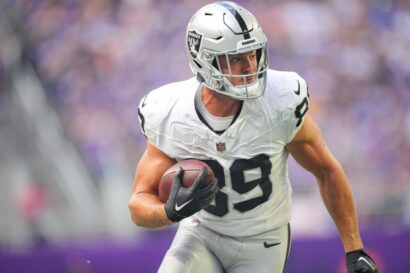
Continuing my Redraft series, I’m now going to look at the average draft position (ADP) for tight ends in 2025. My goal is to identify the ideal ADP windows for targeting the TE position versus other positions.
I looked at the top 96 players in 2025, and 10 tight ends were taken in that range. I looked to see how the player did based on their draft position. I am using Sleepers’ ADP for this exercise.
To access the rest of this article, login or become a member.
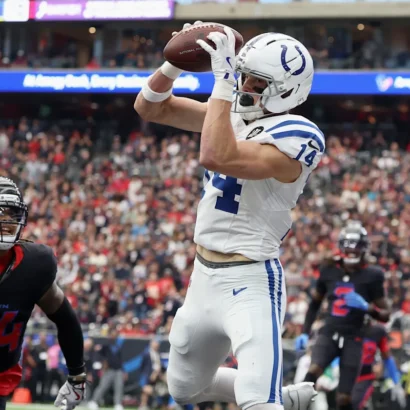
Continuing my Redraft series, I’m now going to look at the average draft position (ADP) for wide receivers in 2025. My goal for this is to identify the ideal ADP windows for targeting the RB position versus other positions.
I looked at the top 96 players in 2025, and 43 wide receivers were taken in that range. I looked to see how the player did based on their draft position. I am using sleepers’ ADP (average draft positions).
To access the rest of this article, login or become a member.
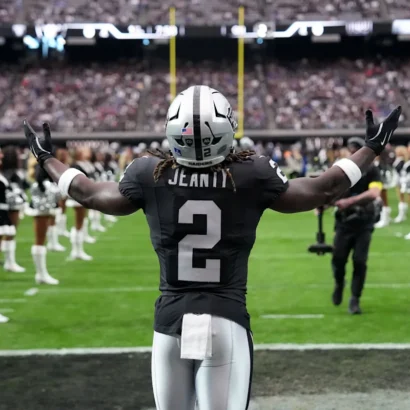
Continuing my Redraft series, I’m now going to look at the average draft position (ADP) for running backs in 2025. My goal is to identify the ideal ADP windows for targeting the RB position versus other positions.
I looked at the top 96 players in 2025, and 32 running backs were taken in that range. I looked to see how the player did based on their draft position. I am using Sleepers’ ADP for this exercise.
To access the rest of this article, login or become a member.
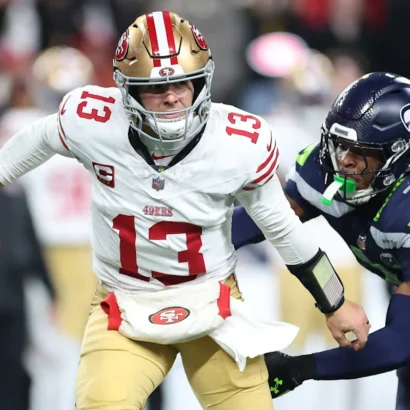
With today’s article, I’m going to look at the average draft position (ADP) of quarterbacks for 1QB leagues in 2025. My goal is to find the ideal ADP windows to target the quarterback position in this particular format.
I looked at the top 96 overall players in 2025, and 14 quarterbacks were taken on average in the top 96. I looked to see how each player did based on their draft position. I am using Sleepers’ ADP for this exercise.
To access the rest of this article, login or become a member.
In this article, I am going to break down the Scott Fish Bowl scoring and try to identify who we should target in the early rounds and where the value picks are. First, I’ll look at the past two seasons to identify where the value is. It will be hard to know for sure until we know the ADP (average draft position).
To access the rest of this article, login or become a member.
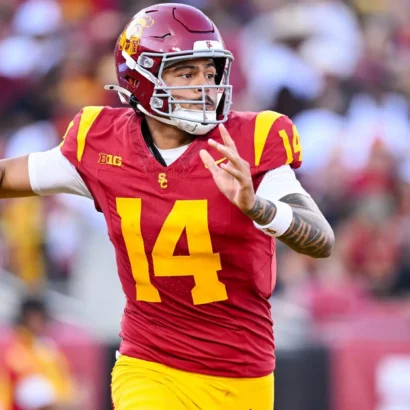
There’s a myth in Campus 2 Canton fantasy football that you need to know every 5-Star recruit, every spring camp battle, and the backup slot receiver at Texas Tech to compete.
You don’t.
You just need to avoid lighting your picks on fire.
If you’re coming from Dynasty Fantasy Football, the hardest part of a Campus 2 Canton startup isn’t evaluating NFL players. It’s staring at a draft board full of college names you’ve never heard of while the guy drafting next to you claims he watched an Oregon State spring practice livestream in April.
Relax. Most of these players are lottery tickets anyway.
The reality is that campus drafts are less about being perfect and more about avoiding catastrophic mistakes. You’re trying to stack probabilities in your favor while everyone else is chasing hype videos and recruiting rankings.
Here’s the approach I use when navigating a campus draft with limited college player knowledge.
To access the rest of this article, login or become a member.
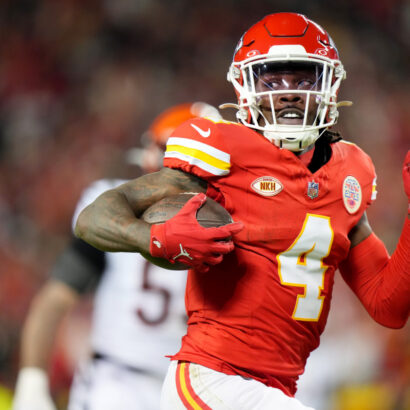
This is one of my favorite series to write every offseason. If you’re new here, the concept is simple: even though redraft and dynasty are two completely different games, there’s still a ton of value in holding them up side by side. If a player is being drafted heavily in redraft but is dirt cheap in dynasty, that’s the market telling you something. And if a veteran player is propped up in dynasty but the redraft market has moved on, that’s your cue to sell while you still can.
Underdog ADP is about as sharp as it gets in the fantasy space, since every contest has real money on the line, hundreds of thousands of teams are drafted each year, and the ADP updates constantly. When that many people are putting dollars behind their opinions, you pay attention. So while dynasty managers are thinking three years down the road, we can use that redraft signal to find guys who are undervalued right now and identify the ones you should already be moving while their value is still inflated
To access the rest of this article, login or become a member.

Most people join fantasy football leagues for one reason. They want to win. Everybody wants that double championship at the end of the season. A lot of people think winning comes down to being the best evaluator or grinding film nonstop. That is not really my style. My edge comes from roster building, understanding value, staying active, and using the right tools to stay ahead of the league.
C2C startups are their own beast. You are drafting anywhere from 40 to 45 rounds, so it pays to have a plan. A good rule of thumb starts with understanding where value comes from in each part of the draft. That is where Dynasty Football Factory comes in with our Devy rankings from Jim and Evan, along with my C2C rankings. In rounds 1 to 10, you want to focus on high-level devy prospects who can also produce right away. These are the players who can help you now on the college side and still carry future NFL value. They are studs now and studs later.
In rounds 11 to 25, you can start shifting toward pure college fantasy producers. These are the players who might not be big NFL names, but they can win you college matchups in the here and now. That high-volume Group of Five wide receiver or that dual-threat quarterback who might not have the size for the pros can be gold when you are trying to fill out your weekly lineup. Then, once you get to round 26 and beyond, that is where you start swinging for upside. Freshmen, sophomores, or under-the-radar talents who could take the next step. Maybe they do not help you much right away, but in a year or two, they could become pieces that help feed your NFL roster.
To access the rest of this article, login or become a member.
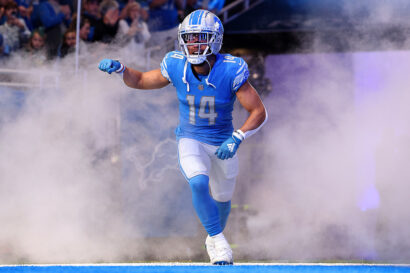
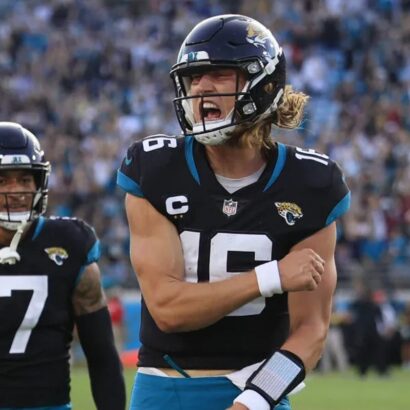
Today, I’ll be walking you through my most recent dynasty startup draft that just wrapped up. If you know me or listen to the Always Be Scouting podcast, you know I’m always in a draft somewhere. This was my first dynasty startup of the year, and I wanted to break it down and walk through how I built this roster.
This is a 1QB, 16-team league, and the rookie draft is separate. The scoring setup matters a lot. Tight ends get a boost with 1.5 PPR, and first down points; wide receivers get full PPR, and running backs only get half. Passing touchdowns are also worth 7 points. So going in, I already knew wide receiver was going to be a big focus for me.
Draft Strategy / Team Build
I didn’t go in locked into one plan, but I knew I wanted to build around wide receivers and keep long-term value in mind. At the same time, I didn’t want to punt the season. I wanted a team that could compete now.
Quarterbacks
- Trevor Lawrence (5.7)
- Shedeur Sanders (13.7)
- Riley Leonard (17.7)
- Kenny Pickett (20.10)
In a 1QB league, I didn’t feel the need to force the position early. Lawrence ended up being my QB1, and I felt good getting him there. Lawrence had his best year under Liam Coen last year. I feel like he’s finally starting to live up to that #1 overall status from 2021. With passing touchdowns worth 7 points, that’s a solid value. After that, I waited and added depth. Sanders is more of a long-term bet, and Leonard and Pickett are just depth pieces.
Running Backs
- Ashton Jeanty (1.7)
- TreVeyon Henderson (3.7)
- Kyle Monangai (6.10)
- Kenneth Gainwell (8.10)
- Damien Martinez (16.10)
- Malik Davis (19.7)
- Xavier Scott (21.7)
I took Jeanty early to lock in a top option. That gave me a foundation at running back. Under new HC Kubiak, Jeanty is poised for a breakout year, especially with the Raiders addressing their QB situation with the Cousins signing, possibly drafting Mendoza with the #1 overall pick, and improving the O-line in the 2026 draft.
Henderson brings upside, but there’s some risk there. I think in 2026, we’ll see more of him in the backfield after coming off one of the most productive rookie seasons in a Josh McDaniels offense.
Kyle Monangai had an impressive rookie season and is pushing for more opportunities in 2026.
Make no mistake, Gainwell has shown he can still produce as part of a one-two punch. Now heading to Tampa Bay, he should continue to fill that passing-down role even with Bucky Irving there.
After that, I didn’t chase the position too hard. With only .5 PPR for RBs, I was fine adding depth and upside later instead of forcing picks.
Wide Receivers
To access the rest of this article, login or become a member.
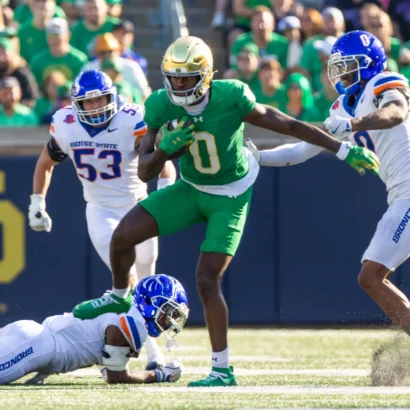
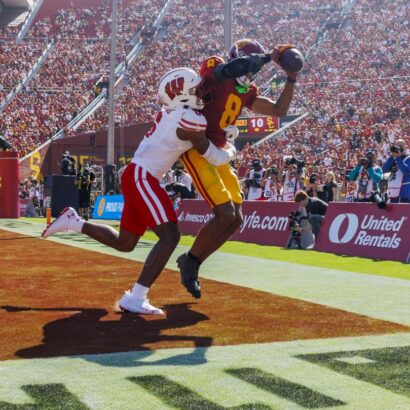
Gain an edge in dynasty with @force_fantasy’s WR1 model. We reveal the data-driven rankings for WR 11-15 in the 2026 rookie class.

Welcome back for another edition of Hit Rate by Rounds. In today’s article, we’ll be focusing on the running back position. The goal of this article is to see whether draft capital has become a stronger predictor of fantasy production for running backs over the past 14 seasons. I split the data into the first seven years and the last seven years, but I did not include 2025 because RBs typically take a couple of years to produce. Adding rookies to the equation would skew the numbers too much in favor of the older group. The charts below show the hit rate for running backs drafted in each round (1–7), measuring what percentage went on to post at least one Top-12, Top-24, or Top-36 fantasy season. This gives us a sense of how likely a back is to deliver meaningful fantasy value based on draft capital. Looking at Round 1, the same number of running backs have been drafted in Round 1 in both groups, but the success rates have decreased. It has become harder to identify elite first-round running backs in recent years. Rd 1 RB Total Top 12 Top 24 Top 36 2011 – 2017 9 = 8/9 = 89% = 8/9 = 89% = 8/9 = 89% 2018 – 2024 9 = 6/9 = 67% = 7/9 = 78% = 8/9 = 89% 2011 – 2024 18 = 14/18 = 78% = 15/18 = 83% = 16/18 = 89% Looking at Round 2, fewer running backs have been drafted in Round 2 recently, and the hit rates […]
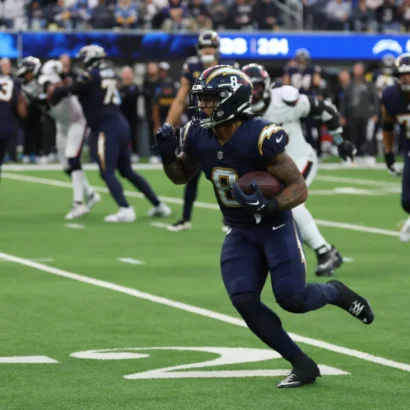
In Dynasty Fantasy Football startups, the roadmap usually starts to crystallize around Round 9. By that point, I’ve generally established the direction of my roster and identified the players I want as long-term building blocks. It’s also the stage of most drafts where managers begin wheeling and dealing to refine their strategy. For this particular mock, however, we kept things strictly business. The DFF crew came together for a pre–free agency startup draft and ran it without trades, letting the board fall naturally. Below are some of my favorite selections from this team build.
Dynasty Startup Season is often reminiscent of beginning a new romantic relationship. In many ways, you’ve learned valuable lessons about what works and, more importantly, what doesn’t. You promise yourself you won’t repeat old mistakes. You tell yourself you’ll stay patient, trust your board, and not reach for the shiny new thing just because everyone else is swooning. And yet, when you’re finally on the clock, emotions tend to creep back in.

Dynasty startup drafts are where leagues are won or lost. Not because of flashy picks. Not because you landed a superstar quarterback. They’re won through positional leverage — understanding where real weekly edges exist and where managers are paying for name recognition instead of production. After reviewing five Dynasty startup drafts and comparing positional scoring, one conclusion became impossible to ignore: Quarterbacks are being massively overdrafted in early rounds.
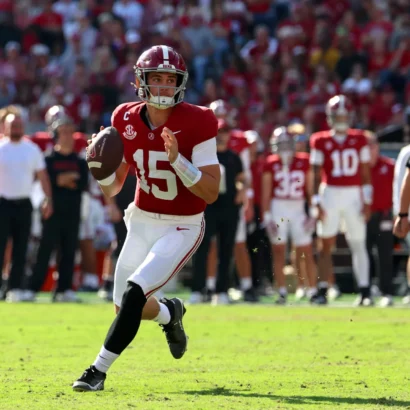
My goals for this Quarterback model are to help us win more championships and have fewer busts in our rookie drafts for Dynasty football. Some players get hyped up with the Senior Bowl and the NFL Combine each year, but they are landmines, and I want to help you avoid them if possible. Quarterbacks should always be one of the first pieces of your team, but you should always take the best player available in your rookie drafts and trade for needs.

@badgrlandcrypto discusses the best times to buy (and sell) rookie draft capital in your Dynasty leagues, to ensure you are maximizing value.
Don’t sabotage your dynasty league before it even begins; @badgrlandcrypto breaks down the golden rules every new manager must follow during startup season. Master the art of value-based drafting with this ~FREE~ article from Dynasty Football Factory.
