
Dynasty Analysis
This weekend, we wrapped up my final dynasty rookie draft of the offseason (outside of my home dynasty league, which drafts during the preseason). With rookies now rostered in 17 of my 18 leagues, I thought it was a good time to discuss my top-owned dynasty rookies.
Using the “exposure” feature in the Dynasty Control Room, I’m able to see my ownership percentage of every single fantasy player. Being a “portfolio manager” in 18 leagues, this feature is especially useful, showing me who I need to invest more heavily in, as well as the guys I should look to lower my exposure on. The tool also shows you which players DFF expert consensus is above and below market on, to give you an idea of whether you’re investing in the right players.
With that, let’s take a look at my top 5 most-owned rookies right now.
To access the rest of this article, login or become a member. 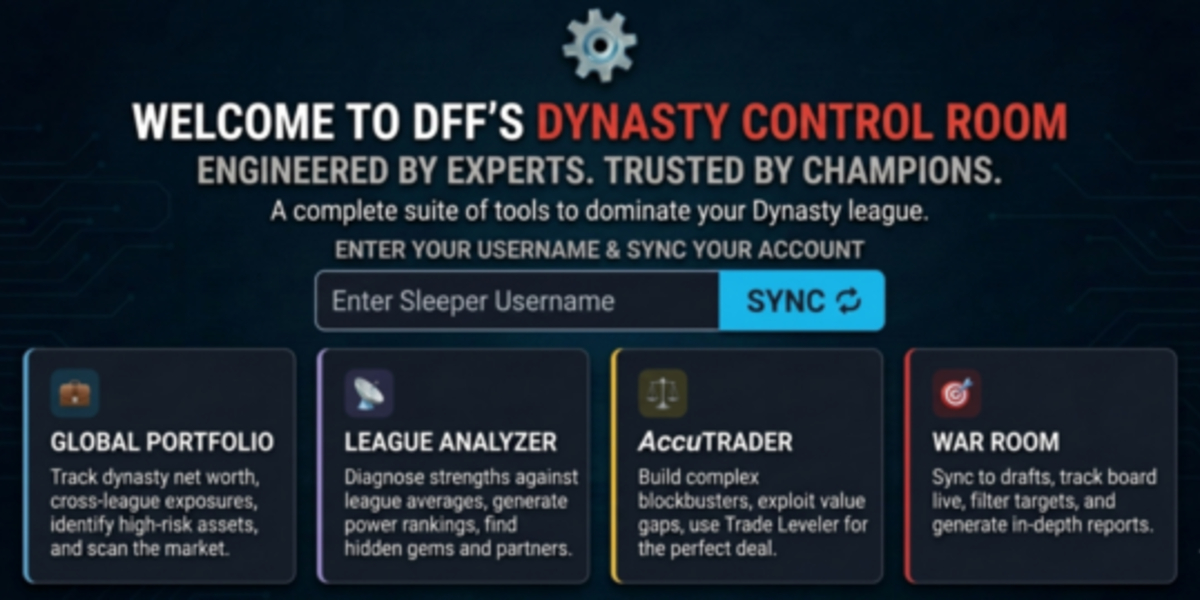
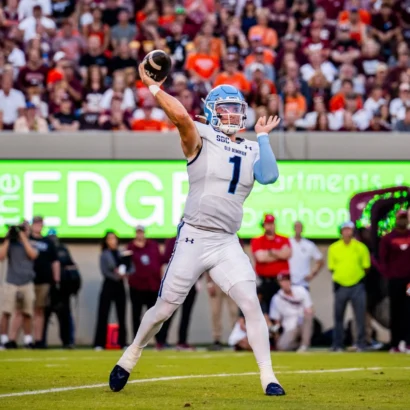
In Campus 2 Canton leagues, people constantly chase the next five-star quarterback before he ever takes a meaningful snap. But some of the best C2C values come from a different path entirely. They come from productive quarterbacks stepping into bigger situations before the market fully adjusts. That’s exactly why Colton Joseph should be one of the biggest quarterback breakout targets in C2C heading into 2026. And to be clear: This is primarily a C2C production bet, not necessarily an NFL projection bet.
Right now, Joseph does not profile as a future locked-in NFL franchise quarterback. But honestly? That barely matters in Campus 2 Canton. Fantasy points matter. Weekly ceiling matters. Rushing production matters. And Joseph massively checks those boxes.
To access the rest of this article, login or become a member.

Most dynasty managers spend two or three months trying to learn an incoming rookie class.
They binge prospect videos.
They consume rankings.
They memorize combine numbers.
They suddenly convince themselves they understand hand usage, route nuance, and footwork because they watched a three-minute highlight clip on Twitter.
Meanwhile, Campus-to-Canton managers have already been living with these players for years.
That’s the hidden edge of C2C.
It’s not just another fantasy football format.
It’s an investment in every dynasty league you already play.
To access the rest of this article, login or become a member.

The goal of this article is to determine the makeup of an elite fantasy football wide receiver. I am looking for wide receivers who average more than 17+ PPR a game, which is about the top 8 each year.
Since 2010, we have had 32 wide receivers with multiple seasons of 17+ PPR. These quarterbacks have accounted for 111 of 138 seasons since 2010. We have had 27 wide receivers only do it once so far. Some of those guys that are still playing and could join the list of 32 are:
To access the rest of this article, login or become a member.
The goal of this article is to find what the makeup of an elite fantasy football quarterback is. I am looking for quarterbacks who score 20+ PPR a game, which is about the top 6 each year.
Since 2010, we have had 17 quarterbacks with multiple seasons of 20+ PPR. These quarterbacks make up 71/80 seasons since 2010. We have had 9 quarterbacks only do it once so far. Some of those guys that are still playing and could join the list of 17 are: Drake Maye, Jayden Daniels, and Baker Mayfield.
Now, the list of 17 quarterbacks who have been elite since 2010.
To access the rest of this article, login or become a member.

In this episode of Always Be Scouting, @DffFrankPanthro and producer Tommy D hop into a three-round dynasty rookie mock draft and talk player values.
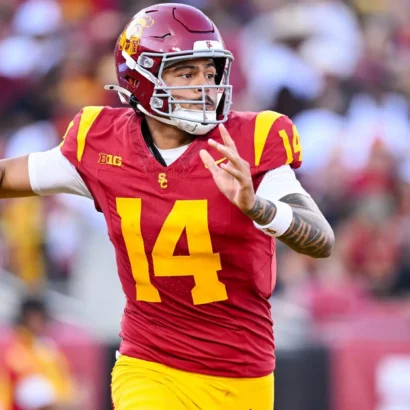
There’s a myth in Campus 2 Canton fantasy football that you need to know every 5-Star recruit, every spring camp battle, and the backup slot receiver at Texas Tech to compete.
You don’t.
You just need to avoid lighting your picks on fire.
If you’re coming from Dynasty Fantasy Football, the hardest part of a Campus 2 Canton startup isn’t evaluating NFL players. It’s staring at a draft board full of college names you’ve never heard of while the guy drafting next to you claims he watched an Oregon State spring practice livestream in April.
Relax. Most of these players are lottery tickets anyway.
The reality is that campus drafts are less about being perfect and more about avoiding catastrophic mistakes. You’re trying to stack probabilities in your favor while everyone else is chasing hype videos and recruiting rankings.
Here’s the approach I use when navigating a campus draft with limited college player knowledge.
To access the rest of this article, login or become a member.

*To gauge market value, positional rankings in this article were pulled from FantasyPros’ Expert Consensus Rankings (ECR)*
NFC North
Chicago Bears – Rome Odunze (WR25)
Everyone seems to have forgotten how electric Rome Odunze was in the Bears’ first four games last season. He had four top-20 finishes and averaged 19.9 fantasy points per game during that span. Sadly, his season was later derailed by a foot sprain, and he never looked like quite the same player after that.
Hot finishes from Luther Burden and Colston Loveland to end the 2025 season have created a nice buy window for Odunze. Let’s not forget, this is a young player (23) who was a top-10 draft pick just two years ago. With D.J. Moore now in Buffalo, a healthy Odunze has a chance to become Caleb Williams’ top target earner going forward.
To access the rest of this article, login or become a member.

This is one of my favorite series to write every offseason. If you’re new here, the concept is simple: even though redraft and dynasty are two completely different games, there’s still a ton of value in holding them up side by side. If a player is being drafted heavily in redraft but is dirt cheap in dynasty, that’s the market telling you something. And if a veteran player is propped up in dynasty but the redraft market has moved on, that’s your cue to sell while you still can.
Underdog ADP is about as sharp as it gets in the fantasy space, since every contest has real money on the line, hundreds of thousands of teams are drafted each year, and the ADP updates constantly. When that many people are putting dollars behind their opinions, you pay attention. So while dynasty managers are thinking three years down the road, we can use that redraft signal to find guys who are undervalued right now and identify the ones you should already be moving while their value is still inflated
To access the rest of this article, login or become a member.
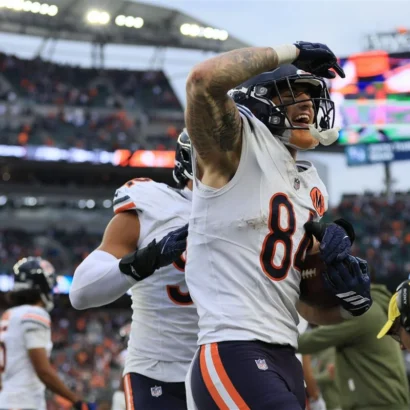
In today’s article, I’m breaking down my most recent dynasty startup draft, covering everything from my draft strategy to player values and roster construction. The goal is to leave you with a few ideas you can take into your own startup drafts this offseason. In this particular draft, I was able to construct a team I believe can compete in Year 1 while being built for long-term dominance. With the help of the DFF Dynasty Control Room, I was able to maximize value by reviewing consensus big boards and checking “top players available” with every pick. According to DFF consensus, it paid off, as I finished with the best draft class in the league.
To access the rest of this article, login or become a member.
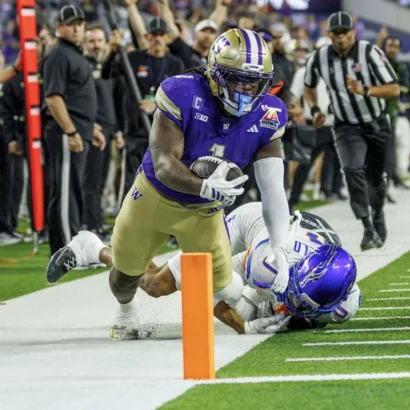
In this week’s episode of Always Be Scouting, @DffFrankPanthro and @John_mancuso5 bring on DFF analysts @jim_DFF and @Evan_Kerr_ to break down the Dynasty Control Room, debate some Devy and C2C rankings, and rapid-fire a rookie mock draft.
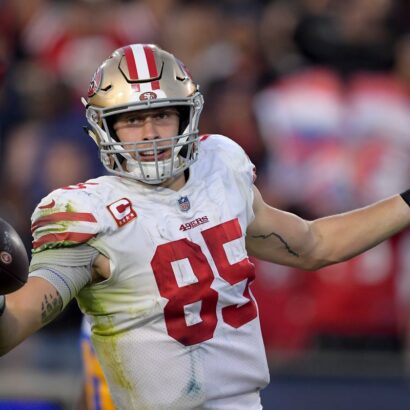
@joshreedy5 takes a look at some historical data to try and predict who the top tight ends will be for fantasy purposes in 2026.
To access the rest of this article, login or become a member.
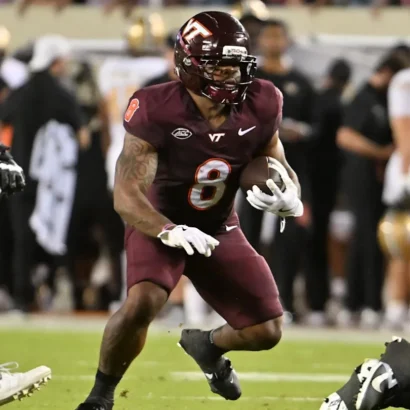
After years of proven success with my WR1 Analytical Model outperforming NFL Draft Capital at predicting future fantasy success of rookie wide receiver prospects, I unveiled the RB1 Analytical Model last year. Similar to my long-running WR1 model, which you can find here, this RB1 model was developed using a recipe of the most predictive advanced college statistics that prior NFL fantasy superstars exhibited.
The goal of these analytical models is to outperform draft capital, as it should. After all, fantasy managers are trying to accumulate the most fantasy points. NFL teams are trying to win football games. For example, in 2024, Bucky Irving and Tyrone Tracy were drafted 6th and 12th in the NFL draft among running backs. The model ranked them 4th and 6th, respectively.
You can find last year’s 2025 RB1 post-draft published model here. Our model was largely in line with draft capital, with 7 of the first 8 players selected in the NFL draft also in the model’s top 7. A big outlier came a little later. Our model ranked Jacory Croskey-Merritt 11th overall, despite the NFL drafting him 26th among all running backs.
Now on to the 2026 class.
To access the rest of this article, login or become a member.

Most people join fantasy football leagues for one reason. They want to win. Everybody wants that double championship at the end of the season. A lot of people think winning comes down to being the best evaluator or grinding film nonstop. That is not really my style. My edge comes from roster building, understanding value, staying active, and using the right tools to stay ahead of the league.
C2C startups are their own beast. You are drafting anywhere from 40 to 45 rounds, so it pays to have a plan. A good rule of thumb starts with understanding where value comes from in each part of the draft. That is where Dynasty Football Factory comes in with our Devy rankings from Jim and Evan, along with my C2C rankings. In rounds 1 to 10, you want to focus on high-level devy prospects who can also produce right away. These are the players who can help you now on the college side and still carry future NFL value. They are studs now and studs later.
In rounds 11 to 25, you can start shifting toward pure college fantasy producers. These are the players who might not be big NFL names, but they can win you college matchups in the here and now. That high-volume Group of Five wide receiver or that dual-threat quarterback who might not have the size for the pros can be gold when you are trying to fill out your weekly lineup. Then, once you get to round 26 and beyond, that is where you start swinging for upside. Freshmen, sophomores, or under-the-radar talents who could take the next step. Maybe they do not help you much right away, but in a year or two, they could become pieces that help feed your NFL roster.
To access the rest of this article, login or become a member.
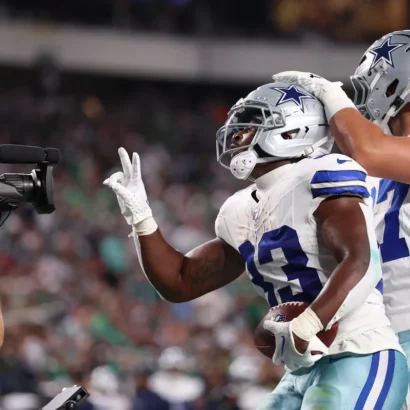
@joshreedy5 dives into some historical date and predictive RB analytics to predict the Top 12 RBs in fantasy football for 2026.
In this week’s episode of Always Be Scouting, @DffFrankPanthro and @John_mancuso5 cover mailbag questions and give their draft grades and opinions for each NFL team.
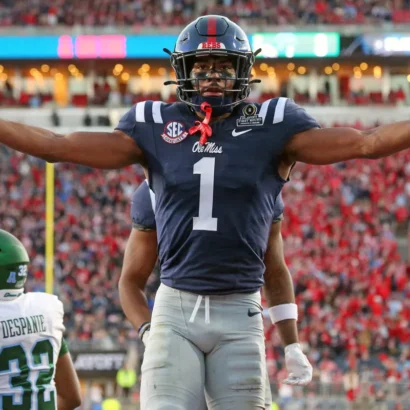
The Prospect Analytical Model Rankings are one of our members’ favorite series each year at Dynasty Football Factory. Years of refining and enhancing the models to accurately predict future fantasy value have brought us to today.
This article covers the final post-NFL Draft analytical model rankings for the wide receiver position. These WR1 model rankings will be your ultimate guide to predicting which prospects will produce the most fantasy points in their NFL career.
You can find the running back RB1 model here.
For those new to the WR1 rating, it is a proprietary formula I developed in 2019 that provides a data-driven forecast of future fantasy production for incoming rookie wide receivers. There are many advanced metrics available today; we at DFF know it can be difficult to determine which ones matter and how much each matters. The WR1 model distills all that hard work into a single, easy-to-understand number. The model evaluates rookies across 13 of the most predictive metrics and combines their individual metric scores into a total WR1 rating. It was a pioneer in the fantasy analysis industry, being the first to incorporate a film-grade into the model. The goal is to provide an easy-to-use score for those who don’t want to spend hundreds of hours dissecting different metrics. Based on the prospect’s model score, I provide their probability of achieving at least one top-24 NFL Fantasy Points Per Game Season, using historical prospects with similar score ranges.
To access the rest of this article, login or become a member.
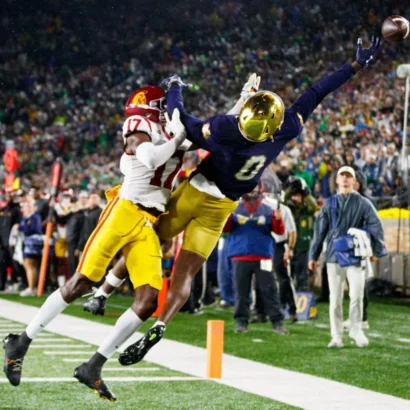
In this episode of Always Be Scouting, @DffFrankPanthro and @Devy_Luigi of prodraftscouting.com discuss the 2026 rookie draft class and hop into a 3-Round Dynasty Rookie Mock draft.
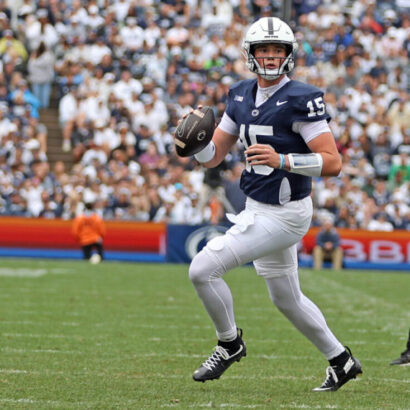
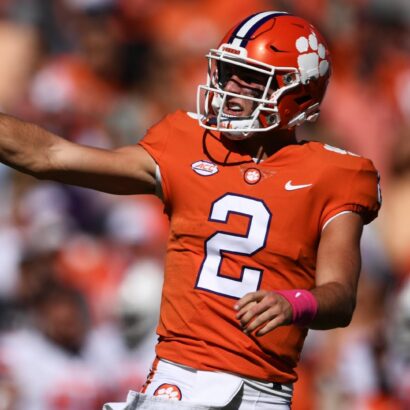
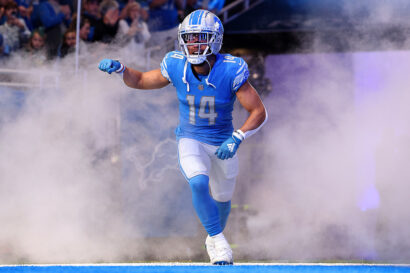
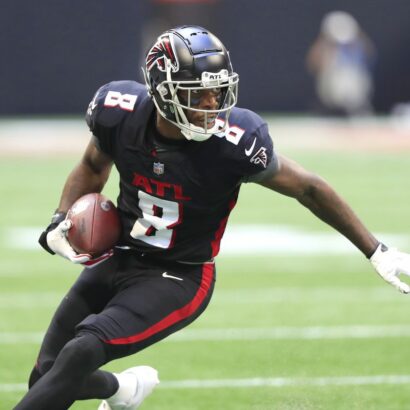
I’m bananas for Burden. This is about the area I like to start swinging for upside, and Luther Burden has it in droves. He finished his rookie year on a strong note and ended up with 652 receiving yards and two scores on 47 receptions. But it’s the underlying metrics that get me all hot and bothered: WR2 in target separation (2.62), WR3 in yards per route run (2.79), and WR4 in QB Rating per target (123.1). With D.J. Moore now in Buffalo, Burden is set to take on a larger role in Ben Johnson’s offense going into Year 2.
Fade: Quinshon Judkins (RB – CLE)
There’s a lot to like about Quinshon Judkins; I just wish he wasn’t in such a bad situation and coming off serious leg injuries. He broke his fibula and dislocated his ankle in his right leg late in December. That’s a tough thing to come back from, even at 22 years old. He’ll be fine eventually, but even before that, he only averaged 3.6 yards per carry behind a piss poor Cleveland offensive line. His 12.1 fantasy points per game were only good for RB25. Maybe in Round 6 or 7, I can talk myself into it. But in the fifth round, I want a rock-solid back I can feel good about. I don’t get that feeling with Judkins.
To access the rest of this article, login or become a member.
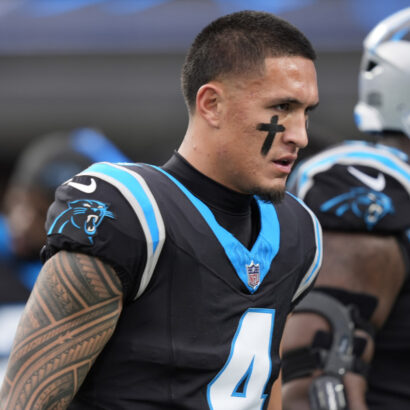
Fresh off winning Offensive Player of the Year after a brilliant 2025 campaign, Jaxon Smith-Njigba is the perfect cornerstone to build your dynasty team around. He only recently turned 24 years old and has been as durable as they come, never missing a game in his three-year career thus far. With back-to-back seasons of over 100 catches, JSN is the focal point of Seattle’s offense and should continue to be for years to come. He’s an easy click in Round 1 if I have the chance to draft him.
Fade: Joe Burrow (QB – CIN)
Older than you might think, Joe Burrow will turn 30 before the 2026 season concludes. And while he’s not an immobile statue in the pocket, he really doesn’t add much fantasy production with his legs. For him to pay off first round draft capital, Joe Brrr needs to have extreme outlier seasons in the passing department. He’s capable of it — like in 2024 when he threw for 4,913 yards and 43 scores — but he’s also missed substantial time in three of his six pro seasons and remains an injury risk.
To access the rest of this article, login or become a member.

I am trying to help us find ways to avoid the bust at quarterback, especially in rookie drafts. This is the cheapest most of these quarterbacks will ever be, but if you miss on one and spend a first-round pick on them, it could set you back even further.
I am looking at quarterbacks drafted in the first round of the NFL Draft and breaking them down into 4 tiers from 2015 to 2025.
I call the 1st tier the “green tier”. These are the quarterbacks who score a 90 or higher in my model and went to a Power 5 school. My model includes a film grade from Lance Zierlein, fantasy points per game in college, and their passing touchdowns-to-interceptions ratio.
There have been 37 quarterbacks drafted since 2015 in the first round, but only 13 ended up in tier 1, the green tier.
Below are the names of those 13 guys.
To access the rest of this article, login or become a member.
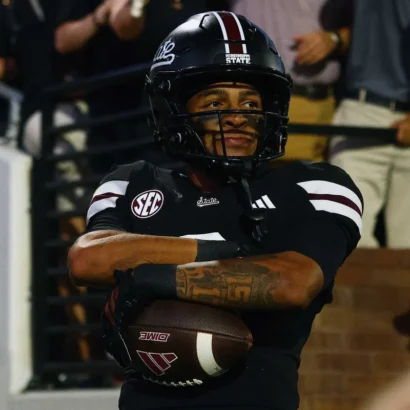
In 2025, Thompson was third-team All-SEC. He set a Mississippi State single-season record with 1,054 receiving yards, was the first Mississippi State player to lead the SEC in receiving yards, and led the SEC in average depth per target. He was also a nominee for the Conerly Trophy (top player in Mississippi) and made the Biletnikoff Award Watch List. Thompson is projected as a 4th-round selection by NFL Mock Draft Database, and Lance Zierlein has a player comparison to J.J. Nelson.
STRENGTHS
Thompson is a smaller-built vertical threat who has an eye-popping 39.8 yards per touchdown catch. Seven of these ten career touchdowns have come on plays of 42 yards or more. Clearly, he’s a dynamic playmaker based on these statistics alone. His speed allows him to have easy wins over the top that require safety help in man coverage. Thompson shows a shifty release against press coverage and runs past cornerbacks before they can even turn and run. He adds an immediate vertical dimension that can loosen defenses.
To access the rest of this article, login or become a member.
