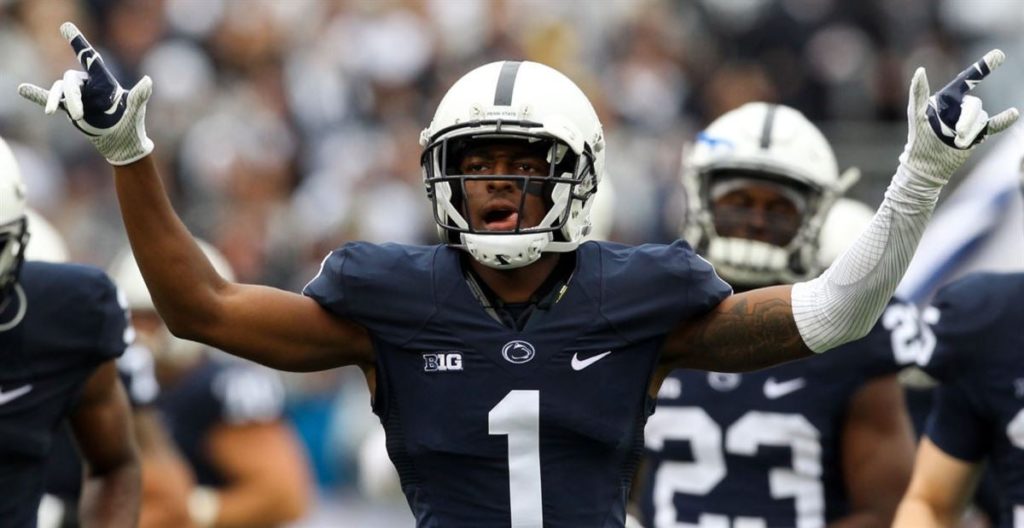
When one rookie receiver climbs in value, one is usually falling in value. But is the rising value worth the price? Is the falling value worth the lessened price? Is the higher valued receiver even the better receiver? Cue: Jaylen Waddle versus Rashod Bateman.
The Similarities
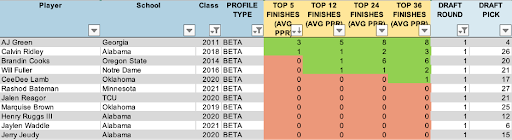
Thing is, Waddle and Bateman have a good number of similarities. What does this mean? When first comparing profiles, we will get a similar base of possible outcomes. Both were made first-round picks in April, while also both being early declares. There’s another similarity that could be possibly debated and that is that they are both Betas in size. Waddle is a clear Beta while Bateman came in five pounds under the Alpha threshold of 195 lbs. during his Pro Day. Close, but both remain Betas. First-round, early declare Beta prospects. Who are they joining?
How they Separate
Waddle and Bateman have their similarities when it comes to certain profile metrics, but what about their production? (per dynastyleaguefootball.com)
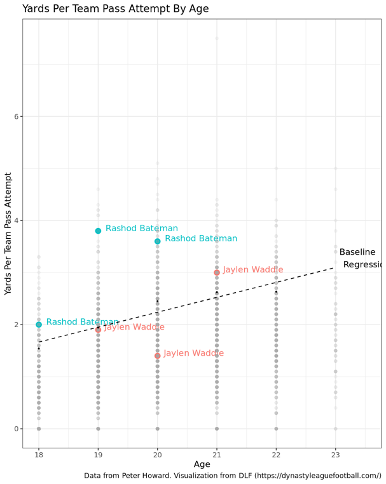
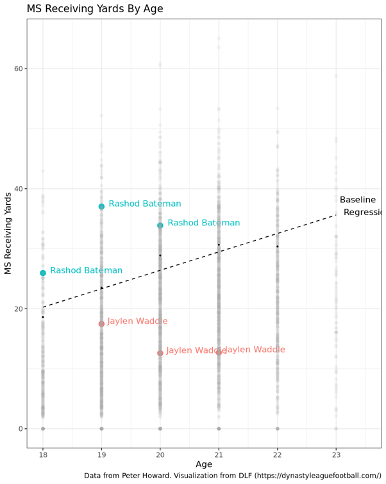

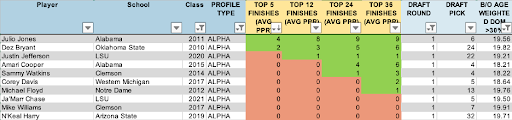
It’s clear that Bateman owns the superior production profile, not just in dominance, but age dominance as well. Using my 30% weighted dominator threshold for a breakout, Bateman broke out during his 19-year-old season while Waddle never did. Using this information, we begin to see that the separation in possible outcomes is starting to show. Who does Waddle compare to as a first-round, early declare, beta who never broke out?

Not the best company. What about for Bateman, if we use the same criteria just apply it to those who broke out before 20 years old?

Better. If you enjoy a little “what if”, here are Bateman’s comparisons if he were to weigh in at just five pounds heavier.
“But Waddle Went to Alabama”
There is the narrative that receivers that go to Alabama take longer to breakout because the talent ahead of them is so immense. Let’s just pretend this narrative is true and compare Jaylen Waddle to fellow first-rounders from Alabama. We will use a weighted dominator as it is what dictates a breakout. Waddle’s first season was at 19 years old, so here’s how his 19-year-old season compares.

Well, second worst out of six isn’t exactly a great sign. Hopefully, his 20-year-old season can show us legitimate upside.

Nope. He, unfortunately, had the worst season among the seven receivers who had a 20-year-old season. If that doesn’t feel risky enough, when we look at peak college seasons, in which Waddle owned a 26.17% weighted dominator his 21-year-old and final season, it only trails Henry Ruggs III for worst peak season by a first-round Alabama receiver. Not great.
Bad Situation?
Bateman is in the perceived worse situation being drafted by Baltimore, who failed to throw more than 30 pass attempts per game in 2020. But is Waddle’s situation that much better that it counters the clear difference in their prospect profile? The answer should always be no, it is always talent > situation. Bateman is an “ELITE” prospect, unlike Waddle.
Conclusion
It’s a quick one. Don’t let the fear of a bad situation force you to whiff on superior talent. The higher valued receiver isn’t the better receiver in this case. Take advantage of it before you can’t.
Until the next article, follow me on Twitter @dynasty_im!