
There is no shortage of annual narratives that develop within the hive mind of the fantasy football (FF) community. Some narratives last for several seasons, and some attach themselves to specific players. That is not to say that the hive mind can’t be useful, or that narratives that form are necessarily wrong. Quite the opposite happens a lot of the time. The wisdom of the crowd is something that can be leveraged to improve one’s fantasy performance. But following the groupthink mindset can be treacherous, and has led to what I think are some systemic misunderstandings within the hobby.
In case you missed it, here were #6-10. League settings and roster parameters notwithstanding, here are the rest of my Top 10 FF Myths.
5. You Should Always Gain Value in Trades
That sounds nice but doesn’t match reality. If you’re not losing trades once in a while then you aren’t making enough of them. If you are good at reading tea leaves and predicting when players’ values are going to rise and fall, and if you can make trades before those predictions are realized, then you stand to profit. It may look like you are losing on paper at first, though. I use trade calculators to gauge a sense of market consensus, but it is never to be taken as gospel, and for many reasons. One of them is the time lag associated with calculators and rankings catching up to newsworthy events. If you can be ahead of the curve, you win. Plus, value is in the eye of the beholder. I wrote my very first article here largely based on the idea of the murky perception of value.
4. That Last Play Cost Me My Matchup
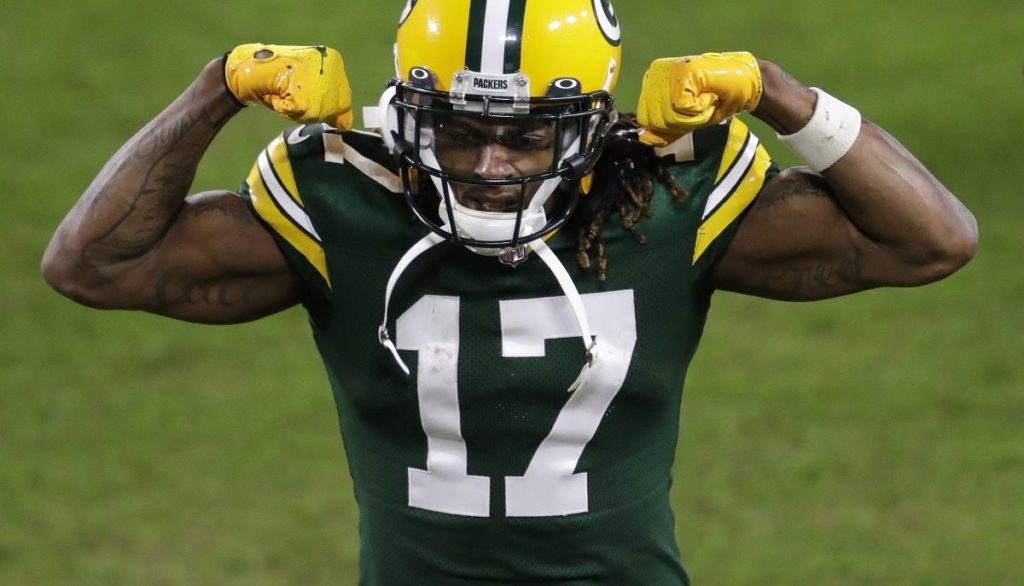
Did it, now? Huh. I’ve never experienced that before in this hobby. Ok. that was sarcasm. Yes, we all know the bitter agony of losing a matchup on the last play of a game, but let’s be real and acknowledge that the first play of the weekend is just as important as the last. Your box score is the aggregate of every play that occurred. In 2019 I took third place in the Footballguys Players Championship. If I had got just one more catch for just one more yard from Davante Adams on MNF, I would have taken 2nd place and an additional $15,000. Adams’ last catch was a few minutes before the end of the third quarter.
Did I complain about the lack of a last play to put me over the top? Was it that fourth quarter that “screwed” me? No, how about giving credit to the 200+ fantasy points I had already put up that weekend already? What about those other plays that put me in that kind of a position in the first place? I had the highest week 16 score of anyone in the tournament that year and I’m going to complain about not getting more? No, I was thankful for what I did have. It is always frustrating to lose in the end. It helps to recognize you probably had other players that could have gotten a few more points, too.
3. “Analytics” Disagrees
This one might cause some headaches. I hate it when people use their resumes to try and make an argument, but I come from a physical sciences background where I trained under some of the best ecologists, statisticians, and geologists around. I am nationally endorsed to teach secondary science (and social studies) and I worked as a conservation scientist and GIS analyst for the US government for 10 years. Does any of that make me qualified to analyze football metrics? Not exactly, no. Does it make my takes more credible? Not exactly, no.
But I cringe most of the time when I hear anybody use the word ‘analytics’, even when they are making an argument I agree with. The word simply gets used too loosely and unfortunately it has lost a lot of its meaning and therefore utility. My background emphasizes a systems-driven approach that is grounded in statistical, and quantitative analysis. But that doesn’t make it a data-driven approach. In my professional opinion, FF is overrun by data-driven analysts that don’t (necessarily) understand the system in which they are attempting to provide predictive tools. It isn’t necessarily that they are using bad statistical methods, it is that the results may not be relevant in the way they think they are. There are notable exceptions, and many very solid analysts are trying to overcome these challenges.
In FF, the system consists of several factors that are often left out of what gets referred to as “analytics”. Coaching tendencies, strength of schedule, strength of OL play, individual FF league parameters, the importance (or lack thereof) of interviews, athletic testing, FF game theory, ADP analysis, draft strategies, and so many other elements. This time of year, everything is about rookie profiles, and for good reason, but that is just one layer of this hobby. To truly pull these factors together in a systems-driven “analytical” approach is to achieve something that so far nobody has really pulled off.
TLDR nothing happens in a vacuum. Context is everything and I think there is a systemic failure within a portion of the so-called analytic FF community in thinking that their results reveal more precision and utility than they really do. Moving on.
2. Always Draft Talent Over Situation
I don’t like any advice that says ‘always’ or ‘never’. I generally will always go talent over situation if the players I am comparing are in different tiers for me. If I think the talent gap is small or marginal, I am willing to cross a tier line in favor of what I think is a decidedly better situation. If they are in the same tier it is easy to draft for situation.
I think lots of dynasty players play too much for the future and not enough for the present. I don’t like waiting for rookies I draft to emerge, though this is largely because I play in the FFPC format where rosters are short. The counterargument is strong, that situation changes so fast that it isn’t something you can count on, whereas talent remains. Situation remains an easy tiebreaker for me, though.
1. You Can’t Predict Outliers
If the pot odds are good enough, the underdog is a profitable play in the long run, provided you can stay solvent long enough to realize it. If you aren’t familiar with the concept of pot odds (from the world of poker), the idea is that you can afford to lose a certain number of underdog hands if you win one once in a while. The math has to be right, and if you chase too many underdogs eventually you will go broke. A multitude of other factors must be considered when making individual decisions.
However, if you can afford to take multiple dart throws (think third and fourth-round rookie picks), you should be doing so. All you have to do is be a marginally better scout than half of your league mates and your dart throws should carry more weight. My historic hit rate on third-rounders is 54%. There are multitudes of fantasy players out there that don’t believe in the concept of outliers. There are many that think third-round rookie picks are worthless. These attitudes can and should be exploited. If you have chances to acquire extra thirds and fourths in bigger deals, do so. In FFPC dynasty leagues, our rookie drafts begin May 7th, so there are still lots of opportunities to gain extra picks.
(Dis)honorable Mentions:
You Must Have Lots of QBs in Superflex to Win – I’ve written a lot about this and will have an update soon
It’s Crazy To Draft for Redraft or BestBall This Early in the Offseason – only if you think you are more unlucky than your league mates
Stay sharp out there and remember, you only have to be better than half your league mates on average to be a perennial playoff team. Let’s keep balling! Look for more of my articles soon.
Thanks for reading! Feel free to reach out to me to chat about fantasy football on Twitter @Ship_Chaser and follow along with me on my journey as I chase six-figure paydays!

