
Setting the Bait
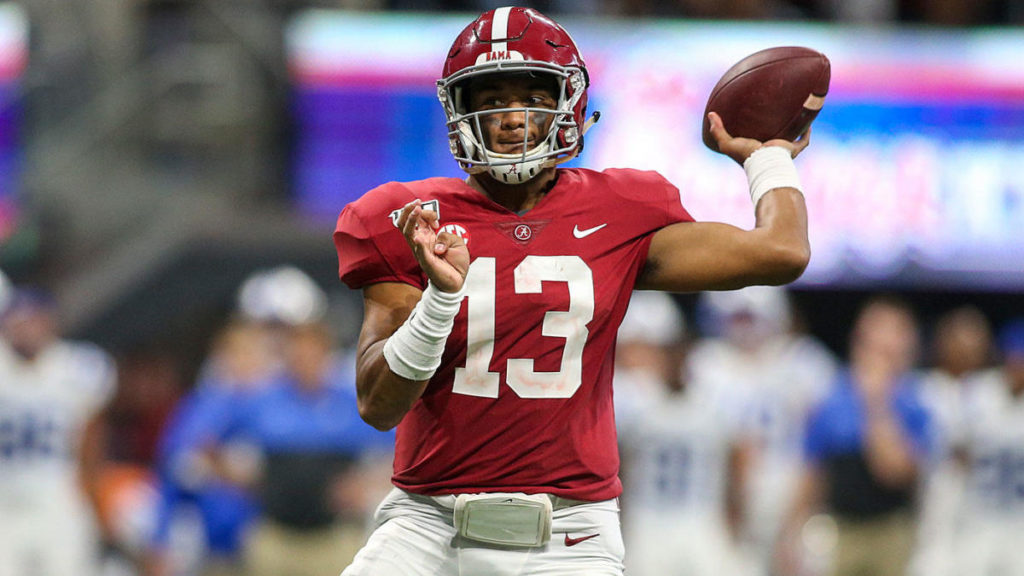
Every season, highly-drafted rookie quarterbacks enter the league surrounded by a whirlwind of hype, and 2020 is no exception. Fantasy managers that believe in Joe Burrow, Tua Tagovailoa, and Justin Herbert will be eager to snatch up pieces in their respective offenses. However, history tells us that might not be the wisest idea, at least when it comes to wide receivers.
A.J. Green is currently being drafted as the WR28, according to FantasyPros ADP. Among players that started at least 10 games, here’s where Green has finished in PPG each season since 2011 (PPR scoring): WR3, WR5, WR16, WR12, WR5, WR11. With almost two years to return to full health, and Joe Burrow coming to town, he’s a no-brainer at his WR28 price, right?
Wrong.
Joe Burrow is a mousetrap, and A.J. Green is the delicious piece of cheese. You are beckoned forward with hopes of a tasty reward, but then you stop. Should I put myself in harm’s way when there’s freshly sliced Jarvis Landry in the fridge? Could this cheese taste that much better, or is “elite upside” just code for “unnecessary risk”?
A Recent History of Rookie Quarterbacks
You see, I did a little digging into what happens when WRs, even productive ones, are forced to play with rookie QBs. The results were far from encouraging. What I found was that rookie QBs typically struggle to support even one top-36 WR, let alone anything remotely close to “elite.” Take a look at the table below, which shows the 23 rookie QBs since 2012 that started at least 12 games. Notice where their top WR finished in PPR points per game.
| Rookie Year | Rookie QB | Top Wide Receiver | Finish in PPG |
| 2012 | Andrew Luck | Reggie Wayne | WR11 |
| 2012 | Robert Griffin III | Pierre Garcon | WR26 |
| 2012 | Ryan Tannehill | Brian Hartline | WR41 |
| 2012 | Russell Wilson | Golden Tate | WR51 |
| 2012 | Brandon Weeden | Josh Gordon | WR53 |
| 2013 | Geno Smith | Jeremy Kerley | WR58 |
| 2013 | Mike Glennon | Vincent Jackson | WR20 |
| 2014 | Blake Bortles | Allen Robinson | WR35 |
| 2014 | Teddy Bridgewater | Greg Jennings | WR48 |
| 2014 | Derek Carr | James Jones | WR45 |
| 2015 | Jameis Winston | Mike Evans | WR26 |
| 2015 | Marcus Mariota | Dorial Green-Beckham | WR71 |
| 2016 | Carson Wentz | Jordan Matthews | WR38 |
| 2016 | Dak Prescott | Dez Bryant | WR21 |
| 2017 | Mitchell Trubisky | Kendall Wright | WR57 |
| 2017 | DeShone Kizer | Rashard Higgins | WR109 |
| 2018 | Baker Mayfield | Jarvis Landry | WR27 |
| 2018 | Sam Darnold | Robby Anderson | WR43 |
| 2018 | Josh Allen | Zay Jones | WR52 |
| 2018 | Josh Rosen | Larry Fitzgerald | WR35 |
| 2019 | Kyler Murray | Christian Kirk | WR32 |
| 2019 | Daniel Jones | Sterling Shepard | WR25 |
| 2019 | Gardner Minshew | DJ Chark | WR20 |
Breaking down these results broadly, we find that 4% of our sample QBs supported a WR1,17% supported a WR2, and 47% supported a WR3. In other words, since 2012, there’s been a 53% chance that a rookie QB fails to produce even a single wide receiver in the top 36. Considering there are only 32 teams in the NFL, that’s a pretty shocking revelation.
So, What’s Going On?
Since 2012, there have been 66 occurrences of a QB throwing for over 4,000 yards and 25 TDs. None of them were rookies. This means that when you project production for weapons in a rookie-led offense, you have to start with a smaller pie. When you mix in the poor efficiency and conservative tendencies that often plague first-year signal-callers, we start to understand why their WRs often let us down. Consider the 11 WRs from our previous sample that managed to finish in the top 36.
| Top-36 WRs | Finish in PPG | Targets Per Game Rank |
| Reggie Wayne | WR11 | 2nd |
| Pierre Garcon | WR26 | 54th |
| Vincent Jackson | WR20 | 10th |
| Allen Robinson | WR35 | 28th |
| Mike Evans | WR26 | 11th |
| Jarvis Landry | WR27 | 11th |
| Dez Bryant | WR21 | 37th |
| Larry Fitzgerald | WR35 | 33rd |
| Sterling Shepard | WR25 | 21st |
| Christian Kirk | WR32 | 20th |
| DJ Chark | WR20 | 25th |
Pierre Garcon, Dez Bryant, and DJ Chark were efficient with their targets, finishing higher in PPG than targets per game. For all the rest, the opposite is true. Essentially, their rookie QBs were able to provide them with enough volume to finish well, but poor efficiency still suppressed their overall point totals.
In 2012, Andrew Luck had a historic rookie season, finishing 5th all-time in TDs and 1st in passing yards. He peppered Reggie Wayne with a career-high 195 targets,2nd-most in the league. Despite this, Wayne saw a career-low in catch percentage, a below-average YPR, and just 5 receiving TDs, leading to his WR11 finish.
Despite Mike Glennon’s underwhelming stat line, Vincent Jackson was similarly propped up by a whopping 160 targets, 6th in the NFL. With an accomplished passer, those targets likely would have led to a WR1 finish. Instead, Jackson caught only 48% of those passes due to Glennon’s inaccuracy and finished as the WR20.
Revisiting 2019
I don’t feel the need to provide context for every player in the sample, but I would like to briefly touch on the impact of Drew Lock and Dwayne Haskins, two rookie QBs from 2019, that started a handful of games. Courtland Sutton had 8 weekly top-30 finishes before Drew Lock took over in Week 13. In Lock’s 5 games, Sutton finished as the WR6 (cool!), WR51, WR37, WR50, and WR43. As crazy as it sounds, without Joe Flacco and Brandon Allen, Courtland Sutton may not have broken out.
We see a similar trend with Terry McLaurin, who finished as the WR29 in PPG. With Case Keenum at QB, McLaurin was on pace to finish as the WR11 (15.98 PPG). Extrapolating his six games with Dwayne Haskins would lead to a much less impressive finish as the WR43 (12 PPG). These additional examples continue to drive home the overarching point: rookie QBs are more or less incapable of providing WRs with the volume AND efficiency required to put up elite fantasy production.
Application for 2020
There are three potential Rookie QB Mousetraps to be aware of in 2020: Joe Burrow, Tua Tagovailoa, and Justin Herbert. Of these three, Burrow is the only one projected to play all 16 games. This means that these trends should affect A.J. Green and Tyler Boyd to a greater extent than the Chargers and Dolphins WRs. The Bengals are also the only team of the three with two WRs being drafted in the top 36. This means that A.J. Green or Tyler Boyd or both have a high chance of underperforming.
Keenan Allen, Mike Williams, DeVante Parker, and Preston Williams are not immune to the Rookie QB Mousetrap simply because they are expected to have veteran passers to start the season. Consider how drastically Sutton and McLaurin’s production fell after their teams turned to rookie QBs. Knowing that their production will likely be in the hands of Tua and Herbert, do you want to rely on these receivers when the fantasy playoffs arrive?
The solution to the Rookie QB Mousetrap is not to avoid it at all costs. After all, every player becomes a value at a certain point, even these WRs. The key is knowing the mousetrap is there in the first place. Use this data as a tiebreaker when you’re on the clock, to construct tiers, or even when considering trades during the season. Let’s be smarter than the mouse. Don’t fall for the cheese, no matter how tasty it looks.
Thanks for reading this article! Look me up on Twitter at @fantasyfreezer if you’d like to hear more from me. I love answering fantasy questions, discussing trades, and engaging in friendly debates, so be sure to drop in and say hello.

