dynasty value

dak

Projecting Top Fantasy QBs for 2026

In this article, I’ll be reviewing data from the past four seasons to predict the next top 12 fantasy football quarterbacks. I started by analyzing the top 12 quarterbacks by points per game in each season for the past 4 seasons, identifying a total of 26 players. Next, I focused on quarterbacks who achieved multiple top 12 seasons — not just one-hit wonders. This narrowed the list to 15 total quarterbacks. Josh Allen Patrick Mahomes Brock Purdy Jalen Hurts Lamar Jackson Dak Prescott Trevor Lawrence Bo Nix Daniel Jones Joe Burrow Baker Mayfield Jared Goff Kyler Murray Jordan Love Tua Tagovailoa These are the 15 guys I will be looking at closely in this article.  15/15 averaged more than 23 PPR in their best college season 15/15 threw for more than 5000 yards in their college career 15/15 threw for more than 40 touchdowns in their college career 14/15 passed for more than 175 yards a game (Hurts) 14/15 rushed for more than 10 yards a game (Goff) 14/15 averaged more than 20 PPR a game in their college career (Love) 14/15 had more than 2 touchdowns to interceptions ratio (Jones) 14/15 had more than 300 rushing yards in college (Goff) 14/15 was taller than 72.5 inches (Murray) 13/15 were from a Power 5 conference 12/15 had a film score from NFL.com greater than 6.2 (Hurts, Prescott, Purdy) 10/15 were drafted in the top 12 of the NFL Draft (Jackson, Love, Hurts, Prescott, Purdy) So, looking at these 12 stats, I will break down this year’s quarterbacks and look at […]

To access the rest of this post, you must login or purchase a DFF Membership.

Projecting Top Fantasy QBs for 2026 Read More »

fannin

Reviewing My Top Dynasty Exposures

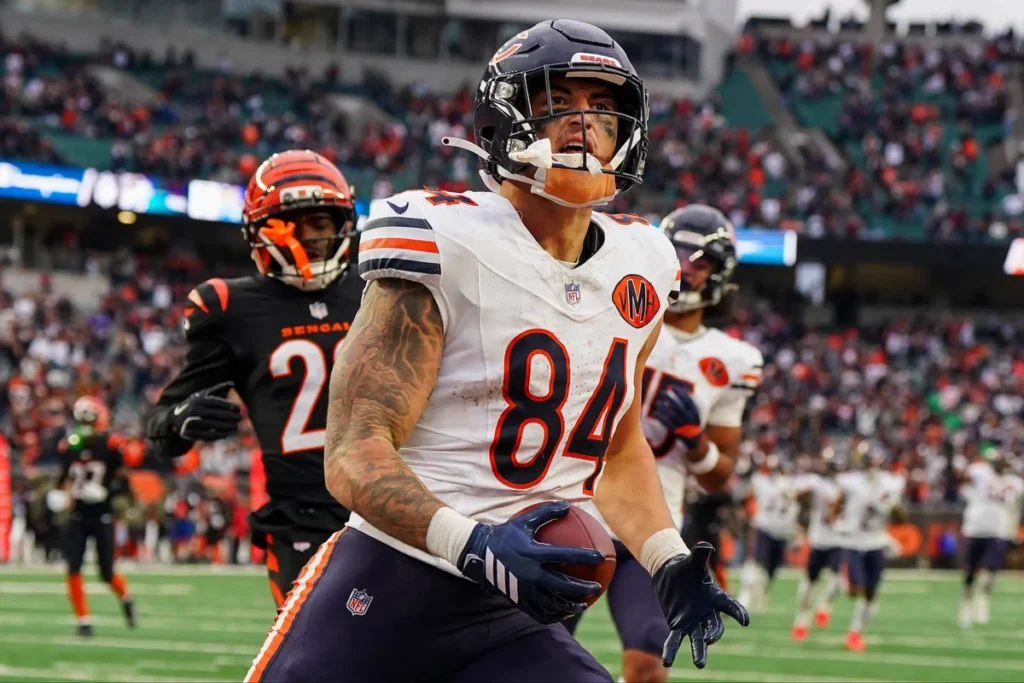
If you’re a portfolio dynasty player (I’d put the threshold at around eight or more leagues), it’s worth periodically checking your overall dynasty exposures to make sure your ownership percentages actually reflect your player takes. Tracking player exposure helps you identify where you’re underweight and looking to add, and who you might want to sell to avoid being over-leveraged. I use Dynasty Data Lab for this, and the dynasty offseason is the perfect window to review your exposures.  In today’s article, I’ll break down my top 10 most-owned players and share my thoughts on each from a dynasty perspective. To keep this article focused solely on impact players, I’ll just be looking at the first 12 rounds of startup ADP. 1. Harold Fannin (TE – CLE) – 41.2% ownership Fannin was a major third-round target for me in last year’s dynasty rookie drafts, coming off the most productive tight end season in college football history. He was overlooked due to his athletic limitations and the poor competition he faced at Bowling Green (both legitimate concerns), but the discount was simply too large, considering his production profile. I’m thrilled to have so many shares of what I believe is a clear Top 5 dynasty TE, and I acquired most of these shares for a fraction of his current price.  2. Colston Loveland (TE – CHI) – 35.3% ownership Another 2025 rookie prospect who was a major target of mine in the latter part of the first round. I loved everything about Loveland’s college profile; he was elite from a per-route perspective,

To access the rest of this post, you must login or purchase a DFF Membership.

Reviewing My Top Dynasty Exposures Read More »

goff

The State of QBs & TEs in Early 2026 Startups

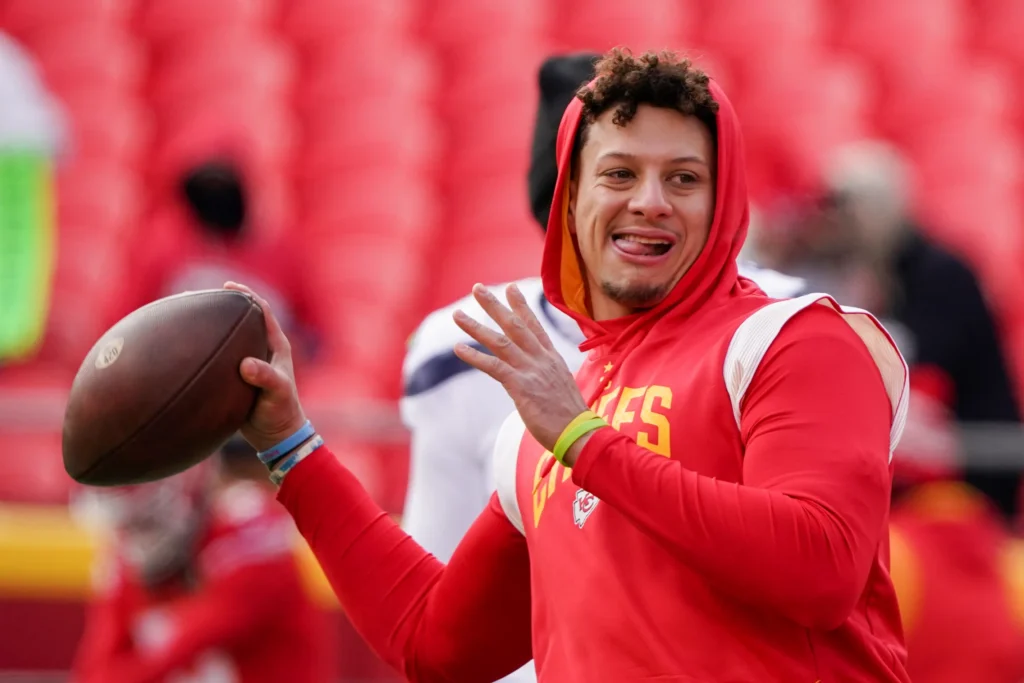
Can you smell that? Yep, it’s startup season. Most of the big names on the market have found new homes via free agency, so some player values have shifted since the end of the 2025 season. And they’ll shift again soon, with the NFL Draft less than a month away.  After jumping into some 2026 startups recently, I wanted to share my thoughts on the quarterback and tight end markets. Here’s what I’m seeing at those two spots with some suggestions on how to attack them in drafts.  Quarterbacks The number of quarterbacks being selected in round one of Superflex drafts is as low as I’ve seen in years. Gone are the days of six or seven signal-callers flying off the board early. Managers want the elite running backs and wide receivers at the top and are willing to bypass QBs to get them. Right now, it’s Josh Allen and Drake Maye as the only constants, and even those guys are slipping in some instances. I just got Allen at pick 1.04 in a startup, then followed it up with Lamar Jackson at 2.09! Imagine getting that duo just one or two years ago — you would’ve had to trade away most of your middle-round selections to make that happen. After Allen and Maye, you’ll usually see Jayden Daniels, Joe Burrow, or Caleb Williams go later in the round, but I’ve also seen them fall to the second. Hard to hate the value there. If you’ve ever wanted Patrick Mahomes, I’ve got good news for you: he’s never been cheaper.

To access the rest of this post, you must login or purchase a DFF Membership.

The State of QBs & TEs in Early 2026 Startups Read More »

young

QBs on the Chopping Block: Planning for the 2027 Class

There was an interesting question posed by a subscriber in our DFF Discord this past weekend, following this tweet being posted:  Seeing the potential that the 2027 draft class has at the quarterback position, Josh asked this:  It’s an excellent question, and one we need to be asking ourselves for dynasty purposes. Obviously, a good number of guys from McShay’s list above either won’t pan out as first-round talents or will elect to stay in college for the 2027 season if they have remaining eligibility. But there are additional guys not on this list who could end up being first-round selections. Josh Hoover. John Mateer. Maybe DJ Lagway finally has that breakout season everyone’s been waiting for. Maybe Drew Mestemaker’s G5 dominance carries over into the P4, and he emerges as a top pick. It’s hard to project any of this so far out, but for the sake of this exercise, let’s take McShay at his word and treat the 2027 QB class as the “historic” one he’s calling it. Who will these quarterbacks be taking over for? Let’s take a look at the guys whose jobs may not be as secure as we think. These names may be good sell candidates in dynasty for you, especially on a team that’s rebuilding or retooling.  The Top “Cut” Candidates I’ll kick off my list by covering the quarterbacks I feel have the most to prove this coming season and will likely be out of a starting job by 2027 or sooner.  Geno Smith (NYJ) – Geno is the most obvious quarterback

To access the rest of this post, you must login or purchase a DFF Membership.

QBs on the Chopping Block: Planning for the 2027 Class Read More »

stowers

Eli Stowers: The Tight End Built for the Modern Game

Modern tight ends have one job above everything else: catch the football. Blocking matters. Athleticism matters. But if you can’t be trusted in traffic, none of it plays. Eli Stowers gets that. And it’s why his transition from quarterback to tight end has turned into one of the most impressive developments in college football. Stowers didn’t just convert positions. He became the focal point of Vanderbilt’s offense. In 2025, he led all FBS tight ends in receiving yards, and he did it by winning the same way every NFL tight end has to win: hands, feel, toughness, and consistency. At 6’4” and around 235-239 pounds, Stowers isn’t built like an old-school in-line blocker. He’s built like a modern weapon. And he plays like one. Production That Matters The breakout didn’t come out of nowhere. It was built year by year. In 2025, Stowers caught 62 passes for 769 yards, the most receiving yards by any tight end in the country. He averaged 12.4 yards per catch and played all 12 games as a centerpiece of the offense. The year before, he put up 49 catches for 638 yards and 5 touchdowns, earning First Team All-SEC honors and Mackey Award semifinalist recognition. Across three seasons at Vanderbilt and New Mexico State, he finished with 146 catches, 1,773 yards, and 11 touchdowns. That’s not gadget production. That’s real usage. How Stowers Wins Stowers catches the football first. That’s the foundation. He has strong, reliable hands and shows comfort working through traffic. He doesn’t panic when bodies are around him. He secures the

To access the rest of this post, you must login or purchase a DFF Membership.

Eli Stowers: The Tight End Built for the Modern Game Read More »

hurts

The Definitive Dynasty Rankings Guide: 11 to 20

Published January 2026 Welcome to players 11 to 20 in my Dynasty rankings series. Players 10 to 1 can be found here. Players 21 to 30 can be found here. Those who follow my work know I approach all of my rankings from an analytical foundation and then layer in additional context on top of that. This series is no different. The foundation of my Dynasty rankings is a proprietary model that utilizes a combination of predictive metrics with an emphasis on prior season fantasy points per game and then combines that with a position-specific age multiplier, flattening of TD luck, and position adjustment. This is the Dynasty 1 Score. From there, I layer on situational adjustments that pure statistics can not identify. I also prioritize consistency in my rankings. How likely are the players to be able to repeat their prior season performances based on their archetype? With that introduction, let me introduce you to my Dynasty rankings series. Note these are a snapshot in time vs. the always-evolving rankings you can find on our rankings site. But in this article series, you get the context and thinking behind the ranking that is not supplied by the pure ranking. Rankings are always fluid, and at DFF, we update them continuously here. These are a snapshot with the thought process behind each that you don’t see in simple rankings. These ranks are a snapshot as of January 2026. Superflex, Full PPR, TE Premium *Data sources: PFF, Pro Football Reference, Player Profiler, NFL+ Premium The rest of this rankings article series

To access the rest of this post, you must login or purchase a DFF Membership.

The Definitive Dynasty Rankings Guide: 11 to 20 Read More »

coleman

Jonah Coleman: The Human Bowling Ball

Jonah Coleman is not hard to figure out. He’s not here to race anyone. He’s not here to bounce everything outside. He’s here to hit you, keep his feet, and move the chains. Every carry looks the same in the best way possible. Square shoulders, low pads, and forward momentum. At 5’9” and around 228 pounds, Coleman is built like a brick. Thick lower half. Low center of gravity. When defenders meet him in the hole, he usually wins. That’s why the “human bowling ball” label fits. He doesn’t avoid contact. He uses it. How He Runs Coleman’s game starts with vision and patience. He presses the line, lets blocks develop, and waits for defenders to declare themselves. He doesn’t dance in the backfield or rush decisions. Once he sees the crease, he commits and explodes through it. He’s decisive. That matters. Four yards on first down is a win, and Coleman understands that. His north-south approach keeps offenses on schedule and keeps him on the field. Footwork and Balance For a back of his size, his feet are better than you’d expect. Coleman has enough lateral quickness to slide between blocks and make decisive cuts in tight spaces. He doesn’t need wide lanes. He can get skinny and squeeze through traffic. The contact balance is the calling card. Arm tackles don’t slow him down. He pinballs off defenders and keeps his legs moving. During stretches of his college career, he averaged over 6 yards after contact. That’s not luck. That’s strength and balance working together. Ball security is another

To access the rest of this post, you must login or purchase a DFF Membership.

Jonah Coleman: The Human Bowling Ball Read More »