

There exists a great divide between redraft and dynasty fantasy football. Many factors contribute to the considerable gap between the two, but one aspect unique to dynasty is the constant evolution. The ability to adjust as a dynasty manager is key, whether it is fixing a mistake made in the start-up draft or understanding the applied strategy is outdated or unreliable in today’s dynasty landscape, success hinges on one’s aptitude for self-reflection and change.
As dynasty manager’s we need to be able to look ourselves in the mirror and admit when we got it wrong, otherwise, we suffer long-term and are unlikely to improve, missing out on a ton of fun along the way as a result.
I recently released my yearly “Hit/Miss” article, and this year I added a “lesson learned” to each “Hit” or “Miss”. This provided some actionable information for myself and the readers based on my process the year before. It’s all about growing and developing the tools necessary to be the best manager possible. So, I thought I’d expand on my article and bring our readers “Dynasty Lessons Learned: 2021” to push everyone to reflect and maybe even help others avoid mistakes I’ve realized I made over time.
ADMIT YOUR MISTAKES
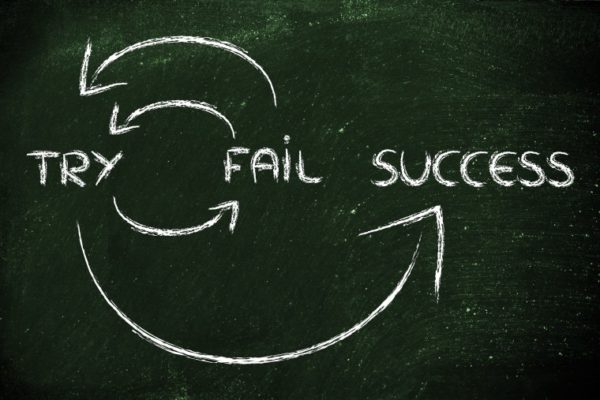
One of the most important lessons I can impart on other dynasty managers is: Don’t be afraid to admit mistakes AND correct them. A significant appeal of dynasty fantasy football is the ability to make major alterations to a team within a season or from year to year. Managers have more assets than in redraft (larger rosters, rookie picks, and FAAB budget) at their disposal to completely turn a team around if done correctly.
First things first, it all starts with identifying your mistakes. If you hold on to a false sense of hope and never face reality, you’ll be stuck in dynasty quicksand with little chance of reaching the ultimate goal of winning a title. With dynasty leagues spanning over many seasons, if you don’t identify your mistake, it will quickly identify itself.
For example, I drafted both Jameis Winston and Mitchell Trubisky in a start-up in 2019. By some miracle, I even won the league that year. I easily could’ve stood my ground and said, “I was right about Winston, look, I won the league”. I could’ve thought, “Hey, I’m the defending champ, I can sit and wait on Winston and Trubisky in hopes they actually pan out”. Instead, I told myself I totally messed up my late-round QB strategy in the start-up and drafting two players that likely ride the bench in more games than they start the rest of their careers*. Maybe I didn’t know that then, but I sure knew it by 2020, and I ended up moving on from both in return for Ryan Tannehill, Robert Woods, and a few high 2021 rookie picks.
We all have “hot takes” and players we just must roster on every team, but accepting your failures and misses not only inherently makes you a better person, it substantially increases your dynasty competence and ability to turn losing teams into championship contenders.
*Using the late-round QB strategy can be very beneficial as our own Lewis Glover pointed out in a recent article “The (R)evolution of the Rushing Quarterback on Late Round QB Strategy”, quarterbacks rarely return value on their ADP. In fact, of the 60 quarterbacks drafted in the top 12 since 2016, only 17 have either met or returned on their ADP. 43 quarterbacks have finished with a PPG rank lower than their positional ADP – that’s over 71%! Clearly, there is plenty of value to be had at the quarterback position in later rounds, I just made it a mission to pick the worst options possible at the time in my above illustration.
Lesson 1: ADMIT YOUR MISTAKES.
BACK TO THE FUTURE

The dynasty community certainly puts a premium on youth, and in turn, many focus on the future as values change quickly both in the NFL and dynasty leagues. It’s easy to get caught up in the past, which in dynasty can be as recent as last week as values shift with a single signing or unsavory news report.
This lesson is about looking forward, not back. Last year’s performances rarely matter, especially for running backs. The likelihood last year’s RB1 repeats their season-long performance the following year is astronomically low. Take Todd Gurley and Le’Veon Bell for instance. Gurley finished RB1 and Bell finished RB2 in 2017, just two years later neither finished inside the top 10. Think it’s just running backs? Odell Beckham went from the number one overall dynasty start-up pick five years ago to a virtual ghost in a few short years. Do you love Derrick Henry? Me too, but that doesn’t mean we get to ignore his age and improbability of repeating his 2020 performance over and over again. It may just be time to sell high. Sometimes we need to accept the future has come before we’d like it to. A study conducted by profootballreference.com suggested peak age for running backs is between 27-28, and they also found running backs under 27 tend to improve while those over 28 begin to decline.
I can cite countless examples, but the point remains. Focusing on the past, even last year’s performance, as a predictor for future success can lead us down the creek without a paddle.
Lesson 2: LOOK FORWARD, NOT BACK.
CONSOLIDATION

Consolidation has become a staple instrument of my dynasty strategy. In any given dynasty league you are afforded 25-35 (or more) roster spots and therefore accumulate as many players in the start-up draft. However, have you ever asked yourself how many of those players you actually use in your starting lineup?
Usually not as many as you’d like, or if you do, it’s a lot of mid-tier players filling in flex spots that don’t push your team over the top. It’s great to roster Jakobi Meyers and hope he breaks out, but the odds are he’s a perennial WR3 and at the very best a WR2. Personally, I’m looking to acquire as many studs as possible, and if that means consolidating my roster by selling what I consider multiple mid-tier players for one top-tier talent, I’m doing it 100% of the time.
This may also be the time to consider “points above replacement”. Points above replacement measures how a player performs with respect to others at their position. For example, in 2019, the top 10 wide receivers on average scored 37.96 more points than the receivers outside the top 10. The lower they fall in the rankings the less impactful they are to your roster. You can see how stocking up on as many players within the top 12-24 of the position will provide a significant advantage. It’s more beneficial to have one top-tier talent and another mid-to-low-tier option than two mid-tier options as they provide very few points above replacement for your team.
Depth is important to an extent, but rostering five or six WR2’s isn’t giving you any significant advantage. I’d rather turn two, three, or four of them into one or two top 10 players at any given position.
I apply the same strategy to rookie picks. I want as many top-end first-round rookie picks as I can get. The hit rate drops considerably with each round, so I’m always looking to increase my odds of acquiring top 10 talent. That means consolidating all of my picks into as many first-rounders as possible. Sometimes combining second-round picks with mid-tier talent gets you an extra first-round pick, and that’s the lesson I want to convey with consolidation.
Lesson 3: CONSOLIDATION IS KEY.
LET’S MAKE A DEAL
I’m not sure you can have any sort of success in a dynasty without mastering the art of trading. You may be able to win the inaugural year of a dynasty league because you drafted the perfect team, but when it comes time to rebuild, you must be able to successfully negotiate a trade.
So, our last dynasty lesson for 2021 is to avoid forcing trades. For the better part of the last year, I wanted to move on from Mike Evans, Mike Williams, and Darius Slayton. Some in the same league and some in others, either way, this was a nightmare. I was only receiving low-ball offers that would make me feel sick to my stomach the next day that I even entertained the idea of accepting. After a while, you begin to think, “I may as well take whatever I can get because I’ll never receive the return on my investment.” When these thoughts creep up, my advice is to hold strong. Don’t sell. The trades will come. I did just that.
After a while, Mike Evans’ value turned around a bit with Tom Brady and the Tampa Bay offense excelling, and I was able to move him for a 2021 mid-first after almost an entire year of stagnation. Something similar happened with Mike Williams and Darius Slayton once the 2021 rookie drafts began. Their values increased once managers were on the clock looking at players in unfavorable landing spots. After many months of sending “Williams and Slayton on the block” only to receive an offer with a late third, I was able to turn both wide receivers plus my second-round pick for the 1.12, where I selected Jaylen Waddle. Coincidentally, this is also the above consolidation strategy coming alive. That said, applying patience afforded me the opportunity to gain value on my previous investments where I couldn’t find any just weeks or months before. I would have lost tons of value if I was simply eager to move on.
Lesson 4: AVOID FORCING TRADES.
CONCLUSION
In the end, we all play dynasty because we are passionate about the NFL and fantasy football, so we should do it to the best of our abilities. A willingness to admit mistakes, look ahead, and applying patience in trading will go a long way to improving your capabilities as a dynasty manager. Humans are a stubborn species and tend to lean into what’s easy, convenient, and even traditionally enjoyable rather than asking the tough questions and stepping outside of their comfort zone. I’m asking you to do just that in applying these lessons to your future dynasty experiences.
Thank you for reading. If you have any thoughts or would like to discuss, you can find me on Twitter @WillieBeamanDFF

