
General Strategy
When entering a fantasy draft, the first thing I do to plan out my strategy is to look at the league settings. In this draft, there were a lot of irregular rules, like getting points for rushing attempts and first downs, but none of that changed how I evaluated those players. Two rule changes caught my eye as having the biggest impact on weekly scoring. The first is how points are scored for quarterbacks. Instead of the typical four-point passing touchdowns and negative two points for throwing an interception, passing touchdowns are worth six and interceptions take three points away. The next rule change has to do with team defenses. Typically, my strategy is to stream defenses all year long. But in this league, there is a huge bump for allowing low point totals, and there are event points for tackles for loss, QB hits and passes defended.
The next step when looking at league settings is to see how many players are in the league and what the starting lineup looks like. This league has 14 teams, which is just over a typical 10 or 12-team league. This creates slightly more importance in having strong running backs and an elite tight end. Each team has to start two RBs per week, and with 14 teams in the league, I didn’t want to be the team to miss out on a high-end RB and be stuck playing RBs in a timeshare.
Another Interesting wrinkle that the league has is that there are three flex spots. This lowers the importance of having an elite quarterback because they will account for a smaller percentage of points in your roster than a league with one flex spot. Because of this, I knew that unless a QB fell to a spot where they were an insane value, I would likely be taking a late-round QB.
Just to summarize, Going into the draft in the 9-hole, I wanted to get an elite RB option, wanted to get a top-3 TE, and also wanted to wait on QB. This was just a general plan, and like any draft, being able to adjust on the fly is a much-needed skill for fantasy success.
Draft Board
https://sleeper.app/draft/nfl/716467099689631744
Round One
Coming into this draft, I was pretty set on taking Austin Ekeler with my first-round pick. I like the upside of his receiving production, and with the upgrades on the offensive line for the Chargers, he could see an uptick in rushing production. He obviously profiles as more of a pass-catching back and lacks that elite rushing upside, but I am overall very high on Ekeler this year. But like I mentioned earlier, being able to adjust on the fly is another part of the strategy. Saquon Barkley ended up falling to the 9th pick, and although there are concerns about his availability for week 1, I love the potential RB1 finish for a true workhorse RB in a much improved Giants offense.
Round Two
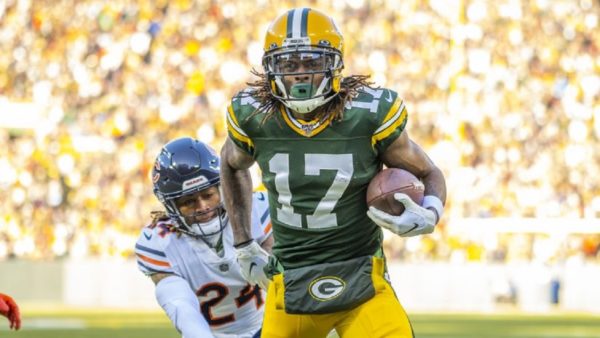
I love building teams on a solid RB group. One of the biggest benefits of picking in the back half of the first round is the fact that there are good RBs available at the beginning of the second. Here, I was eyeing either Antonio Gibson or Clyde Edwards-Helaire with my second pick. Gibson was a longshot to happen, and CEH was a much more realistic plan. As it turns out, neither player was there when it was my turn to pick. But there is always a silver lining to players not being on the board that you were hoping or planning on: there are other players that have to fall. In this case, Davante Adams fell to me and I couldn’t pass him up. This was only a couple of days before Rodgers announced he would play for the Packers this year, so getting the reigning WR1 in the mid-second round is a great value.
Round Three
Knowing that I had taken a running back with questionable health in the first round, I wanted to fill out my running back room with players that were sure to get a lot of the work. Since volume drives production in fantasy football, the running back well was starting to dry up with options that will see good volume. With this pick, I went with Josh Jacobs. He was the last sure-fire option on the board. Even with the addition of Kenyan Drake, I think Jacobs gets the majority of the work in this offense. Not the flashiest pick, but one that I needed to make in case Saquon Barkley is not ready for the beginning of the season.
Round Four
At this point in the draft, I am looking at taking the best player available. The clear choice for me was Julio Jones. I’ve firmly taken a stance on Twitter that I’m a firm believer in Julio Jones, so when he was still on the board in the fourth round it was an easy selection. Without his hamstring injury last year, Julio Jones was well on his way to another WR1 finish last season. Sure, he is a year older, but I am not scared off by a hamstring injury. I’m all-in on Julio Jones this season.
Round Five
Knowing that there will still be wide receiver value later in the draft, I wanted to find another running back here. The perfect running back fell to me here in Mike Davis. He is the lead back in what should be a good offense, but because he’s been a journeyman his entire career he can be drafted at a discount. If a rookie were in Mike Davis’ shoes, they would probably be a third or fourth-round pick. I’m not entirely sold on Davis being able to match his production from last season, but for a third running back who I might need to rely on any given week, I love the projected volume he brings.
Rounds Six, Seven, and Eight
At this point, I felt like I had the foundation for my team, and it was here that I was looking for talent to fall to me and to take the best player available. With Davante Adams and Julio Jones already on my team, I decided to take DeVonta Smith as my WR3. this is probably a questionable pick, and I didn’t love it when I made the pick, but I like that he will step in and be the top receiver for his team from week one. Even with his small frame, he has shown his ability to produce, and that is what fantasy football is all about.

With my next pick, I went with Russell Wilson. He is one of the top quarterbacks in the league, and while it wasn’t my plan to take a quarterback this early, he just fell too far and I jumped on him. Adding Gerald Everett and D’Wayne Eskridge in the draft rounds out one of the top pass-catching units in the NFL. Pete Carroll wants to run the ball, but the passing efficiency that the Seahawks have shown in years past didn’t scare me off of Wilson.
After Wilson, my plan was to take Antonio Brown, who is another one of the guys I especially like this year. I got sniped by one pick, so I quickly pivoted to running back, where there was only one player I liked here and it was James Conner. Another pick that isn’t flashy, but I was pieces of good offenses, and the Cardinals figure to be in the red zone a lot this year, and James Conner has proven effective near the goal line. That, mixed with Chase Edmonds being his competition for goal-line snaps, made this an easy pick.
Late Round Picks of Note
One of my best value picks was TE Logan Thomas in the late 9th round. Half of the reason I liked this pick is that he was picked in the ninth round, but the other half is who was drafted ahead of him. Throughout the two rounds, before I selected Logan Thomas, Mike Gesicki, Tyler Higbee, Rob Gronkowski, Evan Engram, and Jonnu Smth were all taken. And I can say confidently that I would rather have Logan Thomas over any other TE listed here.
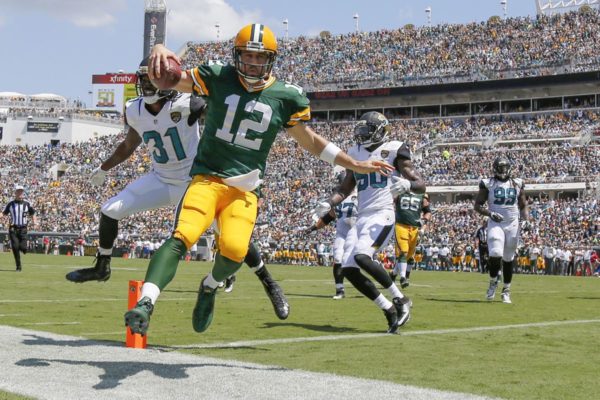
Another pick I really liked was taking Aaron Rodgers in the 11th round. If there was no holdout this offseason, He is likely being drafted in the QB6 to QB8 range in fantasy drafts this fall. In this draft, he was the QB15. Now that we know that he is returning to the Packers this year, I feel like I have immediate value here. It also allows me to trade Russell Wilson away for another player, making my team even better. Sometimes it pays to take a chance, and this is an example of a risk paying off.
Overview
As a whole, I felt like I was well-prepared for this draft. I’m one of the more season redraft players, and I think that played to my advantage in this draft. I was still drafting against other seasoned fantasy players, so this was harder than a generic draft, but I felt like I could see what was going to happen, and that allowed me to make better decisions based on how I thought the board would look in later rounds.
Something I thought I could have done differently is to not take Russell Wilson as early as I did. Hindsight is 20/20, and at that point, I didn’t know that I was going to take Aaron Rodgers as well, but I could have taken one of DJ Chark, Deebo Samuel, Michael Carter, or Curtis Samuel. Other than that, I felt like I had a solid draft. It’s easy to like your team in July and August, but when September and October come around, it just comes down to putting up more points than your opponent.
And I like my odds there.
Thank you so much for reading my content. If you have any questions about this article or anything fantasy football-related, you can find me on Twitter @DecaFantasy. While you’re here, you should check out other great content written by DFF, or you can check out our YouTube Channel. Thanks for being part of the #DFFArmy!

