

Within the last month, we received the news that promising San Francisco running back Jeff Wilson Jr. tore his meniscus at team facilities on May 20th. Coach Kyle Shanahan later reported that “Jeff got hurt sitting down in a chair in the locker room and he got out of it and his knee got in an awkward position”. Just a flukey injury but one that makes these NFL players seem a little more human. Wilson and team staff elected to go forward with a meniscal repair surgery vs a meniscectomy allowing us to discuss the differences in return to play between the two.
Meniscus Anatomy
But first, a little anatomy lesson. Most of us have a fairly good understanding of the meniscus and its role but let’s review.
The meniscus is a “c” shaped structure that sits between our tibia and femur in our knee creating a cushion of fibroelastic cartilage to help absorb shock, increase congruency, transmit force, and increase stability.
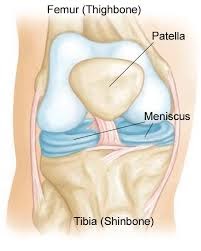
The meniscus has a limited blood supply and typically only the peripheral/outside 25% of the meniscus is capable of healing whereas tears to the central/inside 75% have limited healing potential making the location of injury very important when deciding which surgical route to go.
Meniscectomy Return to Play
Menisc- means meniscus and -ectomy means removal so meniscectomy is the removal of some or all of the meniscus using arthroscopic knee surgery. Meniscectomy surgeries are typically performed when the meniscus tear has a low probability of healing as with centrally located tears or in rare cases to provide an opportunity for significantly improved timetables for return to play.
One study looked at 90 elite athletes who sustained either lateral (outside) or medial (inside) meniscus injuries and found that 100% of athletes returned to sport in five to seven weeks. Furthermore, medial meniscus injuries typically returned to sport in five weeks whereas lateral injuries typically returned closer to seven. Of the medial meniscectomy group, only 8% had further joint swelling or pain upon return to play compared to 69% of the lateral meniscectomy group.
In regards to meniscectomy, medial injuries offer a faster return to play at five weeks on average with fewer adverse events and minimal to no risk of subsequent arthroscopic surgery. However, in the NFL it is not uncommon for athletes to return from meniscus removal in two to four weeks.
Meniscus Repairs
Meniscus repair is the gold standard for meniscus tears if the tear occurs in a viable location where healing has a good probability of occurring. Meniscus repairs typically involve the suturing of the meniscus to maintain as much of the meniscus as possible. The main difference between a repair and removal is recovery time. A repair needs significant time to heal to allow the suture to heal to prevent re-injury upon return to sport. Whereas a removal needs limited time to scar down and manage symptoms before return to sport with minimal risk of re-injury.
Most of the literature reports that between 80-95% of athletes return to play between four to six months. A separate study looked at 725 athletes, including 355 elite athletes, and concluded that 86.5% of meniscus repairs returned to their preoperative level of function. Although in my clinical experience, most repairs return to sport closer to six months than four. However, like we continue to say, every injury, athlete, and rehab is different.
So Why Would a Player Get Their Meniscus Repaired?
You may now be wondering why players would elect to have a meniscal repair surgery over a meniscectomy when the return to sport is four to six months vs five to seven weeks.
The answer is longevity. If you remember from above, the meniscus acts as a shock absorber and force distributor of the knee. So when we remove this force absorber, studies show significantly more correlation to larger and more severe chondral lesions as well as accelerating the development of osteoarthritis. Todd Gurley is the prime example of this, although his meniscal injury occurred with an ACL injury.
One study looked at all the NFL combine athletes from 2009-2015 who had either a lateral or medial meniscectomy that was greater than 10% of the total volume. Of these 287 athletes, 85% had chondral lesions. This study then compared the 287 athletes who had a previous meniscectomy to the healthy control group and found that the athletes with a previous meniscectomy had significantly fewer games played, games started, and lower snap percentage compared to the healthy players in their positional group. Players with severe chondral lesions also were found to have significantly worse performance metrics when compared to the healthy control group.
Menisectomies shorten NFL careers which are why meniscus repairs are always preferred if appropriate.
Take-Home Points
Meniscus injuries are very common in the NFL. As we continue to preach, no injury is the same, so return to play times for meniscus tears will vary based on size, shape, location, and elected surgery.
Overall, athletes with meniscectomies returned to play the fastest at five to seven weeks with minimal in-season complications. Whereas, athletes with meniscus repair surgeries can return to play anywhere from four to six months.
Meniscectomies offer minimal adverse short-term risk and therefore fantasy players can feel confident returning their players coming off meniscectomy surgeries to their lineup as soon as they are cleared. However, long-term, dynasty players likely want to move on quicker from these players as on average these players play fewer games and have lower snap percentages.
Meniscus repairs have increased risk of re-injury in the short term and longer return to play timetables but offer significantly improved long-term outcomes. Meaning players who have meniscus repair surgery in season will likely be a drop for redraft leagues. However, in dynasty, these players should be a hold or buy as they likely will return to their previous level of play by the start of the next season.
As for our example, Jeff Wilson Jr. is projected to start the season on the PUP list meaning he will not be eligible to return until Week 7 of the NFL season putting him at five months of recovery. Given his previous role and the additions of Trey Sermon, Wayne Gallman, and Elijah Mitchell, he likely will not be rushed back so it’s probable he doesn’t return until closer to Week 11 or 12.
At this point, Wilson Jr. is not worth drafting in redraft and likely holds little to no value in dynasty besides as a deeper handcuff.
-Zach Pavlichek, PT, DPT
Thanks for reading! I’m hoping to continue to help merge the medical and fantasy football worlds to help my readers to make the most informed decisions. If you are looking for more injury updates, information, or have any injury/fantasy-related questions feel free to follow me on Twitter @Zachpav42. Cheers!
References
Wiley TJ, Lemme NJ, Marcaccio S, Bokshan S, Fadale PD, Edgar C, Owens BD. Return to Play Following Meniscal Repair. Clin Sports Med. 2020 Jan;39(1):185-196. doi: 10.1016/j.csm.2019.08.002. PMID: 31767105.
Ekhtiari S, Khan M, Kirsch JM, et alMost elite athletes return to competition following operative management of meniscal tears: a systematic review Journal of ISAKOS: Joint Disorders & Orthopaedic Sports Medicine 2018;3:110-115.

