
Hurray for the start of Training Camps!! We can finally begin overhyping Twitter highlights while we listen to the sweet voice of Liev Schreiber give hope to Cowboys fans via Hard Knocks. So as we squeeze in a few more startups before the regular season starts, let’s dive into Part II of our Startup Strategies series. Make sure to check out Part 1 where I focus on drafting a strong core pick-by-pick through the first nine rounds of a real draft I participated in, and how you can take my strategy and deep dive to draft a roster competitive enough to win now without having to rebuild later. In Part II we’ll take a broader look at the full roster post-draft to evaluate depth by position and consider immediate and future roster moves needed to bring home The Ship.
Quarterback
Trevor Lawrence 1.5
Sam Darnold 8.8
Cam Newton 10.8
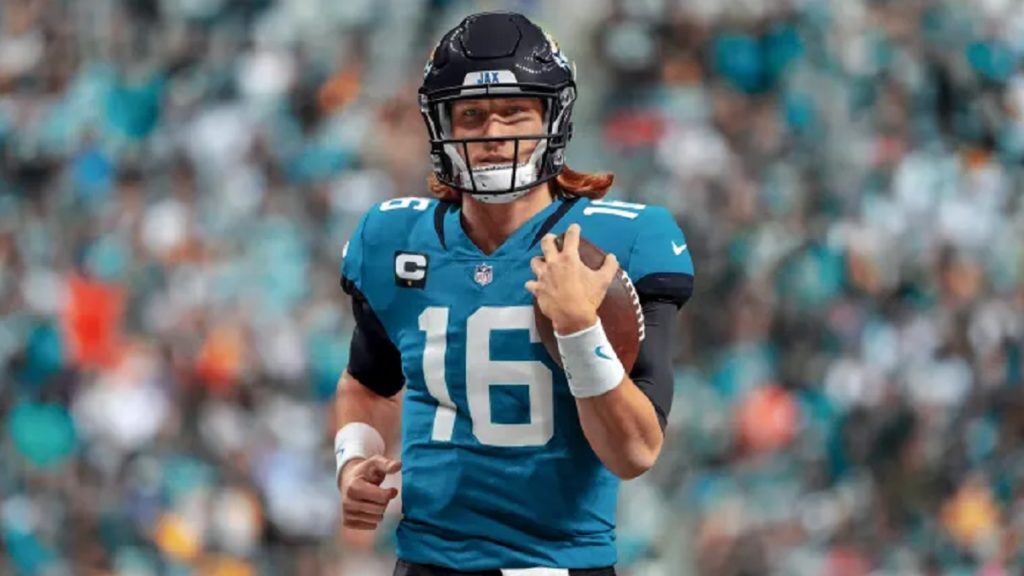
As a reminder from Part I, this is a Superflex/TE Premium league where other owners value young rookie talent. Drafting Trevor Lawrence that high was a slight reach in some manager’s eyes, but I believe understanding how your league values players means more than how other analysts value them. Lawrence is widely considered the best QB prospect since Andrew Luck, so should we consider it that much of a reach? I could trade Lawrence to almost any team looking for a rebuild or just sit on him to bet on garbage time producing fantasy points.
The Sam Darnold and Cam Newton picks are proof of the value you can save for your RB and WR depth by waiting on QB and doubling down on that position later. We have a young QB2 in Darnold on an ascending offense and the underwhelming Cam Newton. Dynasty is a war of attrition, so depth in any fashion is important. I doubt Newton will be on the Pats roster next season, and I doubt he’s on mine either. But let’s consider the advantages of him playing decent enough to start on both of our rosters the entire season. It goes without saying that New England had a poor offense last season, but Newton was never right after having Covid and Jakobi Meyers was the best pass-catcher on the team. If Newton does retain the starting gig, we could hope his rushing totals translate over to next season along with more efficient passing numbers after the spending spree Belichick pulled on pass catchers this offseason. Regardless, he is one of the two players I’m looking to move either this season or the next while having depth behind my two young QBs. Don’t feel the need to double down on QB in SF leagues in the first four rounds. Yes, QBs go quick, but so does RB depth. This brings me to the next position group…
Running Back
Joe Mixon 5.5
Michael Carter 8.5
Damien Harris 10.5
Sony Michel 17.5
Larry Rountree 18.8
Marlon Mack 20.8
Chris Evans 22.8
The word of the day is depth, and that was my biggest priority with running backs. I remember 2020 like it only a season ago and distinctly recall the injury calamity that plagued owners all year. It doesn’t take a fantasy analyst to tell you that running backs tend to get beat up and have short shelf lives, but here I am bringing it up anyway. With that being said, I still chose to punt RB till the third round. Remember, we’re trying to still win later, so it doesn’t make sense to spend a second-rounder on a RB already on their second contract when you can get younger players with RB1 ceilings. It’s about buying players at their floor instead of their ceiling to gain value. But I said enough about Clyde Edwards-Helaire, Joe Mixon, and Michael Carter in Part I, so I’ll move right on to Damien Harris.
Nobody should feel great about Harris being their RB2, but there’s absolutely no reason you shouldn’t take him as your third or fourth back. I’ve heard all the arguments like Cam Newton will vulture touchdowns, James White will vulture catches, and Sony Michel will just vulture in general. Damien Harris was graded 90.3 by Pro Football Focus in 2020 and has been declared the “surefire No. 1 option” according to beat writer Mike Reiss. Let’s not pretend like we haven’t seen a fantasy-relevant back without catching upside. Benjarvus Green-Ellis, Steven Ridley, and LeGarrette Blount have thrived in this role, and I doubt Newton will vulture too much after this season due to the guy named Mac Jones being drafted in the first round. Don’t let Harris hate give you tunnel vision on passing on valuable depth. There are few running backs at his ADP that have a higher floor than Harris has, so snag him for a flex play bye-week plug-in so you can focus on handcuffs and young depth pieces later. Which is exactly what I did.
I waited for seven more rounds till I drafted the underwhelming Sony Michel followed by the intriguing Larry Rountree. Drafting Michel was strictly “just in case” insurance. One of the many joys of Dynasty over Redraft is having a deeper roster with room to insure your top picks. I won’t feel too bad cutting any players on my roster taken that deep in a draft because, at this point, we’re hoping for developing young talent, a lottery ticket that may hit, or handcuffs. Michel was a cuff, Rountree was both a lottery pick and developing young talent.
Rountree finds himself well behind Ekeler in an ambiguous short-yardage or early-down role with Justin Jackson and Joshua Kelley. Jackson flashed talent in his rookie season but has failed to build on that due to injury, and Kelley suffered from fumble-itis and was faded by the former coaching staff later in the season. Rountree is a free spin in a great position to win a spot with the new coaching staff with no ties or love for Kelley or Jackson. Moreover, Rountree is a downhill runner that is the perfect compliment to Ekeler and could see snaps even with Ekeler being the decisive starter. I may not get much out of Rountree in year one, but he’s the type of player to stash on your Taxi that may be a camp standout. Now on to the super late-round picks.
Any picks after the 20th round aren’t sexy, but they could be useful. Marlon Mack is someone who could be useful if Jonathan Taylor gets injured. We don’t know what he’ll look like a post-Achilles injury, but why worry since he’s cheap and running behind the seventh-ranked offensive line according to PFF. I don’t think he’s an instant RB1 or RB2 if Taylor goes down, but he could be a good trade chip or flex play if he does. If you do draft an injury-prone player, you should probably invest in their backup. Getting Chris Evans in the 22nd round is the cheapest and easiest cuff there.
Running back is top-heavy, so the best bang for your buck is getting them early in the top eight rounds, then use your late-round picks after 15 to get youth and handcuffs. Depth and handcuffs secure your assets to make sure you’re in a position to win even with an injury. This RB stable is an example of that.
Wide Receiver
CeeDee Lamb 2.8
DeAndre Hopkins 4.8
Terrace Marshall 7.5
Julio Jones 9.5
Robby Anderson 13.5
Russell Gage 15.5
Van Jefferson 16.8
Kendrick Bourne 19.5
Simi Fehoko 24.8
Scott Miller 25.5
Bryan Edwards (Acquired in Hunter Henry Trade)
Every analyst has yammered on about the depth of the wide receiver position, and they aren’t wrong. Unfortunately, I wasn’t able to capitalize on that depth as much as I wanted to. This is a top-heavy position group for this roster, but I needed to plan for the future due to drafting older players like Julio Jones and DeAndre Hopkins. Robby Anderson and Russell Gage are great flex plays or bye-week plugs, but players like Van Jefferson and Simi Fehoko are draft-n-stash players that might not get many starts. Anderson is by far the best asset due to his breakout last season as the PPR WR19 and I’ve scored a valuable asset at a fairly cheap price if he can come close to those numbers. Kendrick Bourne is the next pick with the most “now” potential but his floor is low. Then again, most at the end of this draft have a low floor.
Overall, I prefer to have two top receivers I feel I can play any week. It’s much harder to stream receivers who don’t have as concentrated volume as an RB or QB. I’d rather work smarter and not harder with top talent I can play against anybody, and then bolster my depth with talent during mid-rounds like Anderson, Mike Williams, or Curtis Samuel. Don’t fall for traps like Tyler Lockett as your WR2. It’s easy to get excited to have a receiver who finished as the PPR WR8 with a stat line of 100/1054/10. But Lockett got all of his touchdowns in only five games and eight or fewer points in seven games. You can read several articles with charts and diatribes about upside, but Fantasy is played laterally. Meaning it’s still about beating the guy across the matchup ticker with a lineup you have to set. Lockett was a surefire winner during the three weeks he scored over 30, but probably set you up for duds the rest of the season. I’m not saying don’t draft Lockett. Boom or Bust players are great to have on your roster as flex plays, but I’d rather have a “boring” pick like Anderson who scored 10 or more points in 10 games. That’s more likely to help you get into the playoffs than holding out for a prayer every week.
Overall, receiver is one position where you can get creative and stay competitive as long as you don’t get cute and aren’t afraid of being safe in mid-rounds. Ensure you don’t ignore young depth just because a receiver is only a second-year player and didn’t break any records or needed time to develop. This draft is the perfect example of drafting week to week starters that are bolstered by young talent that will keep you competitive in two or three seasons.
Tight End
Hunter Henry 11.5 (Traded Away Post Draft)
Jonnu Smith 12.8
Anthony Firkser 14.8
Kylen Granson 21.5
Mo Allie-Cox 23.5
Tyler Higbee (Acquired in Hunter Henry Trade)
I’m sure those who have read Part I were roasting me in their head as I punted the tight end position all the way to the 11th round. I take a Ricky Bobby-ish approach to drafting tight ends. You’re either first or you’re last. I always prefer to be last. I don’t hate the idea of drafting Hockenson or Andrews a little higher, but make sure you like the overall look at your roster when you do. I was able to get DeAndre Hopkins and Terrace Marshall by passing on them. I like to have strong backs and receivers that I know I can play no matter the matchup over an oft-injured Kittle or an unproven rookie like Kyle Pitts. I don’t care that Pitts is a generational talent because history shows that even the best rookies struggle in their first season. So, I’m more willing to bet I can buy Pitts cheaper in the offseason when he inevitably disappoints owners and they let recency bias poison their judgment. (See Edwards-Helaire, Clyde) Until then, we need to wait and roll the dice on value players. I recommend you triple-dip with this strategy and get some young lottery picks to stash on your roster.
Of course, this is exactly what I did by securing both New England tight ends back to back. This was me watching the board and predicting my move a round or two ahead and nabbing my targets. Jonnu Smith was the real prize, and Hunter Henry was a pick I got for name value to trade. Smith is a better blocker and will be on the field more than Henry, and I can’t ignore Henry’s injury history. I didn’t love any WRs or RBs with 11th round value, so why reach when you play in the most trade-friendly fantasy format? Henry or Smith will be off my roster before the season ends. In fact, I traded him to DFF’s Editor-In-Chief Michael Romero immediately after the draft for Tyler Higbee and Bryan Edwards. I get the extra receiver depth I complained about earlier, and a tight end with the same value, but is the de facto TE1 in a better offense with Gerald Everett’s departure.
Anthony Firkser finishes off the triple-dip of potentially startable TEs. He replaces Jonnu Smith as the TE1 in Tennessee and should receive similar volume in an offense that looks to pass a little more with the addition of Julio Jones. Yes, Jones should benefit the most out of the uptick of pass attempts, but more pass attempts still translates to more opportunity for every pass catcher. Jones still has to be open, and he’s famously lacked red zone production, so Firkser is a cheap bet to have startable weeks.
No, I don’t have an elite tight end, but I’ve drafted a few who have turned in elite performances and are in better situations to turn in even more. The best-case scenario is that Smith or Higbee truly breakout and finish as top-ten TEs, and the worst is that I might have to stream week to week. Nobody can have the “perfect” team, so you have to choose where you want to punt or focus your roster, and I’m willing to gamble at TE. Nobody was drafting Robert Tonyan or Logan Thomas as their TE1, yet they still finished top 10. So statistically it seems viable that I still have a TE1 in this group, and I have extra receiving studs for both winning now and in the future.
Final Outlook
I’m already aware that many aren’t going to be in love with this team and doubt it can win, but keep in mind that it’s dynasty and I can always trade during the season. Moreover, I have more than enough confidence that this is a playoff team barring few injuries and drafting plenty of depth to go the distance.
- Quarterbacks go lightning quick during SF, so GET YOUR QB. Don’t get cute with your QB1, or at least get a young guy you know you can trade. Like Lawrence. Don’t shy away from Lamar Jackson and ignore recency bias against him.
- Running Back depth is razor-thin, so prioritize this over receiver in every level of the draft, though waiting on RB till the 3rd isn’t crazy. Travis Etienne, J.K. Dobbins, Ezekiel Elliot, and Antonio Gibson were still available depending on draft position. Don’t leave your draft without four startable backs on your roster if you plan on competing this season.
- Don’t be afraid to trade back for extra picks in the early rounds to get an extra dip at depth.
- Wide Receiver has lots of value, but don’t get cute. I like to pair a young stud and a premium vet with high floors early, so I can focus on securing RB depth.
- Allen Robinson, D.J. Moore, and Amari Cooper are all receivers with WR1 potential that are 27 years old or younger that fell to the fifth round. Don’t be scared to wait on receiver till after you’ve secured two RBs and QBs.
- You’re either one of the first or one of the last to draft TEs. If you don’t feel comfortable winning without a surefire elite TE, you’re going to have to pay for it. I’d get more depth at other skill positions and look for a Jonnu Smith, and get other TEs with upside like Everett, Kmet, and Trautman.
Don’t let anyone fool you into thinking you can either rebuild or go “all in.” As the NFL moves towards offensive friendliness, rookies will continue to pop. Use your basic fantasy principles to understand that you probably don’t have to burn a high pick on a second-contract running back. Get a young stud at receiver who will hold down a starting spot on your roster for 10 seasons, and sprinkle in still tradeable vets to ensure you have the talent to win the ship. Hold onto future picks in a startup unless you’re overwhelmingly winning a trade to secure your future. Finally, and most importantly, criticize your leaguemate’s picks while you draft and have fun.
Think my draft strategy is nuts or helpful? Come tell me on Twitter @SportsJag to rate my draft, give me a hot take, or see any of my future work.

